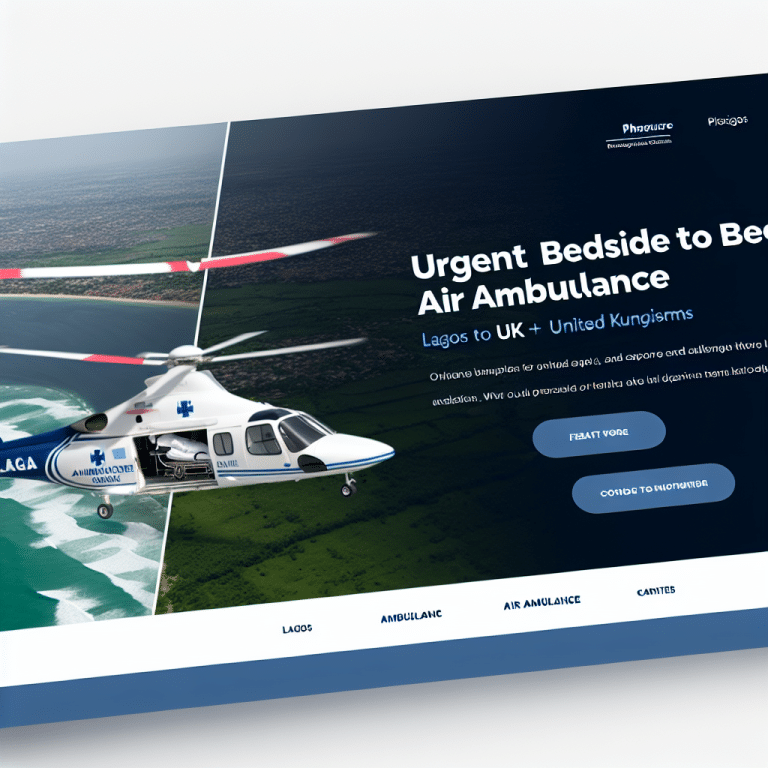
The Technology and Expertise Powering Modern Air Ambulances
- Posted by: PSL
- Categories: BRICS News, Financial Management, Human Resources and Talent Management, International Business and Market Entry, Marketing and Sales, News Blog, Operations and Process Improvement, Organizational Development, Risk Management and Compliance, Strategy and Planning, Technology and Digital Transformation

Introduction to Air Ambulance Services
Air ambulance services play a crucial role in modern emergency healthcare, offering rapid transport to critical patients. These aerial medical units are specially equipped for both emergency and non-emergency patient transfers, often designed to reach patients in areas that are hard to access via ground transportation. With the ever-evolving technology landscape, air ambulances are increasingly integrated with state-of-the-art medical equipment and highly trained personnel, further enhancing their life-saving capabilities.
Evolution of Air Ambulances
Air ambulances have come a long way since their inception. The first recorded air ambulance flight occurred during World War I when military air transportation was used to evacuate injured soldiers. The concept began to take shape commercially in the mid-20th century when civilian operations began in the U.S. and Europe. With ongoing advancements in aviation technology, communications, and medicine, air ambulances today have redefined emergency healthcare responses.
Types of Air Ambulances
-
Helicopter Ambulances:
- These are most commonly used for emergency situations that require quick transport over short-to-medium distances. Helicopters can navigate urban environments easily and reach remote locations where ground ambulances may face difficulties due to terrain or traffic.
-
Fixed-Wing Ambulances:
- These aircraft are used for long-distance transport. Fixed-wing air ambulances can travel faster and further than helicopters, making them suitable for inter-facility transfers or relocating patients across states.
- Specialized Air Ambulances:
- Some air ambulances are tailored for specific medical needs, such as neonatal transport or critical care. They often come equipped with specialized medical equipment to stabilize patients before they reach hospitals.
Medical Equipment on Board
The effectiveness of air ambulance services heavily relies on the type of medical equipment onboard. Here are some essential components:
-
Advanced Monitoring Systems:
- Equipment such as ECG monitors, pulse oximeters, and advanced capnometers allows medical personnel to keep track of patients’ vital signs in real-time. This information is critical for making rapid medical decisions.
-
Ventilation Equipment:
- Portable ventilators enable paramedics to provide lifesaving respiratory support during transit. These devices are designed to function effectively in the confined space of an aircraft.
-
Defibrillators:
- Automated External Defibrillators (AEDs) are critical in treating patients suffering from cardiac arrest. Modern air ambulances are equipped with sophisticated defibrillation equipment that allows for immediate response options.
-
Medication and IV Supplies:
- Air ambulances are stocked with essential medications and intravenous (IV) supplies for immediate administration. This facilitates emergency treatments and management of critical conditions en route to a medical facility.
- Patient Transport Systems:
- Advanced stretcher systems and securing devices ensure that patients are safely transported. These are designed to allow quick access to patients while securing them during flight.
Communication Technologies
Effective communication is pivotal in air ambulance operations. The following technologies are essential:
-
Crew Resource Management (CRM):
- This set of training and communication processes helps ensure smooth information flow among crew members, from pilots to medical personnel, which is crucial during emergencies.
-
Real-Time Data Transfer:
- Satellite communications and advanced avionics systems allow for real-time data sharing between the air ambulance, dispatch centers, and receiving hospitals. This capability enables receiving facilities to prepare resources before the patient arrives.
- Integrated Dispatch Systems:
- Modern dispatch systems use Geographic Information Systems (GIS) to identify the quickest routes and optimize transport logistics. Advanced algorithms can reduce response time, ensuring quicker patient delivery to medical facilities.
Training and Expertise of Medical Personnel
An air ambulance is only as effective as the personnel operating it. The teams typically comprise paramedics, nurses, and sometimes physicians, all receiving specialized training:
-
EMS Training:
- Emergency Medical Services (EMS) training covers everything from basic life support to advanced trauma care, preparing staff for rapid medical interventions.
-
Critical Care Paramedic Training:
- Many air ambulance personnel are certified as critical care paramedics. This training allows them to manage complex medical conditions and lifesaving interventions in transit.
-
Flight Physiology Training:
- Medical personnel are also trained in the physiological effects of flying on patients, including understanding how altitude can affect patients with respiratory or cardiac issues. This knowledge allows them to tailor interventions during the flight.
- Teamwork and Coordination:
- Given the high-stress nature of air ambulance operations, personnel undergo training focused on teamwork and coordination, which is vital for effective patient care.
Regulatory Standards and Certifications
Ensuring safety and quality in air ambulance services requires adherence to various standards and regulations:
-
Federal Aviation Administration (FAA) Regulations:
- Air ambulances must comply with FAA regulations governing aircraft safety, pilot training, and maintenance protocols.
-
Healthcare Regulatory Compliance:
- Nationally recognized bodies, such as the Commission on Accreditation of Medical Transport Systems (CAMTS), set forth standards that medical transport systems must meet to ensure patient care quality.
- State Regulations:
- Various states have additional regulations governing air ambulance services, thus adding another layer of accountability and quality assurance.
The Role of Technology in Diagnostics and Decision-Making
The integration of technology in diagnostics significantly enhances the capabilities of air ambulances:
-
Portable Ultrasound Machines:
- These are increasingly being utilized to provide immediate diagnostics during transport, enabling medical personnel to assess conditions and take necessary actions based on real-time data.
-
Telemedicine:
- Air ambulances now utilize telemedicine technologies to consult with specialists while in transit. This allows for quicker and more informed decision-making, which is particularly beneficial for complex cases.
- Artificial Intelligence (AI):
- Some air ambulance services are beginning to incorporate AI for predictive analytics, helping to determine the best transport options and necessary interventions in real-time.
Challenges Faced by Air Ambulance Services
Despite the advanced technology and skilled personnel, air ambulance services face several challenges:
-
Weather and Environmental Factors:
- Adverse weather conditions such as storms or fog can delay take-off or landing, impacting time-sensitive operations.
-
Regulatory Hurdles:
- The multi-layered regulatory framework can complicate operations, especially as a service moves across state lines.
-
Financial Viability:
- The costs involved in operating air ambulances can be high, and reimbursement issues often complicate the financial sustainability of these services.
- Public Perception and Accessibility:
- Awareness around the availability and necessity of air ambulance services remains low in certain communities, posing challenges in accessibility.
Future Trends in Air Ambulance Services
As technology continues to evolve, air ambulance services are expected to experience transformative changes:
-
Increased Use of Drones:
- The possibility of autonomous drones for certain types of patient transport or equipment delivery is being researched, potentially reducing response times.
-
Enhanced Telemedicine Capabilities:
- Future air ambulances may utilize even more advanced telemedical capabilities, allowing for remote consultations with a wider range of specialists.
-
Data Analytics for Operations:
- Utilizing big data and machine learning can help optimize flight and operational logistics, improving both response times and patient outcomes.
- Improved Patient-Centric Designs:
- Future air ambulances may focus more on patient-centric designs, enhancing comfort and providing a better environment for both patients and medical staff.
By harnessing these technological advancements and continuing to emphasize personnel training and regulatory compliance, air ambulance services will remain an integral part of emergency healthcare systems worldwide.