

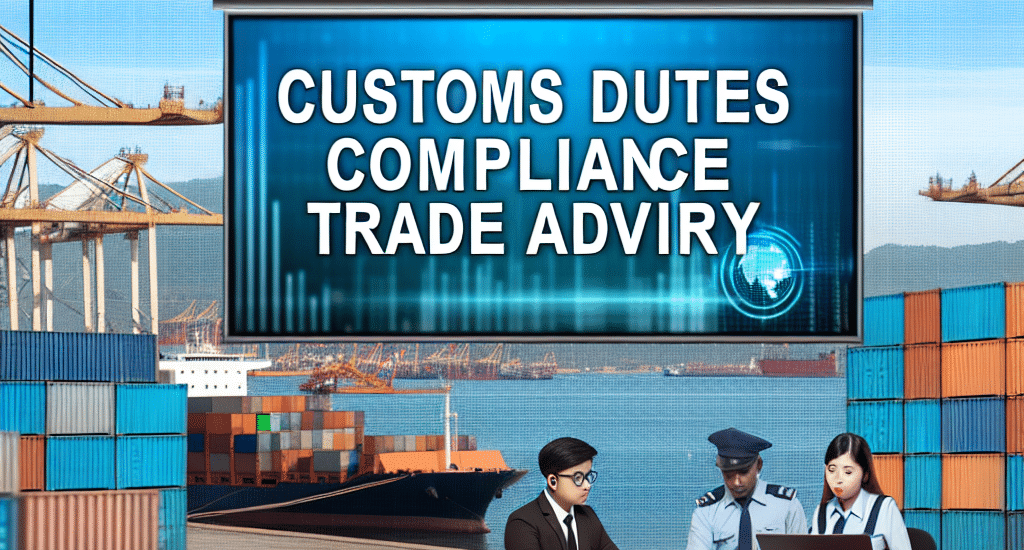
Customs Duties Compliance Trade Advisory
- Posted by: PSL
- Categories: BRICS News, Financial Management, International Business and Market Entry, News Blog
Introduction to Customs Duties
Customs duties are tariffs or taxes imposed on goods when they are transported across international borders. Governments use these duties to regulate international trade, protect domestic industries, and generate revenue. The complexity of customs duties is rooted in various factors, including trade agreements, international relations, and changes in legislation. Ensuring compliance with customs duties is crucial for businesses engaged in international trade to avoid penalties, delays, and increased costs.
Understanding Trade Legislation
The landscape of trade legislation is multifaceted. Various international agreements, national laws, and local regulations govern customs duties. These legal frameworks are designed to promote fair trade, protect national interests, and ensure compliance with international obligations.
Key Trade Agreements
-
World Trade Organization (WTO): The WTO plays a pivotal role in establishing rules for international trade. Its agreements promote lower tariffs, transparent trade practices, and non-discriminatory treatment among member countries.
-
Regional Trade Agreements (RTAs): RTAs allow countries within a specific region to reduce or eliminate tariffs among themselves. Examples include the North American Free Trade Agreement (NAFTA), now replaced by the United States-Mexico-Canada Agreement (USMCA), and the European Union (EU) Customs Union.
-
Bilateral Agreements: Countries often negotiate bilateral agreements to improve trade relations. These agreements can significantly affect customs duties by providing preferential rates or eliminating tariffs altogether for specific goods.
National Regulations
National customs regulations outline the procedures and requirements for importing and exporting goods. In the U.S., for example, Customs and Border Protection (CBP) oversees compliance with customs laws. Each country has its regulatory body that issues regulations on valuation, classification, and duty assessment.
Role of Harmonized System (HS) Codes
The Harmonized System is an internationally standardized system of names and numbers to classify traded products. It plays a critical role in determining the applicable customs duties. Each product is assigned a specific HS code, which facilitates trade by providing a common language for customs authorities around the world. Accurate classification leads to correct duty assessment, while errors can result in significant penalties.
Customs Duties Compliance
Compliance with customs duties involves several critical steps that businesses must undertake to avoid legal pitfalls and inefficiencies in their supply chain operations.
Proper Classification of Goods
One of the most significant aspects of customs compliance is the accurate classification of goods using the HS codes. Each piece of merchandise must be categorized correctly to ensure the right amount of duty is assessed. Misclassification can lead to overpayment or underpayment of duties. Companies should invest in training for their staff or consider hiring customs experts to ensure accuracy.
Valuation of Goods
Customs authorities require an appropriate valuation of imported goods to calculate applicable duties. The World Trade Organization (WTO) provides guidelines for customs valuation, primarily the transaction value method, which assesses goods based on the price paid or payable. However, there are other methods, such as the computed value method, which can apply when transaction value cannot be determined. Businesses must fully document all transactions, providing detailed invoices and records to support their valuations.
Documentation and Record-Keeping
Proper documentation is crucial in customs compliance. Key documents that typically need to be maintained include:
-
Commercial Invoices: These define the transaction and are crucial for determining the value of goods.
-
Packing Lists: These detail the contents of shipments and are used for verification.
-
Shipping Documents: Bills of lading, air waybills, and other shipping documents are necessary for customs clearance.
-
Certificates of Origin: These establish the nationality of goods and determine whether preferential tariff treatment applies.
Organizations should maintain these records for the required duration, typically up to five years, as mandated by many customs authorities.
Duty Payment and Submission
Businesses must ensure timely payment of customs duties. Failing to pay duties promptly can result in penalties or delays in the release of goods. Companies should be aware of any potential customs bonds required, which act as a guarantee to cover duties in case of non-compliance.
Understanding Exemptions and Preferences
Many countries offer exemptions or preferential treatment for specific goods. Understanding these nuances can save businesses substantial money in duties. For example, free trade agreements often provide reduced rates for certain products originating from member countries. Businesses should work closely with their customs personnel to identify applicable exemptions.
Risk Management in Customs Compliance
Identifying Compliance Risks
Businesses should be proactive in identifying risks associated with customs compliance. These risks can be classified into various categories:
-
Operational Risks: Involves errors in documentation, mischaracterization of goods, or failure to maintain records.
-
Regulatory Risks: Includes changes in trade laws or tariffs, resulting in non-compliance due to outdated practices.
-
Technology Risks: Relies on IT systems for data accuracy and integrity; system failures can create compliance lapses.
Implementing Risk Mitigation Strategies
Once risks are identified, companies should implement strategies to manage them effectively. This might include:
-
Internal Audits: Regularly reviewing customs processes and documentation can help identify potential inconsistencies or errors.
-
Training Programs: Ongoing training for staff involved in international trade can keep them informed of updates in customs regulations and best practices.
-
Consultation with Experts: Engaging customs brokers or trade compliance professionals can provide invaluable insight into complex regulations.
Adopting Technology Solutions
Investing in technology can enhance customs compliance. Software systems can assist in the classification of goods, valuation, and generation of required documentation. Additionally, automated compliance checks can minimize human errors and streamline operations.
Customs Duties Enforcement and Penalties
Customs authorities take compliance very seriously, and failing to adhere to regulations can have serious consequences.
Types of Penalties
-
Monetary Penalties: Fines imposed for non-compliance can be substantial, depending on the severity of the violation.
-
Seizure of Goods: Customs may confiscate goods deemed unlawfully imported or misdeclared.
-
Criminal Charges: In cases of fraud or intentional misrepresentation, individuals may face criminal charges, potentially leading to imprisonment.
-
Bad Reputation: Non-compliance can harm a company’s reputation and future business prospects.
Enforcement Procedures
Customs authorities have rigorous procedures to enforce compliance. This includes routine audits, random checks, and investigations into suspicious trade activities. Companies that consistently demonstrate compliance may benefit from lower scrutiny, while those with a history of violations may be subject to closer examination.
Importing and Exporting Best Practices
Due Diligence on Trade Partners
Before conducting business with foreign partners, due diligence is essential. This includes assessing their compliance history, understanding their business practices, and ensuring they comply with their local customs regulations.
Establishing Clear Internal Policies
Companies should develop clear internal policies for customs compliance, including roles and responsibilities, documentation guidelines, and procedures for monitoring compliance. Regular reviews of these policies ensure they remain effective.
Keeping Abreast of Changes
International trade is dynamic, with frequent changes to tariffs and regulations. Businesses must stay informed about any changes in trade policies, including new duties or exemptions that may impact their operations.
Conclusion
In the complex world of international trade, customs duties compliance is not merely a regulatory necessity but a critical component of a successful business strategy. Engaging in proactive compliance measures, understanding trade legislation, and investing in technology can help mitigate risks and promote efficient operations.
Related Posts
 Strengthening Nigerian Aviation Through Expert Advisory Services
 How the Lekki Free Trade Zone is redefining manufacturing in West Africa
 How the African Continental Free Trade Area boosts Nigerian export potential
 Why the Akwa Ibom Deep Seaport project is a game changer for Atlantic trade
 Investing in the commercial trade networks of the Anambra economic basin
 The growth of aviation and hospitality services in the Rivers State capital
 How Delta State is positioning itself as a hub for regional maritime trade
 Investing in the premium hospitality and diplomatic service sector in Abuja