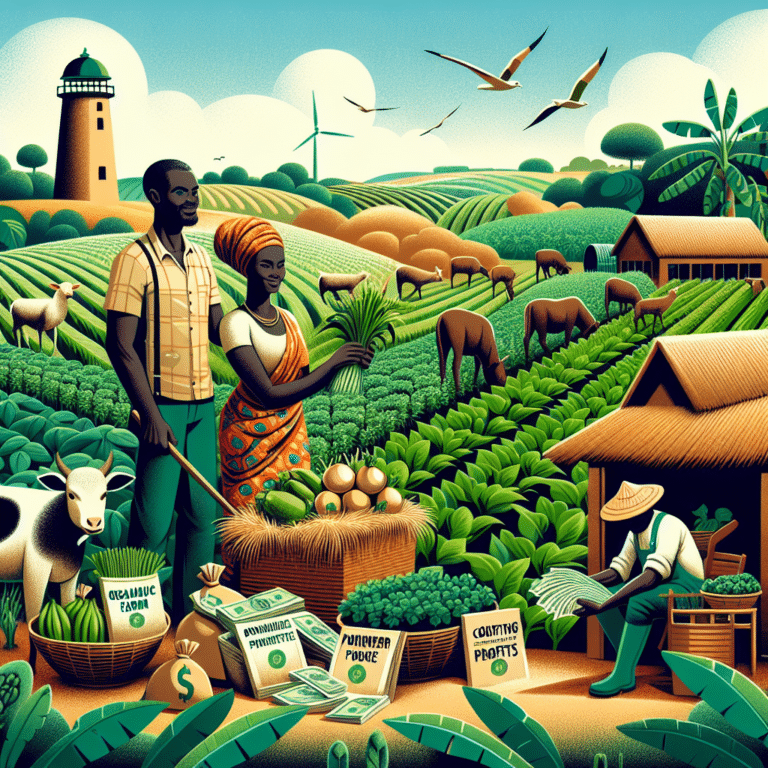
Transforming Nigeria Economy Through Strategic Farm Investments
- Posted by: PSL
- Categories: BRICS News, Financial Management, Human Resources and Talent Management, International Business and Market Entry, Marketing and Sales, News Blog, Operations and Process Improvement, Organizational Development, Risk Management and Compliance, Strategy and Planning, Technology and Digital Transformation

Nigeria, often referred to as the "Giant of Africa," boasts one of the continent’s most dynamic economies, yet it grapples with numerous challenges like unemployment, inflation, and a heavy reliance on oil-export revenues. While the oil sector has long been the cornerstone of Nigeria’s economy, it has also made the country vulnerable to global price fluctuations. To achieve sustainable economic growth and resilience, Nigeria must pivot towards agriculture, a sector with immense potential for transformation through strategic investments.
The Agricultural Landscape in Nigeria
Nigeria has vast arable land, with agricultural potential that remains largely untapped. The country has over 84 million hectares of arable land, of which only about 40% is cultivated. This presents significant opportunities for investment in crop production, livestock, aquaculture, and agro-processing. Nigeria’s diverse climate supports various crops, including maize, cassava, yam, rice, and millet, which can be leveraged to enhance food security and export revenues.
However, the agricultural sector is plagued by challenges, including inadequate infrastructure, limited access to finance, outdated farming techniques, and a lack of modern technology. Addressing these issues requires a coordinated approach that encompasses government policies, private sector involvement, and the commitment of financial institutions.
The Role of Government in Strategic Farming Investments
The Nigerian government has recognized the importance of agriculture to the economy and has initiated several programs aimed at reforming the agricultural sector. Initiatives such as the Agricultural Promotion Policy and the Anchor Borrowers’ Programme have been put in place to encourage farm investments. However, there is room for improvement in the following areas:
1. Policy Framework and Support
Developing a conducive policy environment is crucial for attracting foreign and local investments in agriculture. The government should prioritize creating and implementing coherent agricultural policies that offer incentives for both large-scale and smallholder farmers. These policies may include tax incentives, subsidies for inputs like seeds and fertilizers, and support for research and extension services.
2. Infrastructure Development
Investment in rural infrastructure—such as roads, storage facilities, and refrigeration units—can greatly enhance the agricultural value chain. Improved transportation networks reduce post-harvest losses, making it easier for farmers to access markets and ensuring that consumers receive fresh produce. The introduction of rural electrification can also support agro-processing activities, allowing farmers to add value to their produce and increase their income.
3. Access to Finance
Access to finance remains a significant barrier for many farmers in Nigeria. Traditional banking institutions often view agriculture as a high-risk sector and are hesitant to provide loans. To address this, the government can collaborate with microfinance banks, cooperatives, and credit unions to offer tailored financial products that meet the needs of farmers. Public-private partnerships could also be explored to develop innovative financing mechanisms, such as agricultural bonds or insurance products that cater to climate-related risks.
The Role of Technology in Agricultural Transformation
In an age where technology continues to revolutionize various sectors, agriculture in Nigeria must similarly embrace innovation. The integration of technology in farming can increase productivity, reduce waste, and enhance overall efficiency.
1. Precision Agriculture
Precision agriculture leverages data analytics, GPS, and IoT (Internet of Things) to provide farmers with actionable insights about soil health, crop conditions, and weather patterns. By using data-driven farming practices, Nigerian farmers can optimize inputs like water, fertilizers, and pesticides, thereby increasing yields while minimizing costs.
2. Mobile Applications
Mobile technology has already made significant inroads in Nigeria, with millions of people using smartphones. Farming apps provide farmers with access to crucial information, including market prices, weather forecasts, and expert advice. By providing real-time data, farmers can make better-informed decisions that lead to improved productivity and profitability.
3. Digital Platforms for Market Access
Agricultural e-commerce platforms can bridge the gap between farmers and consumers, reducing reliance on middlemen. By connecting farmers directly to markets, these platforms enable them to get better prices for their produce and increase their incomes. Beyond simple sales, digital platforms can facilitate bulk purchases, enabling farmers to negotiate favorable prices for inputs.
Promoting Agro-Processing and Value Addition
Investments in agro-processing can significantly enhance Nigeria’s agricultural economy. Currently, a substantial portion of the country’s agricultural produce is sold raw, resulting in minimal value addition. By promoting agro-processing, Nigeria can create jobs, reduce post-harvest losses, and improve food security.
1. Investment Incentives
The government can promote agro-processing by offering tax breaks and other incentives to companies willing to invest in processing plants. Such plants should focus on essential commodities like cassava, rice, and oil palm, transforming these raw materials into finished products that can generate higher revenue.
2. Skill Development
A skilled workforce is essential for the agro-processing sector to thrive. The government can collaborate with educational institutions to develop training programs that equip workers with the technical skills needed for modern agro-processing facilities. Public-private partnerships can also be used to create vocational training institutes specializing in food processing and packaging.
3. Research and Development
Investments in research and development (R&D) are crucial for innovation within the agro-processing sector. The establishment of research centers that focus on the development of value-added products can lead to new business opportunities. Through partnerships with universities and international research organizations, Nigeria can leverage global knowledge and technologies to enhance its processing capabilities.
Encouraging Sustainable Farming Practices
Sustainable farming practices are essential for ensuring long-term agricultural productivity while protecting the environment. Strategic investments should focus on promoting methods that balance economic benefits with environmental conservation.
1. Agro-Ecology and Organic Farming
Investments in agro-ecology and organic farming can increase resilience against climate change. By adopting practices such as crop rotation, intercropping, and organic fertilizers, farmers can improve soil health and enhance biodiversity. Government programs should incentivize farmers to shift towards organic methods, thereby tapping into the growing global market for organic produce.
2. Climate-Smart Agriculture
Implementing climate-smart agricultural practices can help farmers increase productivity while reducing GHG emissions. Techniques like agroforestry, sustainable water management, and integrated pest management are essential for adapting to climate variability. Investment in training programs and technical support for farmers can facilitate the adoption of these practices.
3. Renewable Energy
Harnessing renewable energy sources such as solar power for irrigation systems and agro-processing can significantly reduce costs for farmers. Investment in solar technology not only provides a reliable energy source but also opens up opportunities for jobs in the renewable energy sector.
Building Partnerships for Investment
Transforming Nigeria’s agricultural sector requires the collective efforts of various stakeholders, including the government, private sector, NGOs, and international organizations. Building effective partnerships can facilitate investment flows and create a more sustainable agricultural ecosystem.
1. Public-Private Partnerships
Public-private partnerships (PPPs) can drive infrastructural development and create an enabling environment for investments. By collaborating with private companies, the government can mobilize resources, share risks, and leverage expertise, leading to more efficient agricultural projects.
2. International Collaborations
Global partnerships can serve as a platform for knowledge exchange and technology transfer. Nigeria can benefit from collaborations with countries that have advanced agricultural practices and technologies. International organizations can provide funding and capacity-building initiatives to support Nigeria’s agricultural transformation agenda.
3. Community Engagement
Engaging local communities in agricultural development initiatives fosters a sense of ownership and increases the likelihood of success. By prioritizing local knowledge and practices, investments can be tailored to meet the specific needs of each community, leading to more sustainable outcomes.
Conclusion
By strategically investing in agriculture, Nigeria can unlock the sector’s immense potential, driving economic growth, creating jobs, and enhancing food security. Addressing the challenges facing the agricultural landscape through targeted interventions will be key to realizing this vision. As Nigeria moves towards a diversified and resilient economy, the role of agriculture will only become more paramount, requiring commitment from all stakeholders involved.