

The rise of agro-processing zones and their impact on Delta State GDP
- Posted by: PSL
- Categories: BRICS News, Financial Management, Human Resources and Talent Management, International Business and Market Entry, Marketing and Sales, News Blog, Operations and Process Improvement, Organizational Development, Risk Management and Compliance, Strategy and Planning, Technology and Digital Transformation
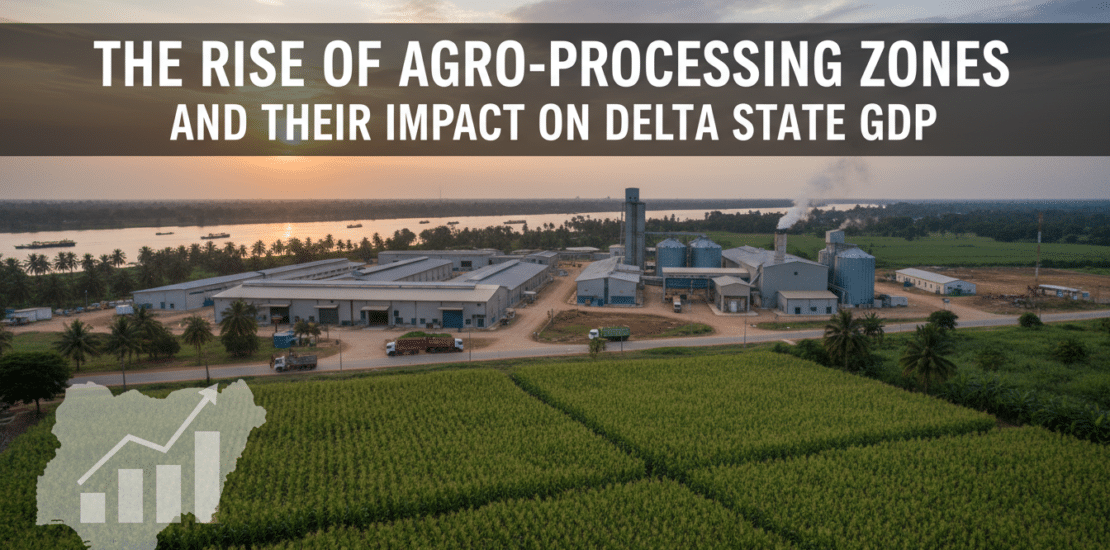
The Rise of Agro-Processing Zones and Their Impact on Delta State GDP
Delta State, situated in the oil-rich Niger Delta region of Nigeria, has historically been heavily reliant on crude oil production for its revenue generation. However, the inherent volatility of global oil prices, coupled with the environmental degradation associated with oil extraction, has underscored the urgent need for economic diversification. Agriculture, long identified as a sector with immense potential, is now at the forefront of the state’s diversification agenda, with agro-processing zones (APZs) emerging as a key strategy to unlock this potential and significantly impact Delta State’s Gross Domestic Product (GDP).
Understanding Agro-Processing Zones: A Catalyst for Agricultural Transformation
Agro-processing zones are designated geographical areas designed to promote the concentration of agro-industrial activities. These zones aim to facilitate the processing, packaging, storage, and marketing of agricultural produce. They achieve this by providing essential infrastructure, including access to reliable power, water, transportation networks, warehousing facilities, and quality control laboratories. In essence, APZs create an ecosystem where farmers, processors, marketers, and other stakeholders can collaborate and benefit from economies of scale, reduced transaction costs, and enhanced market access.
The rationale behind promoting APZs is multifaceted. Firstly, they address the pervasive problem of post-harvest losses, which is particularly acute in Nigeria. A significant portion of agricultural produce is lost due to inadequate storage facilities, poor transportation, and lack of processing capabilities. APZs, with their integrated infrastructure and processing facilities, can dramatically reduce these losses, ensuring that more produce reaches consumers and generating higher incomes for farmers. Secondly, APZs stimulate value addition. By processing raw agricultural commodities into finished or semi-finished goods, APZs increase the market value of agricultural produce, creating more jobs and boosting economic growth. For example, cassava, a staple crop in Delta State, can be processed into starch, flour, and other value-added products, generating significantly more revenue than selling it as raw cassava. Thirdly, APZs promote backward integration, encouraging farmers to adopt better agricultural practices and increase their productivity to meet the demand for raw materials from processing plants. This, in turn, leads to increased farm incomes and improved livelihoods for rural communities. Finally, APZs attract investment, both domestic and foreign, in the agricultural sector. The availability of infrastructure, access to markets, and a conducive business environment make APZs attractive locations for agro-processing companies, leading to job creation and economic growth.
Delta State’s Agricultural Landscape: Opportunities for APZ Development
Delta State possesses a favorable climate and abundant natural resources that make it ideally suited for agricultural production. The state is blessed with fertile land, ample rainfall, and a network of rivers and creeks that provide irrigation potential. Key agricultural commodities produced in Delta State include cassava, yam, plantain, rice, maize, palm oil, rubber, and fish. These commodities offer significant opportunities for processing and value addition.
Despite its agricultural potential, Delta State’s agricultural sector faces numerous challenges, including:
- Low Productivity: Farmers often lack access to improved seeds, fertilizers, and modern farming techniques, resulting in low yields.
- Inadequate Infrastructure: The lack of reliable power, water, and transportation infrastructure hinders agricultural production and processing.
- Limited Access to Finance: Farmers and agro-processors often struggle to access the credit needed to invest in their businesses.
- Poor Market Access: Farmers often lack access to organized markets and struggle to sell their produce at fair prices.
- Post-Harvest Losses: As mentioned earlier, post-harvest losses are a significant problem, reducing farm incomes and hindering agricultural development.
APZs can play a crucial role in addressing these challenges and unlocking Delta State’s agricultural potential. By providing essential infrastructure, facilitating access to finance, and connecting farmers to markets, APZs can transform the agricultural sector and contribute significantly to the state’s GDP.
The Impact of APZs on Delta State GDP: A Multi-faceted Analysis
The establishment and successful operation of APZs in Delta State can have a profound and multi-faceted impact on the state’s GDP. The impact can be analyzed through several key channels:
-
Increased Agricultural Production: APZs can stimulate increased agricultural production by providing farmers with access to improved inputs, technology, and extension services. The guaranteed demand for raw materials from processing plants within the APZs encourages farmers to increase their output and adopt more efficient farming practices. As agricultural production increases, so does the contribution of the agricultural sector to the state’s GDP.
-
Value Addition and Diversification: The primary function of APZs is to facilitate value addition to agricultural commodities. By processing raw agricultural produce into finished or semi-finished goods, APZs increase the market value of agricultural products. This value addition translates into increased revenue for agro-processors and contributes to the diversification of the state’s economy. For example, instead of exporting raw palm oil, Delta State can process it into various products like cooking oil, margarine, and soap within the APZs, thereby increasing its export value and boosting its GDP.
-
Job Creation: APZs create employment opportunities across the agricultural value chain, from farm to market. They generate jobs in farming, processing, packaging, storage, transportation, marketing, and other related activities. The creation of these jobs helps to reduce unemployment and poverty, contributing to the overall economic well-being of the state. Moreover, these jobs offer diversification from the petroleum sector, providing alternative livelihoods for many.
-
Increased Investment: APZs attract both domestic and foreign investment in the agricultural sector. The availability of infrastructure, access to markets, and a conducive business environment make APZs attractive locations for agro-processing companies. This influx of investment boosts economic growth and creates new opportunities for businesses and entrepreneurs.
-
Export Promotion: APZs can promote the export of processed agricultural products, increasing the state’s foreign exchange earnings. By meeting international quality standards and packaging requirements, APZs can enable Delta State to compete in the global market for agricultural products. This increased export revenue contributes to the state’s GDP and helps to diversify its economy.
-
Reduced Post-Harvest Losses: As highlighted earlier, APZs can significantly reduce post-harvest losses by providing adequate storage facilities, processing capabilities, and efficient transportation networks. Reducing these losses translates into increased availability of food, higher incomes for farmers, and a more efficient agricultural sector. This efficiency improvement directly contributes to the GDP by minimizing waste and maximizing the economic potential of agricultural produce.
- Stimulation of Related Industries: The development of APZs can stimulate the growth of related industries, such as packaging, machinery manufacturing, and transportation. These industries provide inputs and services to the agro-processing sector, creating additional jobs and contributing to the overall economic development of the state.
To accurately quantify the impact of APZs on Delta State’s GDP, a comprehensive economic analysis would be required, taking into account factors such as the size and scale of the APZs, the types of agricultural commodities processed, the level of investment, and the efficiency of operations. However, even without precise figures, it is clear that APZs have the potential to significantly boost Delta State’s GDP and transform its economy.
Challenges and Strategies for Successful APZ Development in Delta State
While APZs offer significant potential for economic development, their successful implementation requires careful planning and execution. Delta State faces several challenges in developing and operating APZs, including:
-
Land Acquisition: Securing suitable land for APZ development can be challenging due to land ownership issues and community resistance. Transparent and participatory land acquisition processes are essential to ensure that local communities are involved and benefit from the development of APZs.
-
Infrastructure Deficiencies: Delta State, like many other states in Nigeria, suffers from infrastructure deficits, including inadequate power supply, water infrastructure, and transportation networks. Addressing these deficiencies is crucial for the successful operation of APZs. Public-private partnerships can be used to leverage private sector expertise and investment in infrastructure development.
-
Access to Finance: Farmers and agro-processors often struggle to access the credit needed to invest in their businesses. The government can play a role in facilitating access to finance through the provision of credit guarantees, subsidized interest rates, and other financial support programs. Collaboration with financial institutions is key to ensuring that adequate financing is available for APZ development.
-
Skills Gap: The agricultural sector in Delta State faces a skills gap, particularly in areas such as processing, packaging, and marketing. Investing in training and education programs to develop the skills needed by the agro-processing sector is essential. Partnerships with universities, technical colleges, and vocational training centers can help to address this skills gap.
- Policy and Regulatory Environment: A conducive policy and regulatory environment is essential for attracting investment and promoting the growth of APZs. The government needs to streamline regulatory processes, reduce bureaucratic hurdles, and create a stable and predictable investment climate.
To overcome these challenges and ensure the successful development of APZs in Delta State, the government should adopt a comprehensive and integrated approach that includes the following strategies:
-
Develop a clear and comprehensive APZ development plan: The plan should identify priority agricultural commodities, suitable locations for APZs, and the infrastructure and services required to support their development. The plan should also include clear targets and indicators for measuring the impact of APZs on the state’s GDP and overall economic development.
-
Promote public-private partnerships (PPPs): PPPs can be used to leverage private sector expertise and investment in the development and operation of APZs. The government should create a conducive environment for PPPs by providing clear and transparent guidelines, offering attractive incentives, and ensuring that projects are well-structured and financially viable.
-
Facilitate access to finance for farmers and agro-processors: The government should work with financial institutions to provide access to credit for farmers and agro-processors. This can be achieved through the provision of credit guarantees, subsidized interest rates, and other financial support programs.
-
Invest in infrastructure development: The government should prioritize investments in infrastructure development, including power supply, water infrastructure, and transportation networks. This is essential for creating a conducive environment for agro-processing activities.
-
Strengthen agricultural extension services: Agricultural extension services play a crucial role in providing farmers with access to information, technology, and best practices. The government should invest in strengthening agricultural extension services and ensuring that they are accessible to all farmers, particularly those located in rural areas.
-
Promote market access for processed agricultural products: The government should work to promote market access for processed agricultural products, both domestically and internationally. This can be achieved through the development of marketing infrastructure, the promotion of quality standards, and the negotiation of trade agreements.
- Ensure environmental sustainability: The development of APZs should be environmentally sustainable, minimizing the impact on the environment and protecting natural resources. Environmental impact assessments should be conducted for all APZ projects, and mitigation measures should be implemented to minimize environmental damage.
By addressing these challenges and implementing these strategies, Delta State can unlock the full potential of APZs and transform its agricultural sector into a major driver of economic growth and development. The resulting increase in agricultural production, value addition, job creation, and investment will contribute significantly to the state’s GDP, diversifying its economy and reducing its reliance on crude oil. The APZs will also contribute to improving the livelihoods of rural communities and promoting sustainable agricultural development.


