

Capitalizing on the cassava processing boom in the Delta agricultural belt
- Posted by: PSL
- Categories: BRICS News, Financial Management, Human Resources and Talent Management, International Business and Market Entry, Marketing and Sales, News Blog, Operations and Process Improvement, Organizational Development, Risk Management and Compliance, Strategy and Planning, Technology and Digital Transformation
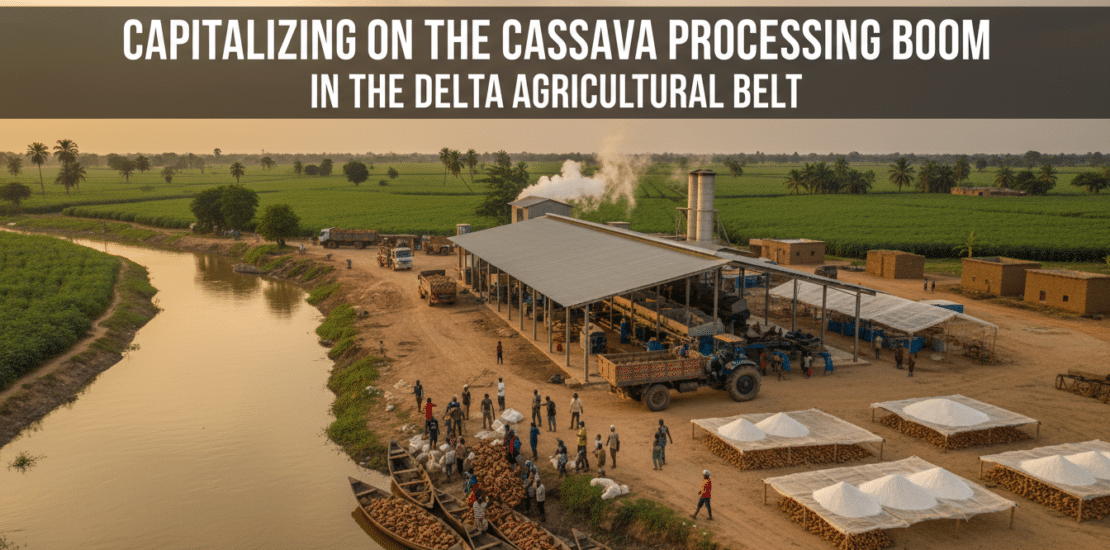
Capitalizing on the Cassava Processing Boom in the Delta Agricultural Belt: Transforming Farms and Fortifying Futures
The Delta agricultural belt, encompassing states like Delta, Edo, Anambra, and parts of Rivers and Bayelsa in Nigeria, possesses a fertile landscape and a history steeped in agricultural production. For generations, cassava has been a staple crop, cultivated primarily for subsistence. However, a burgeoning cassava processing boom is rapidly reshaping the agricultural landscape, offering unprecedented opportunities for farmers, entrepreneurs, and the regional economy as a whole. This article delves into the driving forces behind this boom, explores the multifaceted opportunities it presents, and outlines the strategies necessary to capitalize on its potential, ensuring sustainable growth and prosperity for the Delta agricultural belt.
Understanding the Cassava Revolution: Drivers and Dynamics
The cassava processing boom in the Delta region is not an isolated phenomenon but rather the convergence of several key factors:
-
Rising Demand for Cassava Products: Globally and locally, the demand for cassava-based products is soaring. This surge is fueled by various sectors. In the food industry, cassava flour is increasingly used as a gluten-free alternative to wheat, particularly among health-conscious consumers. Starch, derived from cassava, is a critical ingredient in textiles, paper, adhesives, and the pharmaceutical industry. Furthermore, industrial-grade cassava chips and pellets are utilized in animal feed, particularly for livestock farming. Finally, there is a burgeoning demand for ethanol produced from cassava, driven by the need for biofuel alternatives.
-
Government Initiatives and Policies: The Nigerian government has recognized cassava as a key crop for achieving food security, promoting industrialization, and diversifying the economy. Government policies have been instrumental in fostering the cassava processing boom. These include:
- Cassava Bread Policy: Mandating a percentage of cassava flour in bread production to reduce wheat imports and stimulate local cassava production.
- Agricultural Transformation Agenda (ATA): Promoting cassava value chain development through improved farming practices, access to finance, and market linkages.
- Anchor Borrowers’ Programme (ABP): Providing subsidized loans to cassava farmers and processors to increase production and processing capacity.
- Research and Development: Investing in research institutions to develop improved cassava varieties, processing technologies, and value-added products.
-
Technological Advancements: Improved cassava varieties with higher yields, disease resistance, and better processing qualities have been developed through research. Furthermore, advancements in processing technologies have made cassava processing more efficient, cost-effective, and scalable. These advancements include:
- Automated Cassava Processing Machines: Reducing labor costs and increasing processing capacity.
- Mobile Cassava Processing Units: Enabling processing in remote areas and reducing transportation costs.
- Energy-Efficient Processing Methods: Minimizing environmental impact and reducing operational expenses.
-
Increased Private Sector Investment: The rising demand and favorable government policies have attracted significant private sector investment in cassava processing. Several large-scale cassava processing plants have been established in the Delta region, creating employment opportunities and stimulating economic growth. These investments have also spurred the development of ancillary industries, such as packaging, transportation, and logistics.
- Strategic Location and Infrastructure Development: The Delta region benefits from its strategic location, with access to major seaports and a network of roads and waterways. Ongoing infrastructure development projects, such as road construction and the rehabilitation of seaports, are further enhancing the region’s competitiveness as a cassava processing hub.
Unlocking the Potential: Opportunities Across the Cassava Value Chain
The cassava processing boom presents a myriad of opportunities for various stakeholders across the value chain:
-
For Cassava Farmers:
- Increased Income: The rising demand for cassava translates into higher prices for farmers, leading to increased income and improved livelihoods.
- Access to Markets: Cassava processing plants provide a guaranteed market for farmers, reducing the risk of post-harvest losses and ensuring a stable income stream.
- Improved Farming Practices: Access to training, extension services, and improved cassava varieties enables farmers to adopt best practices, increasing yields and productivity.
- Access to Finance: Government programs and private sector initiatives provide access to credit and other financial services, enabling farmers to expand their operations and invest in improved inputs.
- Diversification of Income Streams: Farmers can diversify their income streams by engaging in cassava processing or producing cassava-based products on a small scale.
-
For Entrepreneurs and Processors:
- Investment Opportunities: The cassava processing boom offers attractive investment opportunities in various areas, including cassava flour production, starch manufacturing, ethanol production, and animal feed production.
- Value Addition: Processing cassava into value-added products increases its market value and profitability.
- Export Potential: Processed cassava products, such as starch and flour, have significant export potential, generating foreign exchange earnings.
- Employment Creation: Cassava processing plants create employment opportunities for skilled and unskilled labor, contributing to poverty reduction and economic development.
- Innovation and Technology Adoption: The cassava processing boom encourages innovation and the adoption of new technologies, leading to increased efficiency and competitiveness.
- For the Regional Economy:
- Economic Growth: The cassava processing boom stimulates economic growth by creating jobs, increasing income, and attracting investment.
- Diversification of the Economy: The cassava processing sector reduces the region’s reliance on oil revenues and promotes diversification of the economy.
- Rural Development: The cassava processing boom promotes rural development by creating economic opportunities in rural areas and reducing rural-urban migration.
- Food Security: Increased cassava production contributes to food security by providing a readily available and affordable source of food.
- Environmental Sustainability: Sustainable cassava farming practices, such as crop rotation and conservation tillage, can help to protect the environment and promote biodiversity.
Strategies for Capitalizing on the Boom: A Multi-pronged Approach
To fully capitalize on the cassava processing boom and ensure its sustainable growth, a multi-pronged approach involving various stakeholders is essential:
-
Strengthening the Cassava Value Chain:
- Improved Cassava Farming Practices: Promoting the adoption of improved cassava varieties, appropriate fertilizer application, pest and disease management, and efficient harvesting techniques. This can be achieved through targeted extension services, farmer training programs, and access to quality inputs.
- Access to Finance: Providing farmers and processors with access to affordable credit, grants, and other financial services. This can be achieved through government-supported lending programs, private sector investment, and microfinance initiatives.
- Market Linkages: Facilitating linkages between farmers, processors, and buyers through market information systems, contract farming arrangements, and trade fairs. This ensures a stable market for cassava and reduces post-harvest losses.
- Infrastructure Development: Investing in infrastructure, such as roads, storage facilities, and processing equipment, to reduce transportation costs and improve efficiency. This requires government investment in infrastructure development and private sector participation in infrastructure financing.
-
Promoting Value Addition and Diversification:
- Research and Development: Investing in research and development to develop new cassava-based products and improve existing processing technologies. This requires collaboration between research institutions, universities, and the private sector.
- Product Development: Supporting entrepreneurs and processors in developing new cassava-based products, such as cassava flour blends, starch derivatives, and ethanol. This can be achieved through product development workshops, business incubation programs, and access to market research.
- Market Promotion: Promoting the consumption of cassava-based products through awareness campaigns, product branding, and participation in trade fairs. This requires collaboration between government agencies, industry associations, and the private sector.
- Export Promotion: Facilitating the export of cassava-based products by providing export financing, market information, and trade facilitation services. This requires government support for export promotion and collaboration with international trade organizations.
-
Ensuring Sustainable Cassava Production:
- Environmental Protection: Promoting sustainable cassava farming practices that minimize environmental impact, such as crop rotation, conservation tillage, and integrated pest management. This requires farmer training, access to environmentally friendly inputs, and enforcement of environmental regulations.
- Climate Change Adaptation: Developing and promoting cassava varieties that are resistant to drought, floods, and other climate change impacts. This requires investment in climate-smart agriculture research and development.
- Land Use Planning: Implementing effective land use planning policies to prevent deforestation and land degradation. This requires collaboration between government agencies, community leaders, and land owners.
- Community Engagement: Engaging local communities in cassava production and processing activities to ensure that they benefit from the boom and participate in sustainable development. This requires community consultations, benefit-sharing agreements, and local empowerment initiatives.
-
Building Capacity and Skills:
- Training and Education: Providing training and education to farmers, processors, and entrepreneurs on improved cassava farming practices, processing technologies, and business management skills. This requires collaboration between training institutions, universities, and the private sector.
- Technical Assistance: Providing technical assistance to cassava farmers and processors on equipment maintenance, quality control, and marketing. This requires the establishment of technical assistance centers and the deployment of qualified extension officers.
- Entrepreneurship Development: Supporting the development of small and medium-sized enterprises (SMEs) in the cassava processing sector through business incubation programs, access to finance, and mentorship. This requires collaboration between government agencies, private sector organizations, and non-governmental organizations.
- Creating a Conducive Business Environment:
- Policy Reforms: Implementing policy reforms to reduce bureaucracy, streamline regulations, and improve the ease of doing business in the cassava processing sector. This requires collaboration between government agencies, industry associations, and the private sector.
- Investment Incentives: Providing investment incentives, such as tax breaks and subsidies, to attract private sector investment in cassava processing. This requires government commitment to promoting investment in the cassava processing sector.
- Infrastructure Development: Investing in infrastructure, such as roads, power supply, and telecommunications, to improve the business environment and reduce operational costs. This requires government investment in infrastructure development and private sector participation in infrastructure financing.
- Security and Stability: Ensuring security and stability in the Delta region to create a conducive environment for investment and business growth. This requires government efforts to address security challenges and promote peace and stability.
By implementing these strategies, the Delta agricultural belt can fully capitalize on the cassava processing boom, transforming farms, fortifying futures, and ensuring sustainable growth and prosperity for the region. The opportunity is ripe, the potential is immense, and with concerted effort and strategic planning, the Delta region can become a leading cassava processing hub in Africa and beyond.
Related Posts
 Investing in Nigerian Cassava Processing for High Returns
 From Cassava to Exports How Delta State is Supporting Agro-Industrialists
 Asabaʼs Real Estate Boom Why Smart Investors Are Looking at Delta
 Why diaspora Nigerians are returning to Delta State for large scale real estate
 The rise of agro-processing zones and their impact on Delta State GDP
 Leveraging Deltaʼs Coastal Location for Export-Led Agro Processing
 Unlocking the Agricultural Value Chain Through PPPs in Delta State
 Scaling data center capacity to meet the surging digital demand in Delta state Nigeria