

From Cassava to Exports How Delta State is Supporting Agro-Industrialists
- Posted by: PSL
- Categories: BRICS News, Financial Management, Human Resources and Talent Management, International Business and Market Entry, Marketing and Sales, News Blog, Operations and Process Improvement, Organizational Development, Risk Management and Compliance, Strategy and Planning, Technology and Digital Transformation
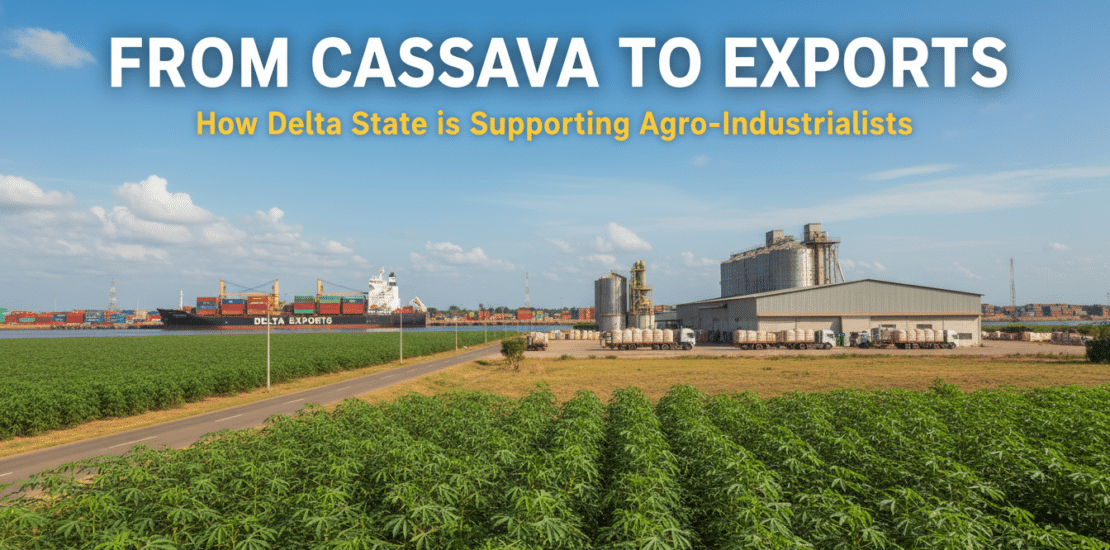
From Cassava to Exports: How Delta State is Supporting Agro-Industrialists
Delta State, nestled in the oil-rich Niger Delta region of Nigeria, is increasingly recognized for its ambitions beyond hydrocarbons. Recognizing the need for diversification and sustainable economic growth, the state government has strategically focused on agriculture, particularly cassava processing, to empower local agro-industrialists and unlock the potential for export markets. This shift represents not just a departure from the traditional reliance on oil revenue, but a significant investment in the future prosperity of its citizens, built on the fertile land and entrepreneurial spirit of the Delta region.
The journey from cassava cultivation to the export of processed products is a complex one, fraught with challenges ranging from inefficient farming practices and inadequate infrastructure to limited access to finance and a lack of market linkages. The Delta State government, under the leadership of Governor Sheriff Oborevwori, is actively addressing these hurdles through a multifaceted approach that encompasses farmer support programs, infrastructural development, investment incentives, and strategic partnerships. This proactive stance is transforming the cassava value chain, turning what was once primarily a subsistence crop into a significant driver of economic growth and job creation.
Boosting Cassava Production: The Foundation of the Agro-Industrial Revolution
The foundation of Delta State’s agro-industrial ambitions lies in bolstering cassava production. Cassava, a root vegetable renowned for its hardiness and adaptability, is a staple food for millions of Nigerians and offers immense potential for diverse industrial applications. However, traditional farming practices often yield low outputs and limit the overall efficiency of the value chain.
The Delta State government is tackling this issue head-on through several key initiatives. These include:
-
Provision of Improved Cassava Varieties: The government, in collaboration with agricultural research institutes, distributes high-yielding and disease-resistant cassava varieties to farmers at subsidized rates. These varieties, specifically bred for the Delta climate and soil conditions, significantly increase crop yields and enhance farmer profitability. Training programs are also conducted to educate farmers on the best practices for cultivating these improved varieties.
-
Agricultural Extension Services: A network of agricultural extension officers is deployed across the state to provide farmers with technical assistance and guidance. These officers offer advice on soil management, pest control, fertilizer application, and harvesting techniques. They also serve as a vital link between farmers and the latest agricultural research and innovations.
-
Land Preparation and Mechanization Support: Recognizing the labor-intensive nature of traditional cassava farming, the government is promoting the adoption of mechanized farming techniques. This includes providing access to tractors, planters, and harvesters through subsidized rental schemes and facilitating the establishment of cooperative farming groups that can pool resources to invest in mechanization. In some areas, the government assists with land clearing and preparation, making it easier for farmers to cultivate larger plots of land.
-
Access to Finance: Lack of access to finance is a major impediment to agricultural development in Nigeria. To address this, the Delta State government has partnered with commercial banks and microfinance institutions to provide farmers with access to affordable credit. These loans can be used to purchase inputs, invest in mechanization, and expand their farming operations. The government often provides guarantees or interest rate subsidies to encourage financial institutions to lend to farmers.
- Farmers Cooperatives and Associations: The government actively encourages the formation of farmers’ cooperatives and associations. These groups provide a platform for farmers to collectively bargain for better prices, access inputs at lower costs, and share knowledge and resources. They also facilitate the implementation of government programs and ensure that support reaches the intended beneficiaries.
These initiatives are not simply about increasing cassava production; they are about empowering farmers to become more efficient, profitable, and resilient. By providing them with the tools and knowledge they need to succeed, the Delta State government is laying the groundwork for a thriving agro-industrial sector.
Developing Processing Capacity: Value Addition and Job Creation
While boosting cassava production is crucial, the real economic potential lies in processing the raw cassava into value-added products. This involves establishing processing plants that can convert cassava into various forms, such as cassava flour, starch, ethanol, and other industrial products. These processed products can then be used in a wide range of industries, including food and beverage, pharmaceuticals, textiles, and paper manufacturing.
The Delta State government recognizes the importance of developing processing capacity and is actively incentivizing private sector investment in this area. Key initiatives include:
-
Industrial Parks and Clusters: The government is establishing industrial parks and clusters specifically designed to attract agro-processing businesses. These parks provide access to essential infrastructure, such as electricity, water, and transportation, as well as shared services, such as warehousing and logistics. The clustering of businesses also fosters collaboration and knowledge sharing, leading to greater efficiency and innovation.
-
Investment Incentives: The government offers a range of investment incentives to attract agro-processing businesses to Delta State. These incentives may include tax breaks, land subsidies, and preferential access to government contracts. The specific incentives offered depend on the size and type of investment.
-
Technical Training and Skills Development: The government is investing in technical training and skills development programs to ensure that there is a skilled workforce available to operate and maintain the processing plants. These programs are designed to equip young people with the technical skills needed to succeed in the agro-processing sector. The government is partnering with technical colleges and vocational training centers to deliver these programs.
-
Support for Small and Medium Enterprises (SMEs): Recognizing that SMEs play a vital role in the agro-processing sector, the government provides a range of support services to these businesses. This includes access to business development training, mentorship programs, and financial assistance. The government also helps SMEs to access markets and connect with potential buyers.
- Encouraging Private Sector Participation: The government is actively seeking private sector participation in the development of the agro-processing sector. This includes partnering with private companies to establish and operate processing plants, as well as providing support to private investors who are interested in investing in the sector. The government believes that private sector participation is essential to ensure the long-term sustainability of the sector.
By creating a favorable investment climate and providing targeted support to businesses, the Delta State government is attracting significant private sector investment in the agro-processing sector. This investment is leading to the establishment of new processing plants, the creation of jobs, and the generation of economic growth.
Enhancing Market Access: Connecting Producers to Consumers
The final piece of the puzzle is connecting producers to consumers and ensuring that processed cassava products can reach both domestic and international markets. This requires addressing issues such as transportation, storage, quality control, and market information.
The Delta State government is working to enhance market access through the following initiatives:
-
Infrastructure Development: The government is investing in infrastructure development to improve transportation and storage facilities. This includes upgrading roads and bridges, building new storage facilities, and improving port infrastructure. These investments will reduce transportation costs, minimize post-harvest losses, and facilitate the movement of goods to market.
-
Quality Control and Certification: The government is working to ensure that processed cassava products meet international quality standards. This includes establishing quality control laboratories, providing training on quality management systems, and assisting businesses to obtain certifications such as ISO and HACCP. Meeting these standards is essential for accessing export markets.
-
Market Information and Linkages: The government is providing market information to farmers and processors, helping them to understand market trends, identify potential buyers, and negotiate fair prices. The government is also facilitating linkages between producers and consumers, connecting farmers with processors and processors with buyers. This includes organizing trade fairs and exhibitions, as well as supporting the development of online marketplaces.
-
Export Promotion: The government is actively promoting the export of processed cassava products. This includes participating in international trade fairs, organizing trade missions, and providing export financing to businesses. The government is also working to negotiate trade agreements that will reduce barriers to trade and facilitate the export of Delta State products.
- Branding and Packaging: The government is encouraging businesses to develop strong brands and attractive packaging for their products. This will help to differentiate Delta State products from those of competitors and increase their appeal to consumers. The government is providing support to businesses to develop their branding and packaging strategies.
By addressing these market access challenges, the Delta State government is creating opportunities for local agro-industrialists to expand their businesses, increase their profits, and contribute to the economic growth of the state.
Challenges and the Path Forward
While Delta State has made significant strides in supporting agro-industrialists, challenges remain. Some of the key challenges include:
-
Inadequate Infrastructure: Despite government efforts, infrastructure gaps still exist, particularly in rural areas. Poor road networks and unreliable electricity supply continue to hinder the efficient operation of agro-processing businesses.
-
Access to Finance: While access to finance has improved, many small-scale farmers and processors still struggle to obtain affordable credit.
-
Technical Skills Gap: There is a need for more skilled workers in the agro-processing sector, particularly in areas such as machinery maintenance, quality control, and marketing.
- Climate Change: Climate change poses a significant threat to agricultural production, with increasing temperatures, unpredictable rainfall patterns, and more frequent droughts impacting crop yields.
To overcome these challenges, the Delta State government needs to continue to invest in infrastructure, improve access to finance, expand technical training programs, and develop strategies to mitigate the impacts of climate change.
Furthermore, collaboration with other states and the federal government is crucial to address broader issues such as trade barriers and export regulations. The government should also continue to engage with the private sector, listening to their needs and providing support to help them overcome challenges.
Conclusion:
Delta State’s commitment to supporting agro-industrialists is transforming the state’s economy and creating new opportunities for its citizens. By focusing on cassava processing and addressing the challenges facing the sector, the government is laying the groundwork for a sustainable and prosperous future. The journey from cassava to exports is a long and complex one, but with continued investment, strategic partnerships, and a focus on innovation, Delta State is well-positioned to become a major player in the global agro-processing market. The focus on agriculture represents a powerful step towards diversification and a more resilient economy for the state.