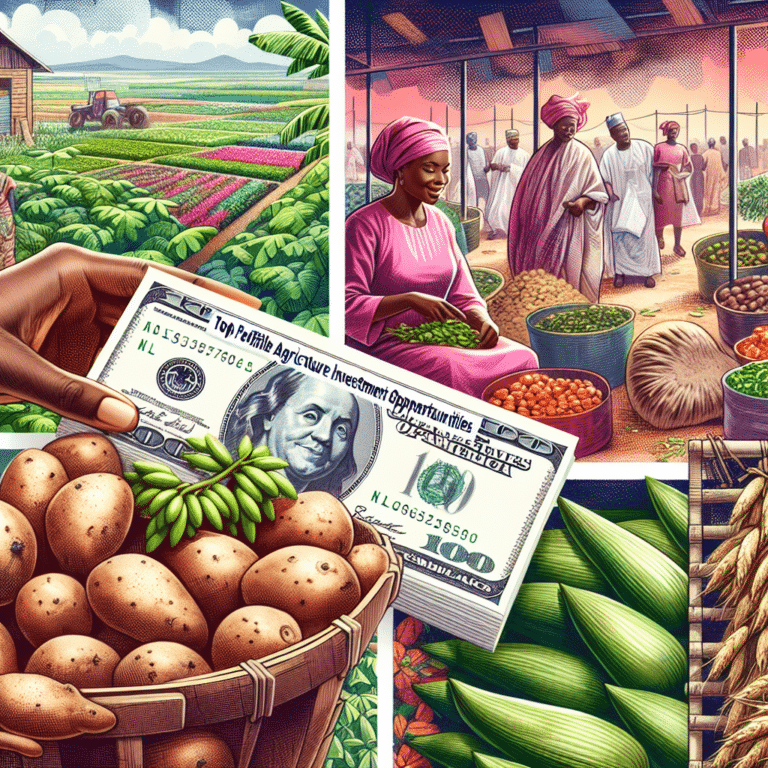
Integrated Agribusiness Solutions Nigeria Growth
- Posted by: PSL
- Categories: BRICS News, Financial Management, International Business and Market Entry, News Blog

Introduction to Agribusiness in Nigeria
Agribusiness is a critical sector in Nigeria, contributing significantly to the nation’s GDP, employment, and food security. With over 70% of Nigeria’s population engaged in agriculture, integrated agribusiness solutions emerge as a central approach to enhance productivity, sustainability, and profitability within the agricultural landscape. The growth of these solutions transforms the way agricultural products are produced, processed, and marketed, considering the challenges faced by farmers and agribusiness stakeholders alike.
The Current State of Agriculture in Nigeria
Over the past few decades, Nigeria has witnessed a blend of traditional farming practices alongside increasing modern agricultural techniques. While the country is rich in arable land and diverse climatic zones suitable for various crops, numerous challenges plague the agricultural sector:
-
Infrastructural Deficiencies: Poor road networks, insufficient storage facilities, and inadequate transportation systems impede the distribution of agricultural goods.
-
Access to Finance: Farmers often face difficulties accessing credit facilities, limiting their capacity to invest in advanced farming technologies and inputs.
-
Land Tenure Issues: Unclear land ownership and disputes can deter investment in land improvements and crop production.
-
Market Access: Smallholder farmers struggle to find consistent markets for their products, often selling at lower prices due to lack of information and marketing strategies.
These challenges emphasize the need for integrated agribusiness solutions that bridge gaps, enhance collaboration, and provide comprehensive support to agricultural stakeholders.
What Are Integrated Agribusiness Solutions?
Integrated agribusiness solutions encompass a holistic approach to agriculture, combining various elements from production to processing and marketing. It aims to create synergistic networks among producers, suppliers, processors, distributors, and consumers. Key components of these solutions include:
1. Value Chain Development
Value chain development emphasizes connecting different stages of production and marketing to optimize resource utilization. By enhancing collaboration among stakeholders, it fosters transparency and efficiency. Integrated solutions streamline the supply of inputs, improve logistics in distribution, and ensure that farmers receive fair prices for their products.
2. Technology Adoption
Modern technologies play a crucial role in facilitating integrated agribusiness solutions. From precision agriculture to digital platforms, technology can enhance productivity, sustainability, and profitability. Examples include:
- Mobile Apps: Platforms that provide farmers with real-time market information, agricultural best practices, and access to financial services.
- Automated Irrigation Systems: Technologies that reduce water usage and crop loss by allowing for real-time assessment of crop needs.
- Drones and IoT: Innovations that aid in crop monitoring, pest detection, and yield estimation.
3. Financial Inclusion
Access to finance is vital for the growth of agribusinesses. Integrated solutions often include financial institutions that offer tailored products specifically for farmers. Collaborative financial models enable farmers to gain access to credit, insurance, and investment opportunities, thus ensuring that they can invest in their operations and increase productivity.
4. Sustainable Practices
Sustainability is at the core of integrated agribusiness solutions. Promoting practices that are environmentally friendly not only benefitting the ecosystem but also aligns with the growing consumer demand for sustainably sourced products. This includes organic farming, agroecology, and conservation practices that help enhance soil health and biodiversity.
Growth Drivers of Integrated Agribusiness Solutions in Nigeria
Several key factors have contributed to the growth of integrated agribusiness solutions in Nigeria:
1. Government Initiatives
The Nigerian government has recognized agriculture as a priority sector for development. Initiatives such as the Agricultural Promotion Policy, anchored on the drive for self-sufficiency, promote integrated agribusiness solutions. Programs aimed at improving rural infrastructure, providing subsidies, and investing in research and development encourage the adoption of modern agricultural practices.
2. Private Sector Engagement
The involvement of private sector players, including multinational corporations and local startups, has fueled growth in the agribusiness sector. These players often bring in the necessary expertise, technology, and capital to drive innovation and enhance productivity. Partnerships with local farmers create mutually beneficial relationships, reducing risk and promoting sustainability.
3. Access to International Markets
Global trade agreements and the increasing demand for agricultural products abroad create opportunities for Nigerian agribusinesses to expand beyond local markets. The African Continental Free Trade Area (AfCFTA) offers a platform for enhanced trade relationships, promoting the establishment of integrated supply chains that benefit various stakeholders in the process.
4. Rising Consumer Demand
As Nigeria’s middle class grows, there is an increasing demand for diverse agricultural products. Consumers are becoming more conscious of quality and sustainability, pushing farmers and agribusinesses to adopt integrated approaches that meet these growing demands. Additionally, urbanization is spurring demand for processed and convenient food products, thus fostering initiatives in food processing and distribution networks.
5. Technology Growth
The proliferation of mobile technology and the internet has enabled greater connectivity among farmers, suppliers, and consumers. Digital solutions that allow farmers to access information, connect with buyers, and receive financial services are transforming agricultural practices. The rise of tech-driven platforms that enable e-commerce in agriculture showcases the potential for integrated solutions to redefine traditional practices.
Case Studies of Successful Integrated Agribusiness Solutions in Nigeria
Examining successful initiatives can provide insights into the potential of integrated agribusiness solutions in Nigeria:
1. Farmcrowdy
Farmcrowdy is Nigeria’s first digital agricultural platform that connects farmers with investors, allowing them to receive the capital necessary to farm. Investors can fund farms and receive returns on their investment based on yields. This model addresses financial inclusion while empowering farmers to access markets and technology.
2. AgroMall
AgroMall is an integrated agribusiness platform that provides farmers with inputs, training, and market access. Through a digital platform, AgroMall enables farmers to sell directly to consumers, thus increasing profits. The initiative promotes transparency within the supply chain, ensuring that farmers benefit fair prices for their produce.
3. Flour Mills of Nigeria
Flour Mills of Nigeria has embraced integrated agribusiness models by investing in local farmers and establishing a network that ensures a steady supply of raw materials. By providing technical assistance, financial support, and access to markets, they enhance productivity while maintaining quality in their supply chain.
4. E-Agri
E-Agri is a mobile application that provides farmers with real-time information regarding weather, pest control, and market prices. By facilitating communication and access to data, farmers can make informed decisions, thus improving productivity and outcomes.
5. Niji Farms
Niji Farms champions sustainability through integrated farming practices. They utilize crop rotations, cover cropping, and polyculture strategies to enhance soil health while providing produce to local markets. Their approach not only enhances farm productivity but also contributes positively to the environment.
Challenges Facing Integrated Agribusiness Solutions
Despite the growth potential, integrated agribusiness solutions in Nigeria face several challenges, including:
1. Infrastructural Barriers
Poor infrastructure continues to hinder agricultural productivity and market access. Limited road networks and inadequate processing facilities contribute to post-harvest losses and inefficiencies within the supply chain.
2. Regulatory Bottlenecks
Navigating the regulatory environment can pose challenges for agribusinesses. Stringent regulations and bureaucracy may deter investment and slow down the pace of growth and innovation.
3. Skills Gaps
Many smallholder farmers lack training and knowledge of modern agricultural practices. Bridging this skills gap is crucial for the successful implementation of integrated agribusiness solutions.
4. Climate Change
Climate change poses a significant threat to agriculture, affecting crop yields and food security. It is essential for integrated agribusiness solutions to incorporate adaptive strategies that mitigate the impact of climate variability.
5. Competition
The agribusiness sector is competitive, and as more stakeholders recognize its potential, competition intensifies. For integrated solutions to succeed, businesses must continuously innovate and adapt to market dynamics.
The Future of Integrated Agribusiness Solutions in Nigeria
The future of integrated agribusiness solutions in Nigeria looks promising, driven by technological advancements, increased investment, and a growing recognition of the importance of agriculture for national development. Stakeholders must continue to collaborate across the value chain, advocate for supportive policies, and invest in sustainable practices that foster resilience and growth within the agricultural sector.
As the demand for food rises and global markets evolve, Nigeria’s integrated agribusinesses can position themselves to be leaders in providing quality agricultural products, contributing to food security, and promoting sustainable practices that benefit farmers and consumers alike.