
Building the future of cold chain logistics for Delta State perishables
- Posted by: PSL
- Categories: BRICS News, Financial Management, Human Resources and Talent Management, International Business and Market Entry, Marketing and Sales, News Blog, Operations and Process Improvement, Organizational Development, Risk Management and Compliance, Strategy and Planning, Technology and Digital Transformation
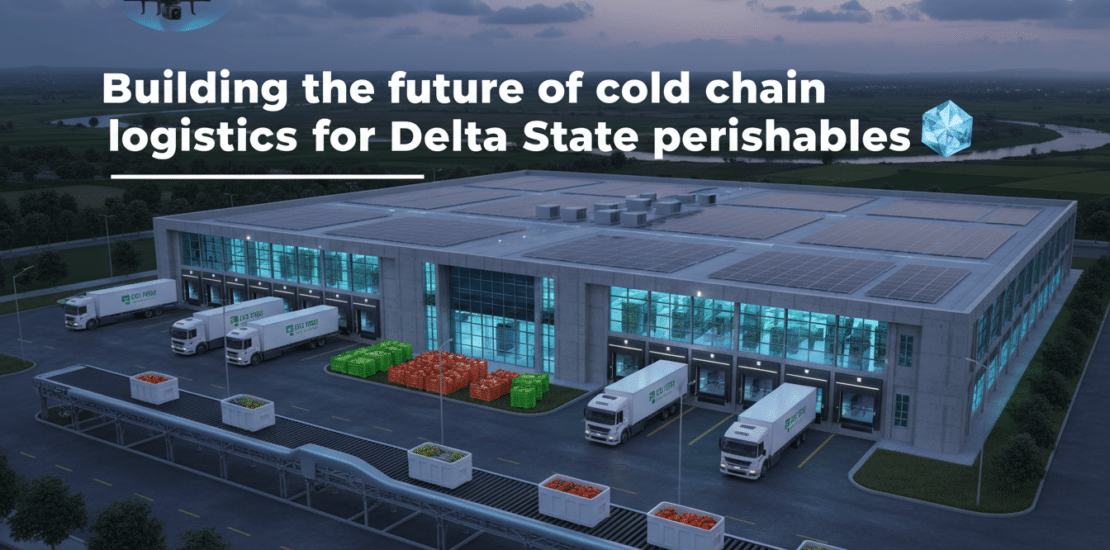
Building the Future of Cold Chain Logistics for Delta State Perishables
Delta State, Nigeria, is a land of agricultural bounty. Rich in fertile soil and blessed with a favourable climate, the state produces a diverse array of perishable goods, including fish, vegetables, fruits, and meat. From the bustling marketplaces of Warri and Asaba to the rural farming communities scattered across the state’s deltaic terrain, these perishable commodities form the backbone of local economies and contribute significantly to the livelihoods of countless individuals. However, the potential of Delta State’s perishable agriculture is currently hampered by inadequate cold chain logistics. This lack of infrastructure and processes to maintain temperature-controlled environments from production to consumption leads to significant post-harvest losses, reduced profitability for farmers, and ultimately, diminished food security for the state’s residents. Building a robust and efficient cold chain is therefore not just a matter of economic growth, but a critical imperative for sustainable development and improved quality of life.
The Current State: Challenges and Deficiencies
The current state of cold chain logistics in Delta State is characterized by a significant gap between supply and demand. While there is some awareness of the importance of refrigeration and temperature control, the practical implementation remains limited, particularly among smallholder farmers and in rural areas. The challenges are multifaceted and deeply ingrained in the existing agricultural value chain.
-
Limited Access to Cooling Infrastructure: One of the most pressing issues is the lack of adequate cold storage facilities at various points along the supply chain. Farms often lack even basic cooling solutions, forcing farmers to sell their produce immediately after harvest, often at depressed prices. Aggregation points, such as local markets, typically lack refrigerated storage, leading to rapid spoilage and waste. While larger processing facilities may have some cold storage capacity, these are often insufficient to handle the volume of perishable goods produced in the state, particularly during peak harvest seasons. The absence of refrigerated transport vehicles, such as insulated trucks with temperature control systems, further exacerbates the problem, exposing produce to detrimental temperature fluctuations during transportation.
-
Inadequate Power Supply: The unreliable power supply in Delta State poses a significant obstacle to effective cold chain management. Frequent power outages disrupt cooling systems, causing temperature fluctuations that can compromise the quality and safety of perishable goods. The reliance on generators as backup power sources is costly and unsustainable, adding to the already high operational expenses for businesses involved in the cold chain. The unpredictable nature of the power supply also makes it difficult to maintain consistent temperature control, increasing the risk of spoilage and waste.
-
Lack of Awareness and Training: A significant impediment to the adoption of cold chain technologies and practices is the lack of awareness and training among farmers, transporters, and market vendors. Many are unaware of the specific temperature requirements for different types of perishable goods or the potential benefits of cold storage and refrigerated transport. There is a need for comprehensive education programs to promote best practices in post-harvest handling, temperature management, and hygiene, ensuring that all stakeholders understand the importance of maintaining the cold chain.
-
High Cost of Technology and Operation: The initial investment in cold chain infrastructure and equipment can be prohibitively expensive for smallholder farmers and small-scale businesses. The cost of refrigeration units, insulated trucks, and temperature monitoring systems can be a significant barrier to entry. Furthermore, the operational costs, including electricity, fuel, and maintenance, can be substantial, making it difficult for businesses to sustain cold chain operations, particularly in the face of fluctuating market prices and inconsistent demand.
-
Poor Road Infrastructure: The poor condition of roads in many parts of Delta State hinders the efficient transportation of perishable goods. Rough roads can damage produce during transit, while traffic congestion can delay deliveries, leading to increased spoilage and reduced shelf life. Improved road infrastructure is essential for ensuring that perishable goods can reach markets and consumers quickly and efficiently.
-
Limited Access to Finance: Access to affordable financing is crucial for enabling farmers and businesses to invest in cold chain infrastructure and technologies. However, many smallholder farmers and small-scale enterprises struggle to secure loans from formal financial institutions due to lack of collateral, limited credit history, and perceived high risk. This lack of access to finance limits their ability to adopt cold chain solutions and improve their competitiveness.
- Weak Regulatory Framework: The absence of a comprehensive regulatory framework for cold chain logistics in Delta State further exacerbates the challenges. Clear standards for temperature control, hygiene, and food safety are needed to ensure the quality and safety of perishable goods. Effective enforcement mechanisms are also essential to prevent the sale of substandard or spoiled products and protect consumers.
Building a Sustainable Cold Chain: Strategies and Solutions
Addressing the challenges outlined above requires a multifaceted approach that involves collaboration between government, private sector, and civil society organizations. A comprehensive strategy for building a sustainable cold chain in Delta State must encompass the following key elements:
-
Investing in Cooling Infrastructure: Prioritizing investment in strategic cooling infrastructure is paramount. This includes establishing cold storage facilities at key production areas, aggregation points, and markets. Government can incentivize private sector investment in cold chain infrastructure through tax breaks, subsidies, and loan guarantees. Furthermore, exploring innovative and cost-effective cooling solutions, such as solar-powered refrigeration and evaporative cooling systems, can make cold storage more accessible to smallholder farmers and rural communities. The focus should be on establishing a network of strategically located cold storage facilities that can serve the needs of farmers and businesses across the state.
-
Promoting Energy Efficiency and Renewable Energy: Addressing the power supply challenge is crucial for the long-term sustainability of the cold chain. Investing in grid infrastructure improvements and promoting the use of renewable energy sources, such as solar and biomass, can reduce reliance on expensive and polluting generators. Government can offer incentives for businesses to adopt energy-efficient refrigeration technologies and implement energy management practices. Furthermore, exploring off-grid solar-powered refrigeration solutions can provide a reliable and affordable source of cooling for rural communities.
-
Enhancing Training and Capacity Building: Implementing comprehensive training programs for farmers, transporters, and market vendors is essential for promoting best practices in cold chain management. These programs should cover topics such as post-harvest handling, temperature management, hygiene, and food safety. Government and private sector organizations can collaborate to develop and deliver training programs that are tailored to the specific needs of different stakeholders. Furthermore, establishing demonstration farms and model cold storage facilities can provide practical learning opportunities and showcase the benefits of cold chain technologies.
-
Providing Access to Finance: Facilitating access to affordable financing for farmers and businesses is critical for enabling them to invest in cold chain infrastructure and technologies. Government can establish loan guarantee schemes and microfinance programs that target smallholder farmers and small-scale enterprises. Collaborating with commercial banks and development finance institutions to develop tailored loan products for cold chain investments can also increase access to finance. Furthermore, exploring innovative financing models, such as crowdfunding and cooperative financing, can provide alternative sources of funding for cold chain projects.
-
Improving Road Infrastructure: Investing in the rehabilitation and upgrading of road infrastructure is essential for ensuring the efficient transportation of perishable goods. Prioritizing road construction and maintenance in key agricultural areas can reduce transportation times, minimize damage to produce, and improve access to markets. Government can allocate funds specifically for road infrastructure projects in agricultural areas and collaborate with private sector partners to implement these projects. Furthermore, promoting the use of appropriate transport vehicles, such as insulated trucks with temperature control systems, can further reduce post-harvest losses.
-
Strengthening the Regulatory Framework: Developing and enforcing a comprehensive regulatory framework for cold chain logistics is crucial for ensuring the quality and safety of perishable goods. Government can establish clear standards for temperature control, hygiene, and food safety, and implement effective enforcement mechanisms to ensure compliance. Collaborating with industry stakeholders to develop and implement these standards can promote ownership and ensure that they are practical and effective. Furthermore, providing training and support to businesses to help them comply with regulatory requirements can further improve food safety and quality.
-
Promoting Public-Private Partnerships: Fostering public-private partnerships (PPPs) is essential for mobilizing resources and expertise to build a sustainable cold chain. Government can partner with private sector companies to develop and operate cold storage facilities, transportation networks, and other cold chain infrastructure. PPPs can leverage the private sector’s technical expertise, managerial skills, and financial resources to improve the efficiency and effectiveness of the cold chain. Furthermore, PPPs can create opportunities for knowledge transfer and capacity building, benefiting both government and private sector partners.
-
Adopting Technology and Innovation: Embracing technology and innovation is crucial for improving the efficiency and effectiveness of the cold chain. Utilizing mobile technology for real-time temperature monitoring, inventory management, and traceability can help reduce spoilage and improve supply chain visibility. Implementing blockchain technology can enhance transparency and accountability in the cold chain, ensuring the authenticity and safety of perishable goods. Furthermore, exploring the use of artificial intelligence and machine learning can optimize cold chain operations and improve decision-making.
- Promoting Sustainable Packaging: Encouraging the use of sustainable packaging materials can reduce waste and minimize the environmental impact of the cold chain. Promoting the use of biodegradable and compostable packaging materials can reduce reliance on plastic packaging and promote a circular economy. Furthermore, providing incentives for businesses to adopt sustainable packaging practices can further accelerate the transition to a more environmentally friendly cold chain.
The Impact of a Robust Cold Chain:
The successful implementation of a robust cold chain in Delta State will have a transformative impact on the agricultural sector and the overall economy.
-
Reduced Post-Harvest Losses: A well-functioning cold chain will significantly reduce post-harvest losses, increasing the availability of perishable goods and improving food security. This will benefit both farmers and consumers, leading to higher incomes for farmers and lower prices for consumers.
-
Improved Quality and Safety: A cold chain will ensure that perishable goods are stored and transported under optimal temperature conditions, preserving their quality and safety. This will enhance consumer confidence and increase demand for locally produced goods.
-
Increased Market Access: A cold chain will enable farmers to access wider markets, both domestically and internationally. This will create new opportunities for farmers to increase their incomes and diversify their markets.
-
Enhanced Competitiveness: A cold chain will improve the competitiveness of Delta State’s agricultural sector, making it more attractive to investors and creating new jobs.
- Sustainable Development: A cold chain will contribute to sustainable development by reducing food waste, promoting energy efficiency, and minimizing the environmental impact of agricultural production.
Building the future of cold chain logistics in Delta State is a complex but achievable goal. By implementing the strategies and solutions outlined above, the state can unlock the full potential of its perishable agriculture, improve food security, and create a more prosperous and sustainable future for its citizens. The key lies in a concerted effort from all stakeholders, driven by a shared vision of a thriving agricultural sector underpinned by a robust and efficient cold chain.