

Capitalizing on the gas-to-industry revolution across the Agbara industrial estate
- Posted by: PSL
- Categories: BRICS News, Financial Management, Human Resources and Talent Management, International Business and Market Entry, Marketing and Sales, News Blog, Operations and Process Improvement, Organizational Development, Risk Management and Compliance, Strategy and Planning, Technology and Digital Transformation
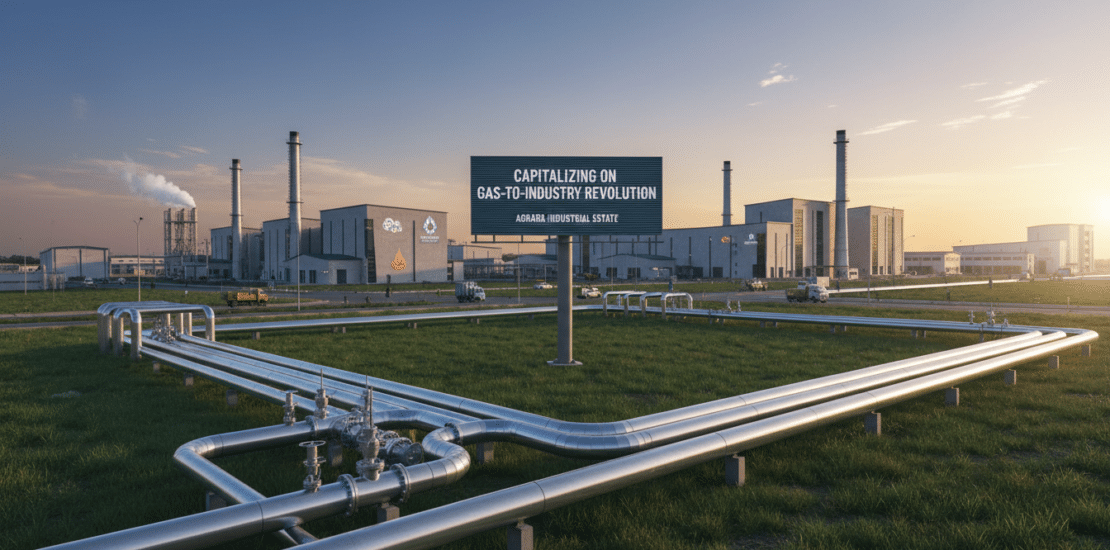
Capitalizing on the Gas-to-Industry Revolution Across the Agbara Industrial Estate: Fueling Growth, Sustainability, and Economic Diversification
The Agbara Industrial Estate, a sprawling hub of manufacturing and industrial activity in Ogun State, Nigeria, stands on the precipice of a significant transformation. For decades, the Estate has relied heavily on expensive and environmentally detrimental sources of energy, primarily diesel generators and heavy fuel oil, to power its operations. However, the burgeoning gas-to-industry revolution, spurred by government policies, infrastructure development, and a growing awareness of the benefits of natural gas, presents a unique opportunity for Agbara to leap forward in terms of economic growth, environmental sustainability, and overall competitiveness. Capitalizing on this revolution effectively will require a multi-pronged approach involving strategic investments, regulatory reforms, technological adoption, and a collaborative spirit amongst stakeholders.
The Current Landscape: Challenges and Opportunities
Agbara Industrial Estate, hosting a diverse range of industries from food and beverage processing to pharmaceuticals and packaging, faces considerable energy-related challenges. The unreliable power grid, characterized by frequent outages and voltage fluctuations, necessitates reliance on self-generation. Diesel generators, while providing a degree of energy security, come at a high cost. The price of diesel fluctuates dramatically, impacting production costs and eroding profit margins. Furthermore, the environmental impact of diesel combustion is significant, contributing to air pollution and greenhouse gas emissions. This dependence on expensive and polluting fuel sources has stifled growth potential, particularly for small and medium-sized enterprises (SMEs) operating within the Estate.
However, the gas-to-industry initiative offers a compelling alternative. The availability of natural gas, a cleaner and often more cost-effective fuel source, can address many of these challenges. Natural gas power generation emits significantly fewer pollutants than diesel, contributing to a healthier environment and improving the quality of life for residents in and around Agbara. Moreover, the lower operating costs associated with natural gas can translate into increased profitability for industries, enabling them to invest in expansion, innovation, and job creation.
The opportunity extends beyond power generation. Natural gas can be used as a feedstock for various industrial processes, including the production of fertilizers, plastics, and other essential materials. This opens up possibilities for backward integration, creating value chains within the estate and reducing reliance on imported raw materials. By embracing natural gas, Agbara can transform itself from a high-cost, polluting industrial zone into a sustainable and globally competitive manufacturing hub.
Laying the Foundation: Infrastructure Development and Gas Supply Security
The success of the gas-to-industry revolution in Agbara hinges on the development of robust and reliable gas infrastructure. This includes:
-
Pipeline Infrastructure: A dedicated gas pipeline network is crucial for delivering natural gas to industrial facilities within the estate. This requires significant investment in pipeline construction, metering stations, and distribution networks. The existing gas pipeline infrastructure may need to be upgraded or expanded to meet the growing demand. Public-private partnerships (PPPs) can be a viable mechanism for financing these large-scale infrastructure projects. Government incentives, such as tax breaks and subsidies, can further encourage private sector participation.
-
Gas Processing Facilities: Ensuring a stable supply of natural gas requires adequate gas processing facilities to remove impurities and condition the gas for industrial use. These facilities should be located strategically to minimize transportation costs and maximize efficiency.
-
Gas Storage Facilities: Gas storage facilities provide a buffer against supply disruptions and ensure a consistent flow of gas to industrial users, particularly during peak demand periods. Underground gas storage facilities, where geologically feasible, can be a cost-effective option for large-scale storage.
- Virtual Pipeline Systems: In areas where pipeline infrastructure is not yet feasible or cost-effective, virtual pipeline systems, involving the transportation of compressed natural gas (CNG) or liquefied natural gas (LNG) via trucks or other modes of transportation, can provide an interim solution. While more expensive than pipeline gas, virtual pipelines can enable industries to transition to natural gas while long-term infrastructure projects are underway.
Beyond infrastructure development, ensuring gas supply security is paramount. This requires diversification of gas sources, exploration and development of new gas reserves, and the establishment of long-term gas supply agreements with reliable suppliers. The government plays a critical role in promoting gas exploration and development through licensing rounds, incentives, and regulatory frameworks. Furthermore, fostering regional cooperation on gas supply can enhance energy security and reduce vulnerability to supply disruptions.
Policy and Regulatory Framework: Creating an Enabling Environment
A supportive policy and regulatory framework is essential for attracting investment, promoting competition, and ensuring the efficient operation of the gas-to-industry value chain. Key elements of this framework include:
-
Transparent and Predictable Pricing: A clear and transparent pricing mechanism for natural gas is crucial for attracting investment and ensuring fair competition. The pricing regime should be based on market principles and reflect the true cost of gas production, transportation, and distribution. Government intervention in gas pricing should be minimized to avoid distortions and ensure the financial viability of gas projects.
-
Streamlined Permitting and Licensing: The process for obtaining permits and licenses for gas infrastructure projects should be streamlined and expedited to reduce bureaucratic delays and attract investment. A "one-stop shop" approach, where all necessary permits and licenses can be obtained from a single agency, can significantly simplify the permitting process.
-
Third-Party Access to Pipelines: Regulations should ensure third-party access to gas pipelines to promote competition and prevent monopolies. This allows multiple gas suppliers to compete for customers, driving down prices and improving service quality.
-
Incentives for Gas Utilization: The government should provide incentives to encourage industries to switch to natural gas, such as tax breaks, subsidies, and preferential access to financing. These incentives can help overcome the initial cost barrier associated with transitioning to natural gas and accelerate the adoption of cleaner energy technologies.
- Environmental Regulations: Stringent environmental regulations should be put in place to ensure that gas infrastructure projects are developed and operated in an environmentally responsible manner. These regulations should address issues such as air and water pollution, noise pollution, and land use.
Technological Adoption and Innovation: Enhancing Efficiency and Sustainability
Embracing advanced technologies and fostering innovation are crucial for maximizing the benefits of the gas-to-industry revolution. This includes:
-
Combined Heat and Power (CHP) Systems: CHP systems, also known as cogeneration, generate both electricity and heat from a single fuel source, such as natural gas. This significantly improves energy efficiency and reduces greenhouse gas emissions. CHP systems are particularly well-suited for industries with high electricity and heat demands, such as food processing, textiles, and chemicals.
-
Gas-Fired Absorption Chillers: Gas-fired absorption chillers use natural gas to provide cooling, offering a more energy-efficient and environmentally friendly alternative to traditional electric chillers. These chillers are ideal for industries that require large amounts of cooling, such as data centers, hospitals, and manufacturing plants.
-
Smart Grid Technologies: Smart grid technologies, such as advanced metering infrastructure (AMI) and demand response programs, can improve the efficiency and reliability of the gas distribution network. AMI allows for real-time monitoring of gas consumption, enabling better management of gas supply and demand. Demand response programs incentivize industrial users to reduce their gas consumption during peak demand periods, helping to stabilize the grid and reduce costs.
- Carbon Capture and Storage (CCS) Technologies: While still in the early stages of development, CCS technologies offer the potential to capture carbon dioxide emissions from gas-fired power plants and industrial facilities and store them underground, further reducing greenhouse gas emissions.
Furthermore, fostering a culture of innovation within the Agbara Industrial Estate is essential. This can be achieved through:
-
Collaboration between Industry and Academia: Encouraging collaboration between industrial enterprises and universities and research institutions can promote the development and adoption of new technologies.
-
Investment in Research and Development: The government and private sector should invest in research and development to support the development of innovative gas utilization technologies.
- Supporting Start-ups and Entrepreneurs: Creating a supportive ecosystem for start-ups and entrepreneurs focused on gas-related technologies can drive innovation and create new business opportunities.
Stakeholder Engagement and Collaboration: A Collective Effort
The successful implementation of the gas-to-industry revolution in Agbara requires a collaborative effort involving all stakeholders, including:
-
Government: The government plays a crucial role in providing a supportive policy and regulatory framework, investing in infrastructure development, and promoting gas exploration and development.
-
Industrial Enterprises: Industrial enterprises are the primary beneficiaries of the gas-to-industry revolution. They need to actively embrace natural gas as a cleaner and more cost-effective energy source and invest in technologies that maximize its benefits.
-
Gas Suppliers: Gas suppliers are responsible for providing a reliable and affordable supply of natural gas to industrial users. They need to invest in infrastructure development and explore new gas sources to ensure supply security.
-
Financial Institutions: Financial institutions are essential for providing financing for gas infrastructure projects and for industrial enterprises seeking to transition to natural gas.
- Local Communities: Engaging with local communities is crucial for ensuring that gas infrastructure projects are developed in a socially responsible manner and that the benefits of the gas-to-industry revolution are shared equitably.
Regular consultations, workshops, and information sharing sessions can help to build trust and understanding among stakeholders and facilitate the development of effective solutions. A dedicated task force, comprising representatives from all stakeholder groups, can be established to oversee the implementation of the gas-to-industry strategy and address any challenges that may arise.
Human Capital Development: Building a Skilled Workforce
The gas-to-industry revolution will create new job opportunities in areas such as pipeline construction, gas processing, power generation, and industrial operations. To ensure that local communities benefit from these opportunities, it is essential to invest in human capital development.
This includes:
-
Training and Education Programs: Providing training and education programs to equip local residents with the skills needed to work in the gas industry. These programs should cover a wide range of topics, including pipeline construction, gas processing, power generation, and industrial operations.
-
Apprenticeship Programs: Establishing apprenticeship programs that allow young people to gain practical experience working in the gas industry.
-
Technical and Vocational Education: Strengthening technical and vocational education institutions to provide students with the skills needed to succeed in the gas industry.
- Scholarship Programs: Providing scholarship programs to support students pursuing studies in gas-related fields.
By investing in human capital development, Agbara can create a skilled workforce that can drive the gas-to-industry revolution and ensure that the benefits of this transformation are shared widely.