
Exploring PPP Opportunities in Delta Stateʼs Road and Transportation Networks
- Posted by: PSL
- Categories: BRICS News, Financial Management, Human Resources and Talent Management, International Business and Market Entry, Marketing and Sales, News Blog, Operations and Process Improvement, Organizational Development, Risk Management and Compliance, Strategy and Planning, Technology and Digital Transformation
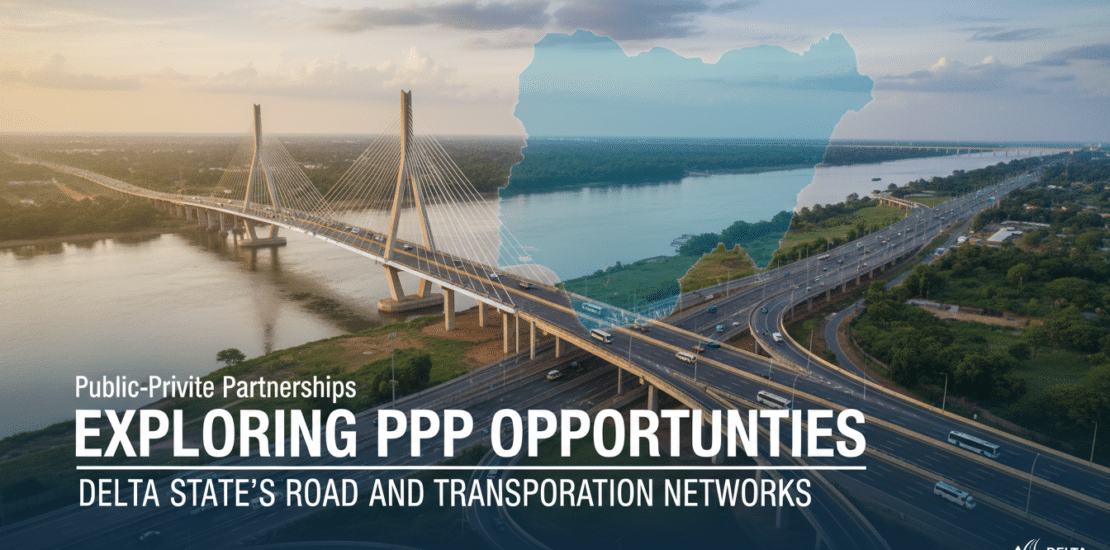
Exploring PPP Opportunities in Delta State’s Road and Transportation Networks
Delta State, located in the oil-rich Niger Delta region of Nigeria, holds immense potential for economic growth. A vital component of unlocking this potential lies in developing its infrastructure, particularly its road and transportation networks. However, limited government resources and the increasing demand for efficient and reliable infrastructure necessitate innovative approaches to financing and development. Public-Private Partnerships (PPPs) offer a promising avenue for bridging this gap, fostering investment, and accelerating the development of Delta State’s critical transportation infrastructure. This article will explore the opportunities, challenges, and considerations involved in leveraging PPPs to transform the state’s road and transportation networks.
The Current State of Road and Transportation Networks in Delta State:
Delta State’s transportation infrastructure is a mixed bag. While some areas boast relatively well-maintained roads, other regions, particularly rural areas, suffer from dilapidated roads, inadequate public transportation, and limited connectivity. This uneven distribution creates bottlenecks, hinders economic activities, and restricts access to essential services for a significant portion of the population.
-
Road Network: The state’s road network consists of federal, state, and local government roads. Federal roads often serve as major arterial routes connecting Delta State to other parts of Nigeria. However, these roads are frequently plagued by potholes, erosion, and inadequate drainage systems, leading to traffic congestion, increased travel times, and higher vehicle maintenance costs. State and local government roads, which are crucial for intra-state connectivity and connecting rural communities, are often in even worse condition, further isolating these areas and limiting their economic opportunities. The lack of proper maintenance and insufficient funding contribute significantly to the deterioration of these road networks.
-
Public Transportation: Public transportation in Delta State largely relies on informal systems, including taxis, buses (often dilapidated and overcrowded), and okadas (motorcycle taxis). While these options provide some level of accessibility, they are often unreliable, unsafe, and poorly regulated. There is a significant lack of organized and integrated public transportation systems that can efficiently and safely move people and goods across the state. The absence of modern bus terminals, designated bus routes, and reliable schedules further compounds the challenges.
-
Waterways: Delta State is endowed with a network of rivers and creeks that offer potential for water transportation. However, this potential remains largely untapped. The lack of investment in infrastructure such as jetties, river ports, and modern ferries, coupled with safety concerns and environmental challenges, hinders the development of this mode of transportation. Developing the waterways could significantly ease pressure on the road network, reduce transportation costs, and open up new economic opportunities for riverine communities.
- Airport Infrastructure: Delta State has one operational airport, Asaba International Airport. While the airport has undergone some upgrades, further investment is needed to expand its capacity, improve its facilities, and attract more airlines and passengers. The airport plays a crucial role in connecting Delta State to other parts of Nigeria and the world, and its development is essential for promoting tourism, trade, and investment.
The inadequacies in Delta State’s road and transportation networks pose significant challenges to its economic development. These challenges include:
- High Transportation Costs: The poor condition of roads and the inefficiency of public transportation lead to high transportation costs for businesses and individuals, making it more expensive to move goods and people.
- Reduced Economic Competitiveness: High transportation costs and unreliable infrastructure reduce the competitiveness of Delta State’s businesses, making it difficult for them to compete with businesses in other regions with better infrastructure.
- Limited Access to Markets and Services: Poor road networks and inadequate public transportation limit access to markets and services for rural communities, hindering their economic development and social well-being.
- Increased Traffic Congestion: In urban areas, traffic congestion is a major problem, resulting in lost productivity, increased fuel consumption, and air pollution.
- Increased Road Accidents: The poor condition of roads and the lack of safety measures contribute to a high rate of road accidents, resulting in injuries and fatalities.
The Potential of PPPs in Transforming Delta State’s Transportation Infrastructure:
Public-Private Partnerships (PPPs) offer a mechanism to address the infrastructure deficit in Delta State by leveraging private sector expertise, capital, and innovation. PPPs involve a contractual agreement between a government agency (the public sector) and a private sector company to deliver a public service or infrastructure project. The private sector assumes significant risk and management responsibility, while the government provides regulatory oversight and may contribute to financing.
PPPs offer several advantages for Delta State’s road and transportation sector:
- Access to Private Sector Capital: PPPs can attract private sector investment, reducing the burden on government finances. This allows the government to allocate its resources to other pressing needs, such as education and healthcare.
- Improved Efficiency and Innovation: Private sector companies are often more efficient and innovative than government agencies, leading to better quality infrastructure and services. They bring specialized expertise in project management, construction, and operations.
- Risk Sharing: PPPs allow the government to share the risks associated with infrastructure projects with the private sector. This reduces the financial burden on the government in case of cost overruns or delays.
- Long-Term Sustainability: PPPs often involve long-term contracts, ensuring that the infrastructure is properly maintained and operated over its entire life cycle. This contributes to the long-term sustainability of the infrastructure.
- Faster Project Delivery: Private sector companies are often able to deliver infrastructure projects faster than government agencies, reducing the time it takes for the public to benefit from the infrastructure.
Specific PPP Opportunities in Delta State’s Road and Transportation Networks:
Delta State presents numerous opportunities for PPP projects in its road and transportation sector. These opportunities include:
-
Road Construction and Rehabilitation: PPPs can be used to finance the construction of new roads and the rehabilitation of existing roads. This can include major highways, urban roads, and rural access roads. The private sector could be responsible for designing, building, financing, operating, and maintaining the roads, with the government providing regulatory oversight and possibly contributing to financing through user fees, tolls, or availability payments.
- Example: A PPP could be established to upgrade the Warri-Benin expressway, a vital trade route that suffers from severe congestion and dilapidation. The private partner would finance the upgrade, collect tolls, and maintain the road for a specified period.
-
Public Transportation Systems: PPPs can be used to develop modern and efficient public transportation systems, such as bus rapid transit (BRT) systems, light rail transit (LRT) systems, and integrated public transport networks. The private sector could be responsible for procuring and operating the buses or trains, building and maintaining the infrastructure, and managing the ticketing system. The government could provide regulatory oversight and subsidize fares to make the service affordable for the public.
- Example: A PPP could develop a BRT system in Asaba, the state capital, to alleviate traffic congestion and provide a reliable and affordable public transportation option. The private partner would invest in the buses, build dedicated bus lanes, and operate the system.
-
Water Transportation Infrastructure: PPPs can be used to develop and modernize water transportation infrastructure, such as jetties, river ports, and ferry services. The private sector could be responsible for building and operating the infrastructure, providing ferry services, and managing the cargo handling facilities. The government could provide regulatory oversight and promote the use of waterways for transportation.
- Example: A PPP could develop a modern river port in Warri, a major commercial hub, to facilitate trade and transportation along the Niger River. The private partner would invest in the port infrastructure, provide cargo handling services, and attract shipping companies.
-
Airport Development and Management: PPPs can be used to expand and upgrade the Asaba International Airport, improving its facilities and attracting more airlines and passengers. The private sector could be responsible for building new terminals, upgrading the runways, and managing the airport operations. The government could provide regulatory oversight and promote the airport as a regional hub.
- Example: A PPP could be established to construct a new cargo terminal at Asaba International Airport, enhancing its capacity to handle air freight and attracting more cargo airlines. The private partner would finance the construction, operate the terminal, and market the airport as a cargo hub.
- Parking Management Systems: PPPs can be utilized to develop and manage modern parking facilities in urban areas, reducing traffic congestion and improving the urban environment. The private sector would invest in constructing and managing parking garages or surface lots, implementing electronic payment systems, and enforcing parking regulations. The government would provide regulatory oversight and ensure fair pricing.
Challenges to Implementing PPPs in Delta State’s Transportation Sector:
Despite the potential benefits of PPPs, there are several challenges that need to be addressed to ensure their successful implementation in Delta State’s transportation sector. These challenges include:
-
Lack of a Robust Legal and Regulatory Framework: Delta State needs a clear and comprehensive legal and regulatory framework for PPPs that provides certainty and transparency for private sector investors. This framework should define the roles and responsibilities of the government and the private sector, establish a clear process for project selection and procurement, and provide mechanisms for dispute resolution.
-
Weak Institutional Capacity: The government needs to strengthen its institutional capacity to manage PPP projects effectively. This includes establishing a dedicated PPP unit with skilled professionals who can provide guidance and support to government agencies in developing and implementing PPP projects. It also requires training government officials on PPP principles, procurement processes, and contract management.
-
Political Risk and Corruption: Political instability and corruption can deter private sector investment in PPP projects. The government needs to demonstrate its commitment to good governance and transparency to build investor confidence. This includes ensuring fair and transparent procurement processes, protecting private sector investments, and combating corruption.
-
Financial Viability and Bankability: PPP projects need to be financially viable and bankable to attract private sector financing. This requires careful project planning, realistic cost estimates, and a clear revenue model. The government may need to provide guarantees or subsidies to make projects financially attractive to investors.
-
Land Acquisition and Resettlement: Land acquisition and resettlement can be a major obstacle to infrastructure projects in Nigeria. The government needs to streamline the land acquisition process and ensure that affected communities are adequately compensated and resettled.
- Community Engagement and Social Impact: It is essential to engage with local communities and consider the social and environmental impact of PPP projects. This includes conducting thorough environmental and social impact assessments, consulting with affected communities, and implementing measures to mitigate any negative impacts.
Strategies for Overcoming the Challenges and Maximizing the Benefits of PPPs:
To overcome the challenges and maximize the benefits of PPPs in Delta State’s transportation sector, the government should adopt the following strategies:
- Develop a Comprehensive PPP Policy and Legal Framework: Enact a comprehensive PPP law that provides a clear legal framework for PPP projects, defining the roles and responsibilities of the government and the private sector, establishing a transparent procurement process, and providing mechanisms for dispute resolution.
- Strengthen Institutional Capacity: Establish a dedicated PPP unit with skilled professionals to provide guidance and support to government agencies in developing and implementing PPP projects. Provide training to government officials on PPP principles, procurement processes, and contract management.
- Promote Transparency and Good Governance: Ensure fair and transparent procurement processes, protect private sector investments, and combat corruption. Implement measures to promote transparency and accountability in all aspects of PPP project development and implementation.
- Conduct Thorough Project Feasibility Studies: Conduct thorough feasibility studies to assess the technical, economic, financial, and social viability of PPP projects. Ensure that project costs are realistic and that the revenue model is sustainable.
- Develop Bankable Projects: Structure PPP projects in a way that makes them financially attractive to investors. This may involve providing government guarantees or subsidies to reduce risk and enhance returns.
- Streamline Land Acquisition and Resettlement: Streamline the land acquisition process and ensure that affected communities are adequately compensated and resettled. Develop a resettlement action plan that addresses the needs of affected communities and ensures that they benefit from the project.
- Engage with Local Communities: Conduct thorough environmental and social impact assessments and consult with affected communities. Implement measures to mitigate any negative impacts and ensure that the project benefits the local community.
- Promote Local Content: Encourage the participation of local companies and workers in PPP projects. This will help to build local capacity and create jobs.
- Develop a Pipeline of PPP Projects: Develop a pipeline of PPP projects that are aligned with the state’s transportation development strategy. This will provide clarity to potential investors and help to attract private sector investment.
- Market Delta State as an Attractive Investment Destination: Promote Delta State as an attractive investment destination for PPP projects. This includes highlighting the state’s economic potential, its commitment to good governance, and its supportive regulatory environment.
By implementing these strategies, Delta State can create an enabling environment for PPPs to thrive and unlock the potential of its road and transportation networks. This will lead to improved infrastructure, reduced transportation costs, increased economic competitiveness, and improved quality of life for its citizens. The state can then truly realize its immense potential by strategically partnering with the private sector to build a more modern and efficient transportation system.