
How Oyo State is leveraging research institutions to dominate Nigerian agri-business
- Posted by: PSL
- Categories: BRICS News, Financial Management, Human Resources and Talent Management, International Business and Market Entry, Marketing and Sales, News Blog, Operations and Process Improvement, Organizational Development, Risk Management and Compliance, Strategy and Planning, Technology and Digital Transformation
How Oyo State is Leveraging Research Institutions to Dominate Nigerian Agri-business
Oyo State, historically known as a significant agricultural hub in Nigeria, is strategically positioning itself to recapture and surpass its former glory by forging strong alliances with research institutions. Recognizing the vital role that scientific innovation and technological advancement play in modern agriculture, the state government is actively leveraging the expertise and resources of these institutions to boost productivity, improve crop quality, diversify agricultural practices, and ultimately, establish a dominant presence in the Nigerian agri-business landscape. This multifaceted approach, encompassing funding initiatives, collaborative projects, technology transfer programs, and manpower development, is transforming Oyo State’s agricultural sector and paving the way for sustainable growth and economic prosperity.
Bridging the Gap: Recognizing the Untapped Potential of Research Institutions
For decades, a disconnect has existed between agricultural research and its practical application on Nigerian farms. Cutting-edge research remained confined within the walls of universities and research institutes, failing to reach the farmers who could benefit most from these advancements. Oyo State recognized this deficiency and embarked on a deliberate policy shift, aiming to bridge this gap and translate research findings into tangible improvements in agricultural practices. This shift is predicated on the understanding that sustainable agricultural development necessitates a strong foundation of scientific research and innovation.
Several key research institutions in and around Oyo State are proving instrumental in this endeavor. These include:
- The International Institute of Tropical Agriculture (IITA), Ibadan: A globally renowned institution focused on research and development in tropical agriculture. IITA’s expertise in crop improvement, sustainable agricultural practices, and biotechnology is invaluable to Oyo State’s agricultural transformation agenda.
- The National Horticultural Research Institute (NIHORT), Ibadan: NIHORT plays a crucial role in improving the production, processing, utilization, and marketing of horticultural crops (fruits, vegetables, ornamentals) in Nigeria. Its research on improved varieties, pest and disease management, and post-harvest handling is directly benefiting Oyo State’s horticultural farmers.
- The Cocoa Research Institute of Nigeria (CRIN), Ibadan: Given Oyo State’s historical significance in cocoa production, CRIN’s research on cocoa breeding, disease control, and processing is vital for revitalizing the state’s cocoa industry and ensuring its competitiveness in the global market.
- University of Ibadan (UI): UI’s Faculty of Agriculture and Veterinary Medicine houses numerous research projects and expertise in various agricultural disciplines, including animal science, crop science, agricultural economics, and agricultural engineering. Its contributions to manpower development and applied research are essential for driving innovation in Oyo State’s agricultural sector.
- Ladoke Akintola University of Technology (LAUTECH), Ogbomoso: LAUTECH’s focus on technological advancements in agriculture, particularly in areas like agricultural mechanization, irrigation, and food processing, is helping Oyo State modernize its agricultural practices and enhance its efficiency.
Funding Initiatives: Investing in Research and Development
The Oyo State government is demonstrating its commitment to agricultural research by allocating significant funding to support research projects and collaborative initiatives with these institutions. This funding takes various forms, including:
- Direct Grants for Research Projects: The state government provides direct grants to research institutions to conduct specific research projects that address critical challenges facing Oyo State’s agricultural sector. These projects focus on areas such as developing improved crop varieties resistant to pests and diseases, improving soil fertility, enhancing water management techniques, and developing sustainable agricultural practices. For example, the government has funded IITA to conduct research on developing drought-resistant maize varieties suitable for the state’s climate.
- Endowment Funds for Agricultural Research: Establishing endowment funds dedicated to agricultural research provides a sustainable source of funding for long-term research projects and ensures the continuity of critical research activities. The state government is actively exploring options for establishing such endowment funds in partnership with private sector stakeholders.
- Matching Grants for Collaborative Projects: To incentivize collaboration between research institutions and farmers, the state government offers matching grants for collaborative projects. These grants encourage farmers to adopt new technologies and practices developed by research institutions, while also providing valuable feedback to researchers on the practical applicability of their findings.
- Scholarships and Fellowships for Agricultural Researchers: Investing in human capital is crucial for the long-term sustainability of agricultural research. The state government provides scholarships and fellowships to promising students and researchers to pursue advanced studies in agricultural disciplines, ensuring a steady supply of qualified personnel to drive innovation in the sector.
- Infrastructure Development for Research Institutions: Recognizing the importance of state-of-the-art research facilities, the state government is investing in upgrading the infrastructure of research institutions in Oyo State. This includes constructing new laboratories, equipping existing facilities with modern equipment, and providing access to high-speed internet connectivity.
Collaborative Projects: Fostering Synergy and Knowledge Exchange
Oyo State is actively promoting collaborative projects between research institutions and farmers to ensure that research findings are translated into practical solutions that address the real-world challenges faced by farmers. These collaborative projects take various forms:
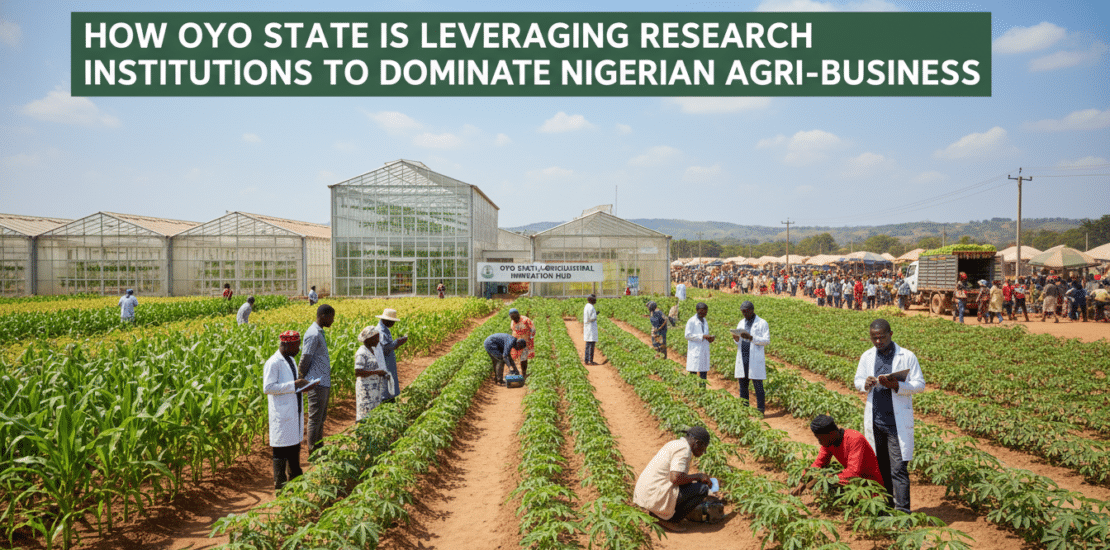
- On-Farm Trials and Demonstrations: Research institutions conduct on-farm trials and demonstrations to showcase the benefits of new technologies and practices to farmers. These trials provide farmers with a firsthand opportunity to observe the results of research and learn how to implement new techniques on their own farms. For example, NIHORT conducts on-farm trials to demonstrate the benefits of using improved vegetable varieties and integrated pest management techniques.
- Farmer Field Schools: Farmer field schools are training programs conducted by research institutions in collaboration with extension agents. These schools provide farmers with hands-on training on various aspects of agricultural production, including crop management, pest and disease control, and post-harvest handling. The curriculum is tailored to the specific needs of farmers in each locality, ensuring that the training is relevant and practical.
- Technology Validation and Adaptation: Research institutions work with farmers to validate and adapt new technologies to local conditions. This involves testing the performance of new technologies under different environmental conditions and making adjustments to ensure that they are effective and sustainable. For example, IITA is working with farmers in Oyo State to validate and adapt climate-smart agricultural practices to the state’s specific climate conditions.
- Joint Research Projects: The state government encourages research institutions to collaborate on joint research projects that address complex agricultural challenges. This allows researchers from different disciplines to pool their expertise and resources to develop comprehensive solutions. For example, CRIN is collaborating with UI to conduct research on developing cocoa varieties that are resistant to both diseases and climate change.
- Establishment of Agricultural Innovation Platforms: Agricultural innovation platforms bring together researchers, farmers, extension agents, policymakers, and private sector stakeholders to identify and address agricultural challenges. These platforms provide a forum for stakeholders to share their knowledge and experiences, and to develop collaborative solutions to improve agricultural productivity and sustainability.
Technology Transfer Programs: Disseminating Knowledge and Innovations
Effective technology transfer is crucial for ensuring that research findings reach the farmers who can benefit most from them. Oyo State is implementing various technology transfer programs to disseminate knowledge and innovations developed by research institutions:
- Extension Services: The state government is strengthening its extension services to provide farmers with access to timely and accurate information on new technologies and practices. Extension agents work closely with research institutions to disseminate research findings to farmers through workshops, seminars, and field visits.
- Information and Communication Technology (ICT) Platforms: Utilizing ICT platforms, such as mobile apps and online databases, to disseminate agricultural information to farmers. These platforms provide farmers with access to information on weather forecasts, market prices, pest and disease outbreaks, and best management practices. The state government is partnering with private sector companies to develop and deploy these ICT platforms.
- Agricultural Shows and Exhibitions: Participating in agricultural shows and exhibitions to showcase new technologies and practices to farmers and other stakeholders. These events provide an opportunity for research institutions to interact directly with farmers and to demonstrate the benefits of their research.
- Publication of Extension Materials: Publishing extension materials, such as brochures, leaflets, and posters, to disseminate information on new technologies and practices. These materials are distributed to farmers through extension agents and other channels. The state government is working with research institutions to develop these extension materials in local languages to ensure that they are accessible to all farmers.
- Training of Trainers Programs: Training extension agents and other agricultural professionals on new technologies and practices. These trainers then disseminate the information to farmers in their respective communities. The state government is partnering with research institutions to conduct these training of trainers programs.
Manpower Development: Investing in the Future of Agriculture
Recognizing that a skilled workforce is essential for driving innovation in agriculture, Oyo State is investing in manpower development to train the next generation of agricultural professionals:
- Strengthening Agricultural Education: The state government is working to strengthen agricultural education at all levels, from primary school to university. This includes curriculum development, teacher training, and infrastructure improvements. The goal is to ensure that students are equipped with the knowledge and skills they need to succeed in the agricultural sector.
- Vocational Training Programs: Providing vocational training programs to equip farmers with practical skills in areas such as crop production, animal husbandry, and post-harvest handling. These programs are designed to be short, intensive, and hands-on, ensuring that farmers can quickly apply what they learn.
- Internship Programs: Facilitating internship programs for students in agricultural disciplines, providing them with practical experience in research institutions and on commercial farms. These internships provide students with valuable exposure to the real-world challenges and opportunities in the agricultural sector.
- Mentorship Programs: Establishing mentorship programs that connect experienced agricultural professionals with young people who are interested in pursuing careers in agriculture. These mentorship programs provide guidance, support, and encouragement to the next generation of agricultural leaders.
- Support for Agricultural Research: Providing financial support for agricultural researchers to attend conferences, workshops, and training programs. This allows researchers to stay up-to-date on the latest advances in their fields and to network with other researchers from around the world.
By strategically leveraging the expertise and resources of research institutions, Oyo State is not only transforming its agricultural sector but also setting a precedent for other states in Nigeria to follow. This comprehensive approach, encompassing funding initiatives, collaborative projects, technology transfer programs, and manpower development, is creating a vibrant and sustainable agricultural ecosystem that is driving economic growth and improving the livelihoods of farmers throughout the state. The ambition is not merely to regain lost ground, but to establish Oyo State as a dominant force in the Nigerian agri-business landscape, a hub of innovation, and a model for sustainable agricultural development in the 21st century.