
Why institutional investors choose Kaduna for large scale ginger and maize exports
- Posted by: PSL
- Categories: BRICS News, Financial Management, Human Resources and Talent Management, International Business and Market Entry, Marketing and Sales, News Blog, Operations and Process Improvement, Organizational Development, Risk Management and Compliance, Strategy and Planning, Technology and Digital Transformation
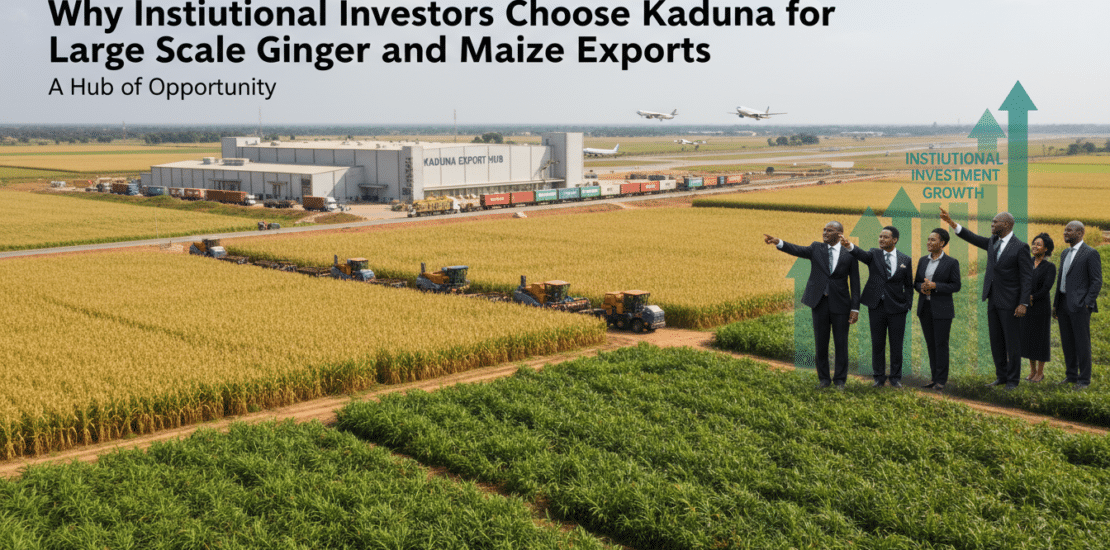
Why Institutional Investors Choose Kaduna for Large-Scale Ginger and Maize Exports
Kaduna State, strategically located in Northern Nigeria, is increasingly attracting the attention of institutional investors for large-scale ginger and maize exports. This surge in interest stems from a confluence of factors, ranging from favorable agro-climatic conditions and government support to infrastructure development and a growing awareness of the region’s untapped potential. Institutional investors, driven by the prospect of attractive returns and portfolio diversification, are increasingly viewing Kaduna as a viable and promising hub for agricultural production and export. This article delves into the specific reasons underpinning this investment trend, examining the various elements that make Kaduna an appealing choice for large-scale ginger and maize export-oriented ventures.
1. Favorable Agro-Climatic Conditions and Land Availability:
Perhaps the most crucial factor driving institutional investment is Kaduna’s suitability for ginger and maize cultivation. The state boasts a diverse agro-ecological landscape that allows for the growth of both crops under rain-fed and irrigated conditions.
- Ginger: Kaduna State is renowned for its high-quality ginger production, particularly in the southern regions like Jaba, Kachia, and Kagarko. The loamy soils, moderate rainfall, and relatively cool temperatures in these areas create an ideal environment for ginger cultivation. The ginger produced here is known for its unique aroma, pungency, and high oleoresin content, making it highly sought after in both domestic and international markets. The specific environmental conditions contribute to the superior quality, allowing for premium pricing in global markets. Institutional investors recognize this inherent advantage and see the potential for scaling up production using modern farming techniques to meet the increasing global demand for high-quality ginger. Furthermore, the longer shelf life of Kaduna ginger compared to some other producing regions is a significant advantage for export logistics.
- Maize: The savanna plains of Kaduna are highly conducive to maize cultivation. The state experiences a distinct wet and dry season, providing the necessary moisture for maize growth during the rainy season, followed by a dry period for harvesting and storage. The fertile soils, coupled with adequate sunlight, contribute to high maize yields. Both yellow and white maize varieties can be successfully cultivated in Kaduna, catering to diverse consumer preferences and industrial uses. Institutional investors appreciate the potential for large-scale maize production, particularly for export to neighboring countries and international markets with a growing demand for animal feed and industrial raw materials. The possibility of double cropping in certain areas using irrigation further enhances the attractiveness of maize production in Kaduna.
- Land Availability: Unlike some other agricultural hubs facing land scarcity, Kaduna offers vast tracts of arable land suitable for large-scale farming operations. The state government has actively encouraged land acquisition for agricultural purposes, simplifying the process and providing support to investors. This availability of land, combined with relatively lower land costs compared to other regions, makes Kaduna an attractive destination for institutional investors seeking to establish large-scale ginger and maize farms. The ease of access to land allows for the implementation of efficient farming practices, including mechanization and irrigation, which are essential for maximizing yields and achieving economies of scale.
2. Government Support and Incentives:
The Kaduna State government plays a proactive role in attracting and supporting agricultural investment. Recognizing the potential of the agricultural sector to drive economic growth and create employment opportunities, the government has implemented various policies and initiatives designed to incentivize investment in ginger and maize production and export.
- Agricultural Policies: The state government has formulated agricultural policies aimed at promoting sustainable agricultural practices, improving yields, and enhancing the value chain for key crops like ginger and maize. These policies include support for research and development, provision of extension services to farmers, and promotion of the adoption of improved seeds and farming techniques. The government also actively works to create a conducive regulatory environment for agricultural businesses.
- Investment Incentives: To attract institutional investors, the Kaduna State government offers a range of investment incentives, including tax holidays, land concessions, and subsidized inputs. The government also provides support for infrastructure development, such as access roads and irrigation facilities, in areas designated for agricultural investment. These incentives significantly reduce the initial investment costs and operating expenses, making Kaduna a more attractive investment destination.
- Public-Private Partnerships: The Kaduna State government actively encourages public-private partnerships (PPPs) in the agricultural sector. PPPs provide a framework for collaboration between the government and private investors in developing agricultural infrastructure, establishing processing facilities, and promoting export opportunities. These partnerships allow institutional investors to leverage the government’s resources and expertise while benefiting from the government’s commitment to supporting agricultural development.
- Security Measures: Recognizing the importance of security for agricultural investments, the Kaduna State government has taken steps to improve security in rural areas, particularly in farming communities. This includes increased deployment of security personnel, establishment of community policing initiatives, and implementation of measures to address farmer-herder conflicts. These efforts aim to create a safe and secure environment for farmers and investors, reducing the risk of losses due to insecurity.
3. Infrastructure Development and Connectivity:
While Kaduna is not without its infrastructural challenges, significant progress has been made in recent years to improve connectivity and facilitate agricultural trade. These developments are crucial for supporting large-scale ginger and maize exports.
- Road Network: The Kaduna State government has invested in upgrading and expanding the road network, particularly in agricultural production areas. Improved roads facilitate the transportation of ginger and maize from farms to processing facilities and export hubs. The government has also prioritized the construction of feeder roads connecting rural communities to major highways.
- Rail Network: Kaduna is connected to the national rail network, providing a cost-effective and efficient means of transporting large volumes of agricultural produce to ports for export. The railway system offers a reliable alternative to road transport, reducing transportation costs and minimizing the risk of damage to agricultural goods.
- Dry Port: The Kaduna Inland Dry Port (KIDP) is a significant infrastructure asset that enhances the state’s attractiveness for export-oriented businesses. The dry port allows exporters to process their goods and complete customs formalities in Kaduna, reducing the time and cost associated with transporting goods to seaports. The KIDP provides a direct link to international markets, making Kaduna a more competitive location for export activities.
- Power Supply: Access to reliable power supply is essential for agricultural processing and storage. The Kaduna State government is working to improve power supply in rural areas through investments in renewable energy projects and grid expansion. Improved power supply reduces the reliance on costly and polluting diesel generators, lowering operating costs for agricultural businesses.
4. Growing Global Demand and Export Potential:
The global demand for ginger and maize is steadily increasing, creating significant export opportunities for Kaduna State. This growing demand is driven by factors such as rising populations, changing consumer preferences, and increasing industrial use of these crops.
- Ginger: The global ginger market is experiencing strong growth, driven by increasing demand for ginger in the food and beverage, pharmaceutical, and cosmetic industries. Ginger is valued for its medicinal properties, flavor, and aroma. Kaduna ginger, with its superior quality and unique characteristics, is well-positioned to capture a significant share of the global ginger market. The demand is particularly strong in countries like the United States, Europe, and Asia.
- Maize: Maize is a staple food crop and a key ingredient in animal feed and industrial products. The global demand for maize is driven by rising populations, increasing livestock production, and growing demand for biofuels. Kaduna’s maize production potential, coupled with its strategic location and access to markets in neighboring countries, makes it an attractive source of maize for export. The demand is particularly high in West African countries that rely on maize imports to meet their domestic consumption needs.
- Regional Trade Agreements: Nigeria is a member of various regional trade agreements, such as the African Continental Free Trade Area (AfCFTA), which provide preferential access to markets in Africa. These trade agreements offer Kaduna-based exporters a competitive advantage in accessing regional markets for ginger and maize.
5. Availability of Skilled Labor and Technological Adoption:
Kaduna boasts a growing pool of skilled labor, particularly in agriculture-related fields. This labor force, combined with increasing adoption of technology in farming practices, enhances the efficiency and productivity of agricultural operations in the state.
- Agricultural Training Institutions: Kaduna has several agricultural training institutions that produce graduates with expertise in crop production, animal husbandry, and agricultural engineering. These institutions provide a steady supply of skilled labor for agricultural businesses in the state.
- Technology Adoption: Farmers in Kaduna are increasingly adopting modern farming techniques, such as improved seeds, fertilizer application, irrigation, and mechanization. The use of technology improves yields, reduces labor costs, and enhances the quality of agricultural produce.
- Extension Services: The Kaduna State government provides extension services to farmers, offering training and technical assistance on modern farming practices. Extension officers play a crucial role in disseminating knowledge and promoting the adoption of technology in agriculture. The extension services are instrumental in bridging the gap between research and practice, ensuring that farmers have access to the latest information and techniques.
6. Diversification and Risk Mitigation:
Institutional investors are often attracted to investments that offer diversification benefits and help mitigate risk. Kaduna’s agricultural sector provides opportunities for diversification and risk mitigation due to the variety of crops that can be grown and the potential for value-added processing.
- Crop Diversification: While ginger and maize are the primary focus, Kaduna’s agricultural landscape allows for the cultivation of other crops, such as soybeans, sorghum, and groundnuts. This crop diversification reduces the reliance on a single crop and mitigates the risk of losses due to crop failure or market fluctuations.
- Value-Added Processing: Kaduna offers opportunities for establishing processing facilities for ginger and maize, such as ginger oil extraction plants, maize flour mills, and animal feed production units. Value-added processing increases the value of agricultural produce, creates employment opportunities, and enhances the profitability of agricultural businesses.
- Integration of Smallholder Farmers: Institutional investors can partner with smallholder farmers in Kaduna to source raw materials for their processing facilities. This integration of smallholder farmers into the value chain provides a reliable source of supply and contributes to rural development. It also helps to reduce the risks associated with relying solely on large-scale farming operations.
In conclusion, the confluence of these factors – favorable agro-climatic conditions, government support, infrastructure development, growing global demand, availability of skilled labor, and opportunities for diversification – makes Kaduna State an increasingly attractive destination for institutional investors seeking to capitalize on the lucrative ginger and maize export markets.