
Why the Ogun State manufacturing corridor is the industrial engine of Nigeria
- Posted by: PSL
- Categories: BRICS News, Financial Management, Human Resources and Talent Management, International Business and Market Entry, Marketing and Sales, News Blog, Operations and Process Improvement, Organizational Development, Risk Management and Compliance, Strategy and Planning, Technology and Digital Transformation
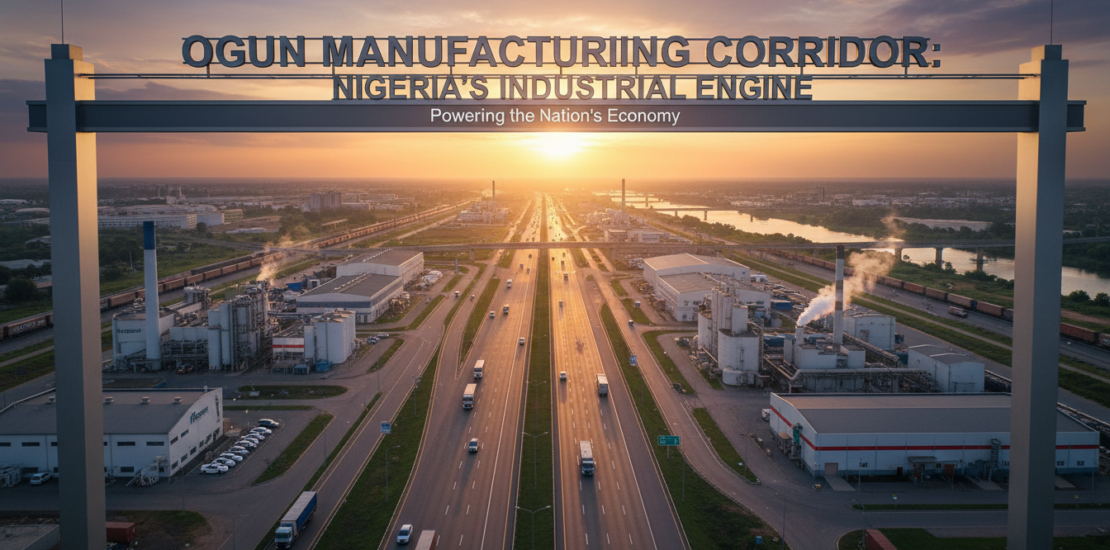
Why the Ogun State Manufacturing Corridor is the Industrial Engine of Nigeria
Ogun State, nestled in the southwestern region of Nigeria, has quietly but decisively cemented its position as the nation’s manufacturing powerhouse. Often referred to as the "Gateway State," its strategic location, proactive government policies, and a burgeoning ecosystem of supporting industries have coalesced to create a thriving manufacturing corridor that is driving economic growth, creating jobs, and attracting significant foreign and domestic investment. While Lagos, its immediate neighbor, often overshadows Ogun in the national narrative, it is in Ogun State that the real nuts and bolts of Nigeria’s industrial aspirations are being tightened, and the engines of production are roaring to life.
The rise of Ogun State as an industrial hub is not a matter of happenstance. It is the result of a deliberate and sustained effort, spanning multiple administrations, to create a conducive environment for businesses to flourish. This success is anchored on several key pillars:
1. Strategic Location and Proximity to Lagos:
Ogun State’s geographical advantage is undeniable. Bordering Lagos State, Nigeria’s commercial nerve center and largest consumer market, provides manufacturers in Ogun with unparalleled access to a vast customer base. This proximity significantly reduces transportation costs and logistical complexities, making it easier to distribute goods and services to a wider market. The congested ports of Lagos, while crucial for international trade, often face bottlenecks that can hinder the swift movement of goods. Manufacturers in Ogun can leverage the infrastructure of Lagos while enjoying comparatively easier access roads and less traffic congestion within the state itself, streamlining their supply chains and reducing delivery times.
Moreover, the spillover effect from Lagos’s economic activity is considerable. As Lagos grapples with rising land costs, infrastructure constraints, and regulatory hurdles, businesses seeking more affordable operational bases and a more enabling environment are increasingly drawn to Ogun State. This has led to a significant influx of businesses, particularly in manufacturing and logistics, further fueling the state’s industrial growth. This proximity isn’t limited to Lagos; Ogun State also shares borders with Oyo, Osun, Ondo, and Republic of Benin, providing access to regional markets and facilitating cross-border trade.
2. Land Availability and Affordability:
Unlike Lagos, where land is a premium commodity, Ogun State boasts a relatively abundant supply of land at significantly lower prices. This is a major draw for manufacturers who require large tracts of land to establish factories, warehouses, and other industrial facilities. The availability of large, affordable land plots allows companies to build expansive, modern production facilities tailored to their specific needs, rather than being constrained by the limitations of cramped urban spaces. This factor is particularly critical for industries such as cement production, food processing, and automotive assembly, which require considerable land for raw material storage, production lines, and finished goods warehousing. The government’s policy of allocating industrial parks and special economic zones further streamlines the land acquisition process for investors, reducing bureaucratic hurdles and ensuring that land is readily available for development.
3. Proactive Government Policies and Business-Friendly Environment:
Successive administrations in Ogun State have actively championed policies designed to attract and retain businesses. This includes tax incentives, streamlined regulatory processes, and a commitment to providing essential infrastructure such as roads, electricity, and water. The government understands that a thriving manufacturing sector is crucial for economic growth and job creation, and it has consistently demonstrated its willingness to work with businesses to address their challenges and support their expansion plans.
The establishment of the Ogun State Investment Promotion and Facilitation Agency (OGUNINVEST) is a testament to this commitment. OGUNINVEST serves as a one-stop shop for investors, providing guidance, facilitating approvals, and connecting businesses with relevant government agencies and stakeholders. This proactive approach significantly reduces the time and cost associated with setting up and operating a business in Ogun State, making it a more attractive destination for both domestic and foreign investment. Furthermore, the government has prioritized improving the ease of doing business in the state by simplifying bureaucratic procedures, reducing corruption, and promoting transparency in government dealings. Regular dialogues with the business community help the government understand their needs and adapt its policies accordingly.
4. Development of Industrial Parks and Special Economic Zones:
The proliferation of industrial parks and special economic zones (SEZs) in Ogun State has been a key driver of its manufacturing success. These zones offer a range of benefits to businesses, including tax breaks, simplified customs procedures, and access to shared infrastructure and utilities. The concept of industrial parks allows for the clustering of related industries, fostering collaboration, knowledge sharing, and economies of scale. This concentrated industrial activity creates a vibrant ecosystem that attracts suppliers, service providers, and skilled labor, further strengthening the manufacturing base.
Notable examples of successful industrial parks in Ogun State include the Agbara Industrial Estate, the Opic Industrial Estate, and the Sagamu Interchange Industrial Park. These parks are home to a diverse range of manufacturers, producing everything from food and beverages to pharmaceuticals, building materials, and automotive components. The SEZs, in particular, are designed to attract export-oriented industries by offering even more generous incentives and streamlined customs procedures. This focus on export promotion helps diversify the Nigerian economy, reduce its reliance on oil revenues, and create jobs in the manufacturing sector.
5. Abundant and Relatively Affordable Labor Force:
Ogun State benefits from a large and relatively affordable labor force, drawn from both within the state and neighboring areas. This provides manufacturers with a readily available pool of workers to fill both skilled and unskilled positions. The government has also invested in vocational training and skills development programs to ensure that the workforce is equipped with the necessary skills to meet the demands of the manufacturing sector. This includes partnerships with educational institutions and private companies to provide on-the-job training and apprenticeships, equipping young people with the skills needed to succeed in the modern manufacturing environment. The relatively lower labor costs in Ogun State compared to Lagos further enhances its attractiveness to businesses seeking to reduce their operational expenses.
6. Strategic Infrastructure Development:
Recognizing the importance of infrastructure in supporting industrial growth, the Ogun State government has prioritized the development of key infrastructure projects, including roads, electricity, and water supply. The government has invested heavily in upgrading and expanding the state’s road network, improving connectivity between industrial areas and major markets. This includes the construction of new roads, the rehabilitation of existing roads, and the implementation of traffic management systems to reduce congestion and improve transportation efficiency.
Efforts are also underway to improve the state’s electricity supply, which has historically been a major challenge for manufacturers in Nigeria. The government is exploring various options to increase electricity generation and distribution capacity, including investing in renewable energy sources and working with private companies to develop independent power projects. Access to a reliable and affordable water supply is also crucial for many manufacturing processes, and the government is working to improve water infrastructure and ensure that businesses have access to the water they need.
7. Diversified Manufacturing Base:
Ogun State’s manufacturing sector is not limited to a few specific industries. Instead, it boasts a diversified base encompassing a wide range of products and sectors, including:
- Food and Beverages: Numerous food and beverage companies operate in Ogun State, producing everything from packaged foods and soft drinks to alcoholic beverages and agricultural products.
- Cement and Building Materials: The state is home to several major cement plants, which supply a significant portion of Nigeria’s cement needs. Other building materials manufacturers produce tiles, roofing sheets, and other construction products.
- Pharmaceuticals: A growing number of pharmaceutical companies are establishing operations in Ogun State, producing a wide range of medications and healthcare products.
- Automotive: Ogun State is becoming a hub for automotive assembly, with several companies assembling vehicles for the Nigerian market.
- Packaging: The packaging industry is also well-represented in Ogun State, with companies producing packaging materials for various industries.
- Chemicals: A considerable number of chemical producing industries also thrive in the state.
This diversification makes the state’s economy more resilient to external shocks and reduces its reliance on any single industry.
8. Political Stability and Security:
Compared to some other parts of Nigeria, Ogun State enjoys a relatively stable political environment and a lower level of insecurity. This provides businesses with a sense of security and confidence, encouraging them to invest and expand their operations. The government has prioritized maintaining law and order and has implemented measures to improve security in industrial areas, including increased police patrols and the installation of security cameras. This stability is a crucial factor in attracting foreign investment, as investors are often wary of investing in areas that are perceived to be politically unstable or unsafe.
9. Growing Educational Infrastructure:
Ogun State boasts a strong educational infrastructure, with numerous universities, polytechnics, and vocational training centers. This ensures a steady supply of skilled workers to meet the needs of the manufacturing sector. The government is also working to strengthen the links between education and industry, ensuring that training programs are aligned with the needs of employers. This includes partnerships with universities and polytechnics to develop curriculum that is relevant to the manufacturing sector and to provide students with opportunities for internships and apprenticeships. The presence of a strong educational infrastructure is a major advantage for Ogun State, as it ensures that the state has a workforce that is equipped with the skills needed to compete in the global economy.
In conclusion, the combination of these factors has transformed Ogun State into the industrial engine of Nigeria, driving economic growth, creating jobs, and attracting significant investment. While challenges remain, such as inadequate infrastructure and bureaucratic hurdles, the state’s proactive government, strategic location, and business-friendly environment position it for continued growth and success in the years to come. The future of Nigerian manufacturing is, in many ways, being forged within the factories and industrial parks of Ogun State, making it a vital component of the nation’s economic landscape.