

How Delta State coastal access lowers operational costs for manufacturing
- Posted by: PSL
- Categories: BRICS News, Financial Management, Human Resources and Talent Management, International Business and Market Entry, Marketing and Sales, News Blog, Operations and Process Improvement, Organizational Development, Risk Management and Compliance, Strategy and Planning, Technology and Digital Transformation
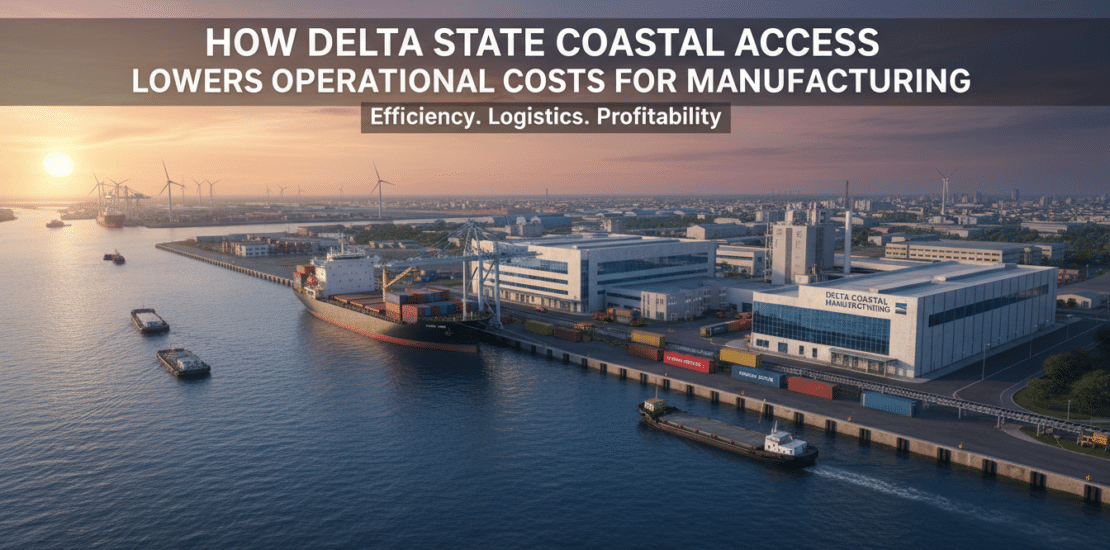
How Delta State Coastal Access Lowers Operational Costs for Manufacturing
Delta State, Nigeria, often hailed as the “Finger of God” due to its unique geographical layout and vast oil reserves, possesses a significant and often under-appreciated asset: its extensive coastal access. This attribute, stretching along the Atlantic Ocean and interwoven with a complex network of rivers, creeks, and lagoons, presents a powerful opportunity to significantly lower operational costs for manufacturing industries looking to establish or expand their footprint within the state. The benefits are multifaceted, impacting transportation, raw material sourcing, energy consumption, and even workforce availability, making Delta State a compelling location for manufacturers seeking a competitive edge in a challenging global landscape.
1. Reduced Transportation Costs Through Waterways:
One of the most direct and substantial impacts of coastal access on manufacturing operational costs is the dramatic reduction in transportation expenses. Moving raw materials and finished goods is a major logistical challenge for any manufacturer, often contributing significantly to overall expenditure. Delta State’s intricate network of waterways offers a viable and often more cost-effective alternative to traditional road or rail transportation, particularly for heavy or bulky goods.
-
Lower Fuel Consumption: Waterborne transport, especially utilizing barges and ships, is inherently more fuel-efficient than road haulage. The resistance encountered by vehicles on land is significantly higher than that experienced by vessels in water, resulting in lower fuel consumption per ton-mile. This translates directly into reduced fuel costs, particularly relevant in an era of fluctuating oil prices.
-
Reduced Road Congestion and Maintenance: Delta State, like many developing regions, struggles with road infrastructure limitations and persistent traffic congestion, especially in urban centers like Warri and Asaba. This congestion leads to delays, increased fuel consumption, and higher vehicle maintenance costs due to wear and tear. Utilizing waterways circumvents these issues, providing a smoother and more predictable transportation route. Furthermore, shifting freight from roads to waterways helps to alleviate pressure on road infrastructure, potentially delaying costly maintenance and reconstruction projects.
-
Access to Remote Locations: The intricate riverine network provides access to areas within Delta State that are otherwise difficult or even impossible to reach by road. This is particularly crucial for manufacturers sourcing raw materials like timber, rubber, or agricultural produce from these remote regions. Waterways enable efficient and cost-effective transport of these materials to processing facilities located closer to urban centers or export points.
-
Direct Port Access: Delta State boasts several ports, including Warri Port, Sapele Port, and Koko Port, offering direct access to international shipping lanes. This eliminates the need for costly inland transportation of goods destined for export, simplifying logistics and reducing handling charges. Manufacturers located near these ports can significantly reduce their export-related transportation expenses.
- Barging Solutions: Barging, utilizing specialized flat-bottomed vessels, is a cost-effective method for transporting large volumes of raw materials or finished goods along the waterways. This is particularly advantageous for industries dealing with bulk commodities such as cement, steel, or agricultural produce. Barging offers economies of scale, allowing manufacturers to move large quantities of goods in a single shipment, further reducing per-unit transportation costs.
2. Access to Abundant and Diverse Raw Materials:
Delta State is richly endowed with natural resources, many of which are readily accessible through its coastal and riverine systems. This abundance translates into lower raw material sourcing costs for manufacturers operating within the state.
-
Petroleum and Natural Gas: As a major oil-producing region, Delta State offers manufacturers access to relatively cheaper energy sources, particularly natural gas. Natural gas can be used to power manufacturing facilities, reducing reliance on more expensive electricity generated from other sources. Furthermore, access to petroleum products at potentially reduced costs can lower transportation expenses and operational costs in general.
-
Agricultural Resources: Delta State’s fertile delta region supports a thriving agricultural sector, producing crops like rubber, palm oil, cassava, and fruits. Manufacturers utilizing these agricultural resources as raw materials benefit from lower transportation costs due to proximity and the availability of water transport options for moving bulky agricultural commodities. Food processing industries, for example, can significantly reduce their operational costs by establishing facilities near agricultural production areas within the state.
-
Timber and Forest Products: The coastal rainforests of Delta State provide a source of timber and other forest products. Waterways facilitate the extraction and transportation of these materials to processing facilities, reducing transportation costs and providing access to remote timber reserves.
-
Fisheries Resources: The coastal waters and rivers of Delta State support a vibrant fishing industry. Seafood processing and packaging industries can benefit from direct access to these fisheries resources, reducing transportation costs and ensuring a fresh supply of raw materials.
- Sand and Gravel: The riverbeds and coastal areas provide abundant sources of sand and gravel, essential raw materials for the construction industry. Manufacturers of concrete, cement, and other construction materials can benefit from the ready availability of these resources, minimizing transportation costs and ensuring a stable supply chain.
3. Lower Energy Costs Through Proximity to Gas Supply:
Manufacturing is an energy-intensive process, and energy costs can represent a significant portion of operational expenses. Delta State’s position as a major oil and gas producing region, coupled with its coastal access, allows manufacturers to potentially access cheaper and more reliable energy sources.
-
Direct Access to Natural Gas: Proximity to natural gas pipelines and processing facilities allows manufacturers to access natural gas directly, bypassing intermediaries and reducing transportation costs. Natural gas can be used to power manufacturing facilities, generate electricity, and provide heat for industrial processes.
-
Reduced Reliance on the National Grid: Nigeria’s national electricity grid is often unreliable, plagued by outages and voltage fluctuations. This unreliability can disrupt manufacturing operations, leading to production losses and equipment damage. Access to cheaper and more reliable natural gas allows manufacturers to generate their own electricity, reducing reliance on the unstable national grid and ensuring a more consistent power supply.
-
Potential for Co-generation: Co-generation, also known as combined heat and power (CHP), is a highly efficient process that involves generating electricity and heat simultaneously from a single fuel source. Manufacturers with access to natural gas can utilize co-generation technology to meet both their electricity and heating needs, further reducing energy costs and improving overall efficiency.
- Liquefied Natural Gas (LNG) Infrastructure: The presence of LNG infrastructure within Delta State, facilitates the availability of LNG as a fuel source for manufacturers located further inland or in areas not directly connected to natural gas pipelines. LNG can be transported by specialized tankers along the waterways, providing access to cleaner and more efficient energy sources for a wider range of manufacturing facilities.
4. Streamlined Logistics and Supply Chain Management:
Coastal access simplifies logistics and supply chain management for manufacturers in Delta State, leading to greater efficiency and reduced operational costs.
-
Multimodal Transportation Options: The availability of both road and water transportation options provides manufacturers with greater flexibility in managing their supply chains. They can choose the most cost-effective and efficient mode of transportation for each stage of the process, optimizing their logistics and reducing overall expenses.
-
Reduced Inventory Holding Costs: Efficient transportation and logistics reduce the need for large inventories of raw materials and finished goods. Manufacturers can operate with leaner inventories, reducing storage costs, minimizing the risk of obsolescence, and freeing up capital for other investments.
-
Improved Supply Chain Visibility: Real-time tracking of shipments along the waterways allows manufacturers to monitor their supply chains more effectively, identify potential delays or disruptions, and take proactive measures to mitigate risks.
- Faster Delivery Times: Efficient water transportation can often result in faster delivery times compared to road transport, particularly for bulky or heavy goods. This reduces lead times, improves customer satisfaction, and allows manufacturers to respond more quickly to changing market demands.
5. Availability of a Skilled Workforce with Maritime Expertise:
Delta State boasts a pool of skilled workers with expertise in maritime operations, shipbuilding, and port management, providing manufacturers with access to a qualified workforce to support their operations.
-
Reduced Labor Costs: The availability of a skilled workforce can reduce labor costs, as manufacturers do not need to invest heavily in training and development.
-
Improved Operational Efficiency: Skilled workers are more efficient and productive, leading to higher output and lower operational costs.
-
Support for Maritime Industries: The presence of a skilled maritime workforce supports the development of related industries, such as shipbuilding, repair, and port services, creating a vibrant ecosystem that benefits manufacturers operating in the region.
- Local Knowledge and Expertise: A local workforce possesses invaluable knowledge of the region’s waterways, environmental conditions, and regulatory requirements, facilitating smoother and more efficient operations.
In conclusion, the coastal access enjoyed by Delta State presents a compelling opportunity for manufacturing industries to significantly lower their operational costs. By leveraging the state’s extensive waterways, abundant natural resources, access to cheaper energy sources, streamlined logistics, and skilled workforce, manufacturers can gain a competitive edge and establish a thriving presence in the region.
Related Posts
 How Kaduna State uses rail connectivity to drive down logistics costs
 Scaling data center capacity to meet the surging digital demand in Delta state Nigeria
 The Case for Building a Gas-Powered Data Center in Delta State
 The Gateway to the Niger Delta Why Delta State Should Be Your First Stop
 The Role of Private Capital in Expanding Delta Stateʼs Urban Renewal Projects
 The Unique Advantage of Delta Stateʼs Peaceful and Welcoming Communities
 Why Diaspora Investors Are Choosing Delta State for Legacy Projects
 Partnering with Delta State Government for Industrial Park Development