

How Kano State is modernizing its ancient trade routes through rail connectivity
- Posted by: PSL
- Categories: BRICS News, Financial Management, Human Resources and Talent Management, International Business and Market Entry, Marketing and Sales, News Blog, Operations and Process Improvement, Organizational Development, Risk Management and Compliance, Strategy and Planning, Technology and Digital Transformation
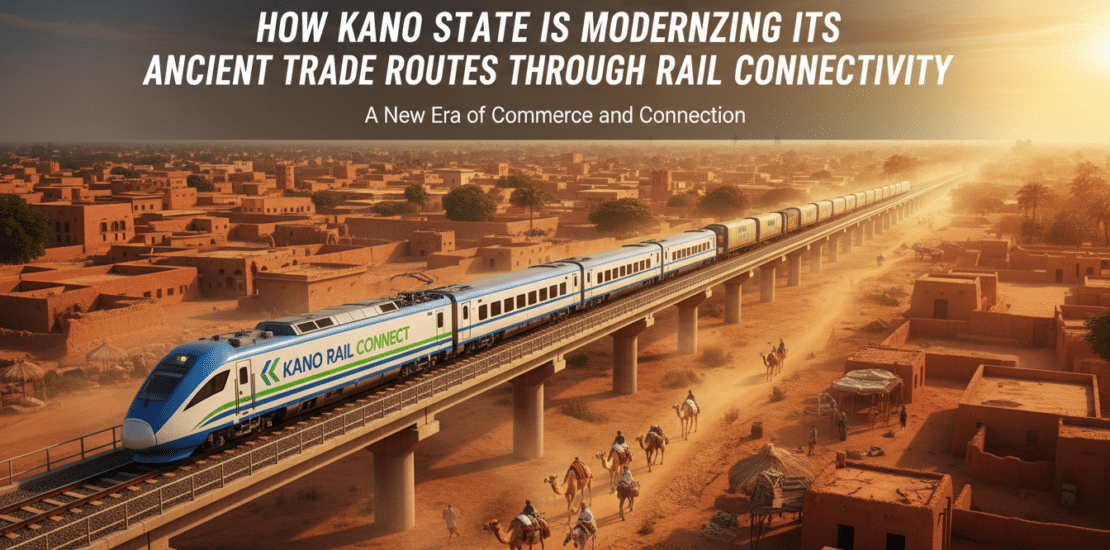
How Kano State is Modernizing its Ancient Trade Routes Through Rail Connectivity
Kano State, a vibrant economic and cultural hub in Northern Nigeria, is strategically positioned to leverage its historical prominence as a major trading center by revitalizing its ancient trade routes through modern rail infrastructure. This ambitious undertaking aims to transform Kano into a critical logistics and commercial nerve center, boosting economic growth, creating employment opportunities, and facilitating the efficient movement of goods and people within Nigeria and across its borders. The project, which involves significant investment in railway construction, rehabilitation, and integration with other transportation modes, is poised to reshape Kano’s economic landscape and reassert its position as a dominant force in regional and international trade. This article explores the historical significance of Kano’s trade routes, the rationale behind the rail modernization project, the specific components of the project, its potential benefits, the challenges it faces, and its long-term implications for Kano State and Nigeria as a whole.
A Legacy of Trade: Kano’s Historical Significance
For centuries, Kano has served as a vital nexus in a complex network of trade routes that crisscrossed the Sahara Desert and connected West Africa with North Africa, the Middle East, and Europe. Its strategic location at the southern edge of the Sahara Desert made it a natural meeting point for merchants from diverse regions, fostering a vibrant exchange of goods, ideas, and cultures. The city’s bustling Kurmi Market, established in the 15th century, became legendary for its diverse offerings, including textiles, leather goods, kola nuts, salt, gold, and enslaved people.
The trans-Saharan trade routes were instrumental in the development of Kano as a prosperous commercial center. Camel caravans laden with goods traversed vast distances, braving harsh desert conditions to reach Kano and other important trading cities in the region. This trade fueled the growth of Kano’s economy, attracted skilled artisans and merchants, and contributed to the city’s rich cultural heritage. The Kano Chronicle, a historical document that traces the history of Kano from the 10th century, provides valuable insights into the city’s economic and political development during this period.
The arrival of the British colonial administration in the late 19th and early 20th centuries brought significant changes to Kano’s trade patterns. The construction of railways and roads by the colonial government facilitated the movement of goods within Nigeria and to the coast for export, but it also led to a decline in the importance of the traditional trans-Saharan trade routes. Despite these changes, Kano remained an important commercial center, serving as a major distribution point for goods imported from abroad and for agricultural products from the surrounding region.
The post-independence era witnessed further shifts in Kano’s economic landscape. The discovery of oil in Nigeria led to a decline in the importance of agriculture and manufacturing, and Kano’s economy suffered as a result. However, the city’s entrepreneurial spirit and its strategic location have enabled it to adapt to these challenges and to remain a significant commercial center. The current rail modernization project represents a renewed effort to leverage Kano’s historical advantages and to revitalize its economy through improved connectivity and enhanced trade facilitation.
The Rationale for Rail Modernization: Addressing Present-Day Challenges
Despite its historical significance and economic potential, Kano faces several challenges that hinder its ability to fully realize its trade ambitions. The existing transportation infrastructure is inadequate to handle the growing volume of goods and people moving through the city. The road network is congested and poorly maintained, leading to delays, increased transportation costs, and higher rates of accidents. The reliance on road transportation also contributes to environmental pollution and increases the cost of maintaining the road infrastructure.
The lack of a modern and efficient railway system has further hampered Kano’s economic development. The existing railway network, which was built during the colonial era, is outdated and inefficient. The tracks are in poor condition, the rolling stock is old and unreliable, and the signaling and communication systems are obsolete. As a result, the railway system is unable to provide a competitive alternative to road transportation for the movement of goods and people.
The inadequacy of the transportation infrastructure has had a negative impact on Kano’s economy. Businesses face higher transportation costs, which reduce their competitiveness. The delays in the movement of goods lead to spoilage and losses, particularly for agricultural products. The congestion on the roads makes it difficult for people to commute to work and for businesses to operate efficiently. The overall effect is to stifle economic growth and to limit Kano’s ability to attract investment.
The rail modernization project is designed to address these challenges and to unlock Kano’s economic potential. By providing a modern and efficient railway system, the project aims to reduce transportation costs, improve the speed and reliability of goods movement, and alleviate congestion on the roads. The project is also expected to create employment opportunities, stimulate economic growth, and attract investment to Kano. The project is seen as a critical component of the government’s efforts to diversify the Nigerian economy and to reduce its dependence on oil revenues.
Components of the Rail Modernization Project: A Multifaceted Approach
The Kano State rail modernization project encompasses a comprehensive range of initiatives designed to create a modern, efficient, and integrated railway system. These initiatives include the construction of new railway lines, the rehabilitation of existing lines, the acquisition of modern rolling stock, the installation of advanced signaling and communication systems, and the development of modern railway terminals and logistics facilities.
One of the key components of the project is the construction of the Kano-Maradi rail line, a 284-kilometer standard gauge railway line that will connect Kano to Maradi in Niger Republic. This project is particularly significant because it will re-establish Kano as a major trading hub, connecting it to a vast hinterland in Niger and other landlocked countries in the Sahel region. The Kano-Maradi rail line will facilitate the movement of goods between Nigeria and Niger, boosting trade and economic cooperation between the two countries. The project is also expected to reduce the cost of transportation for goods moving between Nigeria and Niger, making trade more competitive.
The rehabilitation of the existing narrow-gauge railway lines is another important component of the rail modernization project. These lines, which were built during the colonial era, are in dire need of repair and upgrading. The rehabilitation project will involve the replacement of old tracks, the repair of bridges and culverts, and the upgrading of signaling and communication systems. The rehabilitated railway lines will provide a more efficient and reliable means of transporting goods and people within Kano State and to other parts of Nigeria.
The acquisition of modern rolling stock is also a critical element of the project. The existing rolling stock is old and unreliable, and it is not capable of meeting the demands of a modern railway system. The project will involve the acquisition of new locomotives, coaches, and wagons, which will be equipped with modern features and technologies. The new rolling stock will enable the railway system to operate more efficiently and to provide a higher level of service to its customers.
The installation of advanced signaling and communication systems is essential for ensuring the safe and efficient operation of the railway system. The existing signaling and communication systems are obsolete and unreliable, and they pose a safety hazard. The project will involve the installation of modern signaling and communication systems, which will provide real-time information on train movements and will enable the railway system to operate more safely and efficiently.
The development of modern railway terminals and logistics facilities is also a key component of the project. The existing railway terminals are outdated and inadequate to handle the growing volume of goods and people moving through the city. The project will involve the construction of new railway terminals and logistics facilities, which will be equipped with modern amenities and technologies. The new terminals and logistics facilities will provide a more efficient and convenient means of transferring goods and people between the railway system and other modes of transportation.
Potential Benefits: Transforming Kano’s Economic Landscape
The Kano State rail modernization project has the potential to generate a wide range of economic and social benefits for Kano State and Nigeria as a whole. The project is expected to boost economic growth, create employment opportunities, reduce transportation costs, improve the efficiency of goods movement, and enhance the competitiveness of Kano’s businesses.
One of the most significant benefits of the project is its potential to boost economic growth. By providing a modern and efficient railway system, the project will attract investment to Kano and will stimulate economic activity in the region. The project will also facilitate the movement of goods between Kano and other parts of Nigeria, as well as to neighboring countries, boosting trade and economic cooperation. The Kano-Maradi rail line, in particular, is expected to have a significant impact on trade between Nigeria and Niger, as well as with other landlocked countries in the Sahel region.
The project is also expected to create numerous employment opportunities. The construction of the new railway lines, the rehabilitation of the existing lines, and the operation of the railway system will require a large workforce. The project will also create indirect employment opportunities in related industries, such as manufacturing, logistics, and transportation. The creation of new employment opportunities will help to reduce unemployment and poverty in Kano State.
The reduction of transportation costs is another important benefit of the project. The existing transportation infrastructure is inadequate and inefficient, leading to high transportation costs. The modern and efficient railway system will provide a more cost-effective means of transporting goods and people, reducing transportation costs for businesses and individuals. The lower transportation costs will enhance the competitiveness of Kano’s businesses and will make it more attractive for investors to locate in the region.
The improvement in the efficiency of goods movement is also a significant benefit of the project. The existing transportation infrastructure is congested and poorly maintained, leading to delays in the movement of goods. The modern and efficient railway system will provide a faster and more reliable means of transporting goods, reducing delays and improving the overall efficiency of the supply chain. The improved efficiency of goods movement will reduce spoilage and losses, particularly for agricultural products.
The enhancement of the competitiveness of Kano’s businesses is another important benefit of the project. The modern and efficient railway system will reduce transportation costs, improve the efficiency of goods movement, and provide a more reliable means of transporting goods and people. These improvements will enhance the competitiveness of Kano’s businesses, making them more attractive to customers and investors. The enhanced competitiveness of Kano’s businesses will contribute to economic growth and job creation in the region.
Challenges and Mitigation Strategies: Navigating the Path to Success
Despite its potential benefits, the Kano State rail modernization project faces several challenges that need to be addressed in order to ensure its successful implementation. These challenges include funding constraints, land acquisition issues, technical complexities, security concerns, and environmental impacts.
Funding constraints are a major challenge for the project. The construction of new railway lines, the rehabilitation of existing lines, and the acquisition of modern rolling stock require significant financial resources. The government of Kano State may not have sufficient resources to finance the entire project on its own. Therefore, it will need to seek funding from other sources, such as the federal government, international development agencies, and private investors. To mitigate this challenge, the government of Kano State should develop a comprehensive funding strategy that includes a mix of public and private funding sources. It should also explore innovative financing mechanisms, such as public-private partnerships, to attract private investment to the project.
Land acquisition issues are another potential challenge. The construction of new railway lines will require the acquisition of land, which may involve the displacement of people and businesses. Land acquisition can be a complex and time-consuming process, particularly in areas with high population density. To mitigate this challenge, the government of Kano State should develop a fair and transparent land acquisition process that respects the rights of landowners and provides adequate compensation for displacement. It should also engage in extensive consultations with affected communities to address their concerns and to ensure that the project is implemented in a socially responsible manner.
Technical complexities are also a challenge for the project. The construction of new railway lines and the rehabilitation of existing lines require specialized technical expertise. The government of Kano State may not have sufficient in-house expertise to manage the technical aspects of the project. Therefore, it will need to hire experienced contractors and consultants to provide the necessary technical expertise. To mitigate this challenge, the government of Kano State should develop a robust project management framework that includes clear roles and responsibilities, effective communication channels, and rigorous quality control procedures. It should also ensure that the contractors and consultants it hires have the necessary experience and expertise to successfully implement the project.
Security concerns are a growing challenge in Nigeria, particularly in the northern part of the country. The construction and operation of the railway system could be vulnerable to attacks by insurgents and criminal gangs. To mitigate this challenge, the government of Kano State should work closely with the federal government and security agencies to ensure the safety and security of the project. It should also implement security measures, such as surveillance systems, access controls, and armed guards, to protect the railway infrastructure and personnel.
Environmental impacts are another potential challenge. The construction of new railway lines and the operation of the railway system could have negative impacts on the environment, such as air and water pollution, noise pollution, and habitat destruction. To mitigate these impacts, the government of Kano State should conduct a thorough environmental impact assessment of the project and should implement measures to minimize its environmental footprint. It should also ensure that the railway system operates in an environmentally sustainable manner.
Long-Term Implications: A Catalyst for Sustainable Development
The Kano State rail modernization project has the potential to have a profound and lasting impact on Kano State and Nigeria as a whole. In the long term, the project can serve as a catalyst for sustainable development, promoting economic growth, creating employment opportunities, improving the quality of life, and enhancing the competitiveness of the Nigerian economy.
The project’s contribution to economic growth will be significant. By providing a modern and efficient railway system, the project will attract investment to Kano and will stimulate economic activity in the region. The project will also facilitate the movement of goods between Kano and other parts of Nigeria, as well as to neighboring countries, boosting trade and economic cooperation. The Kano-Maradi rail line, in particular, is expected to have a significant impact on trade between Nigeria and Niger, as well as with other landlocked countries in the Sahel region. The increased economic activity will generate revenue for the government, which can be used to finance other development projects.
The project’s contribution to employment creation will also be significant. The construction of the new railway lines, the rehabilitation of the existing lines, and the operation of the railway system will require a large workforce. The project will also create indirect employment opportunities in related industries, such as manufacturing, logistics, and transportation. The creation of new employment opportunities will help to reduce unemployment and poverty in Kano State. The increased employment will also boost the overall economy, as more people will have income to spend.
The project’s contribution to improving the quality of life will be substantial. A modern and efficient railway system will provide a safer, faster, and more comfortable means of transportation for people traveling within Kano State and to other parts of Nigeria. The project will also reduce traffic congestion on the roads, improving air quality and reducing travel times. The improved transportation infrastructure will make it easier for people to access jobs, education, healthcare, and other essential services, improving their overall quality of life.
The project’s contribution to enhancing the competitiveness of the Nigerian economy will be significant. By reducing transportation costs, improving the efficiency of goods movement, and providing a more reliable means of transporting goods and people, the project will enhance the competitiveness of Nigerian businesses. The improved competitiveness of Nigerian businesses will make them more attractive to customers and investors, leading to increased economic growth and job creation. The project will also help to diversify the Nigerian economy, reducing its dependence on oil revenues.
Related Posts
 How Kaduna State uses rail connectivity to drive down logistics costs
 Why Kano State is the ultimate hub for northern Nigerian logistics and trade
 Building World-Class Healthcare Facilities Through Delta State PPPs
 Why the Akwa Ibom Deep Seaport project is a game changer for Atlantic trade
 Unlocking value in the Kano State commercial agriculture and irrigation sector
 How Delta State is positioning itself as a hub for regional maritime trade
 Unlocking the Agricultural Value Chain Through PPPs in Delta State
 The growth potential of the Abia State trade and commerce ecosystem