

Indirect Tax Strategy Consumption Tax Nigeria
- Posted by: PSL
- Categories: BRICS News, Financial Management, International Business and Market Entry, News Blog
Introduction
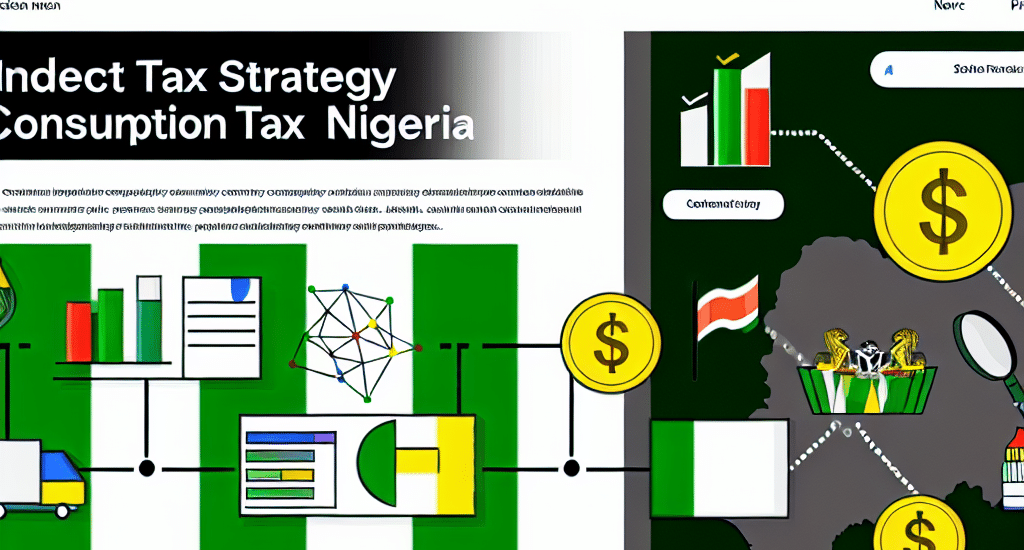
The significance of indirect tax strategies, particularly consumption tax, cannot be overstated in Nigeria’s economic landscape. Consumption taxes, such as the Value Added Tax (VAT) and various levies, play a crucial role in generating revenue for the government and managing economic behavior. This article delves into the current state of consumption taxes in Nigeria, examining its regulatory framework, implications for businesses and consumers, strategies for optimization, and the overall impact on the economy.
Historical Context of Consumption Tax in Nigeria
The evolution of consumption tax in Nigeria dates back to the implementation of VAT in 1994, introduced as a replacement for the sales tax that had been in effect since 1986. Initially set at 5%, VAT was designed to enhance revenue generation while ensuring broader coverage of taxable goods and services. Over the years, VAT has become the primary consumption tax in Nigeria, with a collection mechanism that operates at multiple stages of production and distribution.
The establishment of the Federal Inland Revenue Service (FIRS) was pivotal in managing VAT collection, monitoring compliance, and enforcing regulations. As Nigeria’s economy evolved, so did the application and rate of VAT, impacting various sectors, from telecommunications to agriculture and healthcare.
Regulatory Framework
The legal foundation for consumption taxes in Nigeria is primarily derived from the Value Added Tax Act of 1993 (as amended). The Act outlines key provisions regarding taxable goods and services, exemptions, registration requirements for taxable persons, and compliance obligations.
Taxable Goods and Services
Under the VAT Act, a broad array of goods and services are subject to taxation, contributing to significant revenue. Taxable items include:
- Consumer Goods: Clothing, electronics, food items (though certain essential food products may be exempt).
- Services: Telecommunications, legal and consulting services, and hospitality services.
Exemptions and Zero-rating
Recognizing the need to protect economically vulnerable sectors, the Nigerian government has implemented exemptions and zero-rated goods. Exempt items, such as basic foodstuffs and healthcare services, do not attract VAT, while zero-rated goods remain VAT-free but allow sellers to claim input tax credits. This structure aims to balance revenue generation with social equity.
Compliance and Registration
The responsibility for VAT compliance lies with businesses whose annual taxable turnover exceeds a specified threshold. These businesses must register with the FIRS, collect VAT on their sales, and remit it periodically. However, compliance remains a challenge, with many businesses resorting to informal practices, driven by high levels of tax evasion and challenges in tax administration.
Economic Implications of Consumption Tax
The impact of consumption tax on Nigeria’s economy is multifaceted. While it serves as a revenue-generating tool, it also influences consumer behavior, business operations, and investment strategies.
Revenue Generation
With Nigeria’s economy deeply reliant on oil revenues, the diversification of revenue streams through consumption taxes has become critical. VAT currently accounts for approximately 20% of Nigeria’s total tax revenue. As the government seeks to expand its fiscal base, the efficiency of VAT collection and its inclusive range of taxable goods and services will remain central to discussions about Nigeria’s economic health.
Price Sensitivity and Consumer Behavior
The imposition of consumption taxes can lead to increased prices for goods and services. In an economy where a significant portion of the population lives in poverty, rising costs can disproportionately affect consumers, leading to decreased disposable income and shifts in consumption patterns. Businesses must strategically approach pricing and cost management to mitigate adverse effects on consumer demand while remaining compliant with tax obligations.
Impact on Businesses
For businesses operating in Nigeria, compliance with VAT imposes additional administrative burdens. Companies must invest in specialized accounting systems to ensure accurate tax calculations and records. Non-compliance can result in penalties and loss of credibility, making a sound understanding of consumption tax law integral to business operations.
Strategies for Optimizing Consumption Tax
Governments and businesses alike are keen to develop strategies to optimize consumption tax regimes to ensure equitable growth. The absence of a negative atmosphere surrounding consumption will benefit the broader economy.
Comprehensive Tax Audit
Regular audits are essential for both tax authorities and businesses. Tax authorities can utilize audits to identify non-compliance and streamline collection processes. Businesses, on the other hand, should conduct regular internal audits to ensure compliance, identify opportunities for input tax recovery, and mitigate risks associated with tax administration.
Leveraging Technology
Technology has transformed tax compliance and administration. The adoption of e-filing systems and VAT management software can enhance efficiency, reduce errors, and improve transparency. Additionally, leveraging data analytics provides insights into consumer behavior, enabling businesses to adapt their strategies to changing tax implications.
Education and Awareness Campaigns
The complexity of consumption tax regulations can be overwhelming for businesses, particularly small enterprises. Conducting educational initiatives and awareness campaigns can better inform businesses about their obligations and available exemptions, promoting compliance and optimizing tax collection.
Engaging Stakeholders
Collaboration between the government, tax authorities, and business stakeholders is vital for developing a productive consumption tax strategy. Regular dialogues can help identify challenges, improve compliance, and enhance tax policy formulation. Engaging stakeholders can also facilitate the establishment of a taxpayer advisory committee, securing better representation of business interests within policy discussions.
Regional Comparisons and Best Practices
Examining consumption tax frameworks in other African nations provides valuable insights into best practices that Nigeria can adopt. Countries like South Africa, Kenya, and Ghana have implemented more efficient VAT regimes to bolster revenue generation.
South Africa
South Africa employs a varied VAT rate system, including reduced rates for essential goods and services, making consumption tax more equitable. The South African Revenue Service leverages sophisticated technology for tax collection, allowing real-time monitoring of businesses’ compliance.
Kenya
Kenya has enhanced its VAT collection through public awareness campaigns and mobile technology integration. The country has notably utilized the popularity of mobile money platforms for facilitating VAT payments, bringing efficiencies to tax administration.
Ghana
Ghana’s consumption tax strategy focuses on broadening the tax base while ensuring exemptions for essential products. The Ghana Revenue Authority has initiated regular compliance checks to enhance enforcement and curb tax evasion.
Challenges in Consumption Tax Administration
Despite the potential benefits, several challenges impede efficient consumption tax administration in Nigeria. Understanding these hurdles is crucial for ensuring the success of indirect tax strategies.
Tax Evasion and Informality
A large informal sector, comprising unregistered businesses, complicates tax collection efforts. Informal businesses often evade tax obligations, undermining the tax base and revenue generation. Strategies must be developed that incentivize informal businesses to register and comply with tax laws.
Bureaucracy and Red Tape
Bureaucratic inefficiencies can hinder the timely processing of VAT registrations and refunds. Streamlining administrative processes can improve compliance and encourage businesses to adhere to tax obligations without excessive delay.
Infrastructure and Capacity Gaps
Insufficient infrastructure and a lack of skilled personnel in tax administration may limit the effectiveness of consumption tax enforcement. Investments in training and resource allocation are necessary to enhance the capacity of tax authorities to monitor compliance effectively.
By understanding these complexities and actively working towards solutions, Nigeria can establish a more effective and equitable consumption tax structure, fostering an environment that supports economic growth and fair distribution of tax responsibilities among businesses and consumers alike.
Related Posts
 Tax Adherence Strategies for International Companies in Nigeria
 Understanding Personal Income Tax Laws for Nigerian Employees
 How Tax Incentives Support Industrial Growth in Nigeria
 How the Federal Inland Revenue Service Tracks Tax Compliance
 Guide to Filing Annual Tax Returns for Nigerian Agribusinesses
 Scaling data center capacity to meet the surging digital demand in Delta state Nigeria
 Why Nigeria remains the most significant high growth market in the Global South
 How Nigeria is positioning itself as the data center capital of West Africa