

Why Delta State remains a top choice for petrochemical industry expansion
- Posted by: PSL
- Categories: BRICS News, Financial Management, Human Resources and Talent Management, International Business and Market Entry, Marketing and Sales, News Blog, Operations and Process Improvement, Organizational Development, Risk Management and Compliance, Strategy and Planning, Technology and Digital Transformation
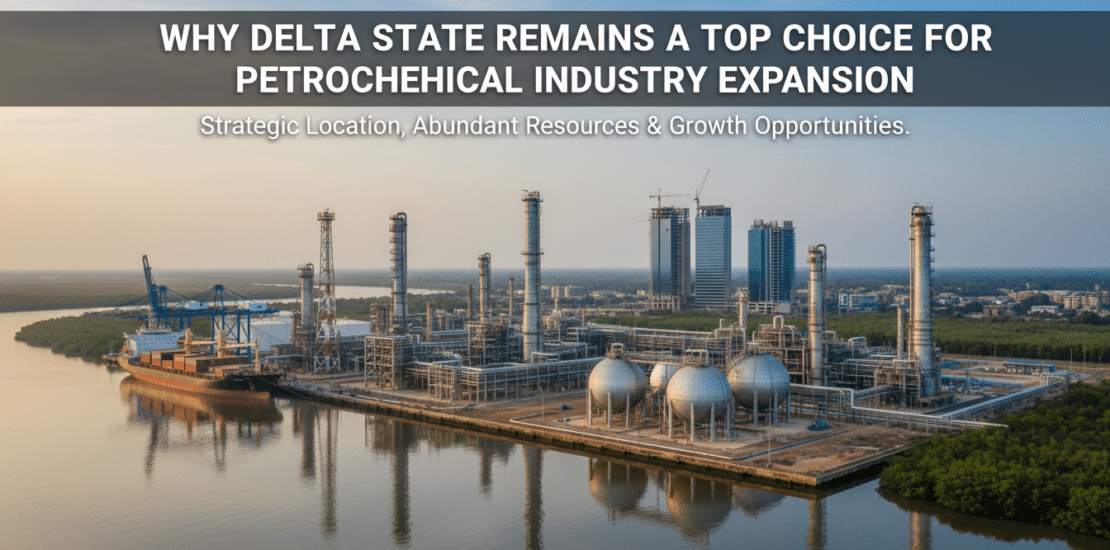
Why Delta State Remains a Top Choice for Petrochemical Industry Expansion: Untapped Potential and Strategic Advantages
Delta State, nestled in the heart of Nigeria’s Niger Delta region, has long been synonymous with oil and gas. While the narrative often focuses on crude oil extraction, the state possesses a unique combination of factors that position it as an increasingly attractive and strategically vital location for the expansion of the petrochemical industry. Despite facing historical challenges and persistent development hurdles, Delta State offers a compelling blend of resource availability, infrastructure development, strategic location, and a growing commitment from both the government and private sector to unlock its potential in the petrochemical value chain. This article will delve into the multifaceted reasons why Delta State continues to be a top choice for petrochemical industry expansion, highlighting its competitive advantages and the opportunities it presents for investors.
1. Abundant Feedstock Availability: The Foundation for Petrochemical Growth
The bedrock of any thriving petrochemical industry is a reliable and readily available source of feedstock. Delta State, being a major oil and gas producing region, boasts significant reserves of natural gas and crude oil, the primary raw materials for a vast range of petrochemical products. This inherent abundance significantly reduces transportation costs and logistical complexities associated with sourcing feedstock from distant locations. The presence of numerous oil fields and gas processing plants within the state provides a consistent and potentially cost-effective supply of essential resources like methane, ethane, propane, butane, and naphtha.
This proximity to feedstock translates directly into lower operational expenses for petrochemical plants. Imagine a scenario where a petrochemical complex located in Delta State can seamlessly draw its requirements from nearby gas processing facilities via pipelines, minimizing the risks and costs associated with long-distance transportation via tankers or other means. This direct access allows for greater control over feedstock quality and consistency, contributing to higher product yields and improved operational efficiency.
Furthermore, the ongoing efforts to reduce gas flaring and harness associated gas are adding to the available feedstock pool. Initiatives aimed at capturing and processing flared gas can provide a sustainable and environmentally responsible source of raw materials for the petrochemical industry, contributing to a more circular and sustainable economy. These efforts are not only beneficial from an environmental perspective but also create new economic opportunities for both the state and the nation. The synergy between gas utilization projects and the petrochemical industry is a key driver for Delta State’s continued attractiveness.
The recent focus on exploring and developing marginal oil fields within Delta State further strengthens the argument for its feedstock advantage. These fields, often overlooked by larger companies, can contribute significantly to the overall oil and gas production in the state, ensuring a sustained supply of feedstock for existing and future petrochemical facilities. The involvement of indigenous companies in these marginal field developments also fosters local participation and economic empowerment, creating a more inclusive and sustainable growth model.
2. Strategic Location and Connectivity: Bridging the Supply Chain
Delta State’s geographical location and connectivity play a crucial role in facilitating the efficient movement of raw materials, intermediate products, and finished goods. The state’s coastline provides access to the Atlantic Ocean, enabling seamless international trade and transportation of petrochemical products to global markets. This maritime advantage significantly reduces reliance on land-based transportation networks, minimizing logistical bottlenecks and associated costs.
The presence of major seaports, such as the Warri Port and the Koko Port, further enhances the state’s connectivity. These ports serve as vital gateways for the import of machinery and equipment required for petrochemical plant construction and maintenance, as well as the export of finished products to regional and international destinations. The ongoing efforts to modernize and expand these port facilities are crucial for accommodating the increasing demands of the petrochemical industry.
Beyond maritime connectivity, Delta State also benefits from its strategic location within Nigeria. It serves as a major transit hub for goods moving between the eastern, western, and northern regions of the country. This central location provides access to a large and growing domestic market for petrochemical products, including plastics, fertilizers, and other essential commodities. The improved road networks connecting Delta State to other parts of Nigeria are crucial for ensuring the efficient distribution of these products to consumers across the country.
Furthermore, the ongoing development of rail infrastructure within the state is expected to further enhance its connectivity and logistical capabilities. The expansion of the rail network will provide a more efficient and cost-effective means of transporting bulk commodities, such as feedstock and finished petrochemical products, thereby reducing reliance on road transportation and minimizing traffic congestion.
The proposed deep seaport project in Delta State, if realized, would be a game-changer for the petrochemical industry. A deep seaport would be capable of handling larger vessels and significantly increasing the throughput capacity of the state’s port infrastructure. This would further enhance its attractiveness as a location for petrochemical plants seeking to export their products to global markets.
3. Developing Infrastructure and Government Support: Creating an Enabling Environment
Recognizing the immense potential of the petrochemical industry, the Delta State government has been actively working to create an enabling environment for investors. This includes investing in infrastructure development, streamlining regulatory processes, and providing incentives to attract private sector participation.
The government’s commitment to improving power supply is particularly crucial for the energy-intensive petrochemical industry. Initiatives aimed at increasing power generation capacity and improving the reliability of electricity supply are essential for ensuring the smooth operation of petrochemical plants. The development of independent power projects (IPPs) within the state is a step in the right direction towards addressing this challenge.
Beyond power supply, the government is also focused on improving road infrastructure, water supply, and waste management systems. These infrastructural improvements are crucial for creating a conducive environment for petrochemical plants to operate efficiently and sustainably. The government’s commitment to providing reliable utilities and infrastructure is a key factor in attracting foreign and domestic investment into the petrochemical sector.
Furthermore, the government is actively working to streamline regulatory processes and reduce bureaucratic hurdles for investors. This includes simplifying land acquisition procedures, expediting environmental approvals, and providing a one-stop-shop for investors to access relevant information and permits. The government’s proactive approach to facilitating investment is a significant advantage for companies considering establishing or expanding their operations in Delta State.
The establishment of industrial parks and special economic zones within the state is another important initiative aimed at attracting investment into the petrochemical industry. These zones offer investors a range of incentives, including tax breaks, customs duty exemptions, and streamlined regulatory procedures. By concentrating industrial activities in designated areas, the government can also facilitate the development of shared infrastructure and services, further reducing costs for businesses.
Moreover, the Delta State government has been actively promoting the petrochemical industry through investment promotion campaigns and participation in trade fairs and exhibitions. These efforts are aimed at raising awareness about the state’s potential as a petrochemical hub and attracting both domestic and foreign investors. The government’s proactive approach to marketing the state’s investment opportunities is a crucial factor in driving growth in the petrochemical sector.
4. Human Capital Development and Local Content: Building a Sustainable Workforce
The availability of a skilled and competent workforce is essential for the success of any industry, and the petrochemical sector is no exception. Delta State boasts a large and growing population, with a significant pool of educated and skilled workers. The state government has been investing in education and training programs to equip the workforce with the skills required to meet the demands of the petrochemical industry.
Technical and vocational training centers are playing a crucial role in providing specialized skills training in areas such as process engineering, instrumentation, and maintenance. These training programs are designed to meet the specific needs of the petrochemical industry and ensure that the workforce is equipped with the latest knowledge and skills. The government’s commitment to investing in human capital development is a key factor in attracting companies to establish operations in Delta State.
Furthermore, the implementation of local content policies is encouraging companies to prioritize the employment of local workers and the procurement of locally produced goods and services. This helps to create jobs for the local population and stimulate economic growth within the state. The local content policy also promotes the transfer of technology and skills from foreign companies to local businesses, fostering a more sustainable and inclusive development model.
The presence of reputable universities and tertiary institutions in Delta State also provides a strong foundation for research and development in the petrochemical sector. These institutions are conducting cutting-edge research in areas such as catalysis, polymer science, and chemical engineering, which can contribute to innovation and technological advancements in the industry. The collaboration between universities and industry is crucial for driving innovation and ensuring that the petrochemical sector remains competitive in the global market.
The commitment to local content development is not only beneficial for the local population but also for the petrochemical companies themselves. By employing local workers and sourcing locally produced goods and services, companies can reduce their operational costs and build stronger relationships with the local community. This fosters a more sustainable and mutually beneficial relationship between the industry and the local population.
5. Addressing Challenges and Promoting Sustainable Development:
While Delta State offers numerous advantages for petrochemical industry expansion, it is crucial to acknowledge and address the challenges that the state faces. Environmental degradation, social unrest, and security concerns have historically plagued the Niger Delta region, and these issues need to be addressed in a sustainable and responsible manner.
The government and the industry must work together to implement best practices in environmental management and pollution control. This includes adopting cleaner technologies, investing in waste management systems, and conducting regular environmental audits to ensure compliance with environmental regulations. The emphasis on sustainable development is not only essential for protecting the environment but also for ensuring the long-term viability of the petrochemical industry.
Furthermore, addressing social unrest and security concerns requires a multi-faceted approach that includes promoting economic development, creating jobs, and improving access to education and healthcare. Engaging with local communities and addressing their grievances is crucial for building trust and fostering a more peaceful and stable environment. The success of the petrochemical industry in Delta State depends on creating a shared sense of ownership and ensuring that the benefits of development are shared equitably with the local population.
The adoption of corporate social responsibility (CSR) initiatives by petrochemical companies is also essential for promoting sustainable development. CSR programs can focus on areas such as education, healthcare, environmental protection, and community development. By investing in these initiatives, companies can contribute to improving the quality of life for the local population and building stronger relationships with the community.
In conclusion, Delta State’s attractiveness for petrochemical industry expansion stems from a potent mix of abundant feedstock availability, strategic location, developing infrastructure, government support, and a growing emphasis on human capital development and local content. While challenges remain, the state’s commitment to addressing them through sustainable development practices positions it as a prime destination for investors seeking to capitalize on the vast potential of the Nigerian petrochemical market. The continued focus on creating an enabling environment, fostering collaboration between government, industry, and local communities, and prioritizing sustainable development will be critical to unlocking the full potential of Delta State as a leading petrochemical hub in West Africa.