
Why institutional investors are eyeing Warri for midstream petroleum infrastructure
- Posted by: PSL
- Categories: BRICS News, Financial Management, Human Resources and Talent Management, International Business and Market Entry, Marketing and Sales, News Blog, Operations and Process Improvement, Organizational Development, Risk Management and Compliance, Strategy and Planning, Technology and Digital Transformation
Why Institutional Investors Are Eyeing Warri for Midstream Petroleum Infrastructure
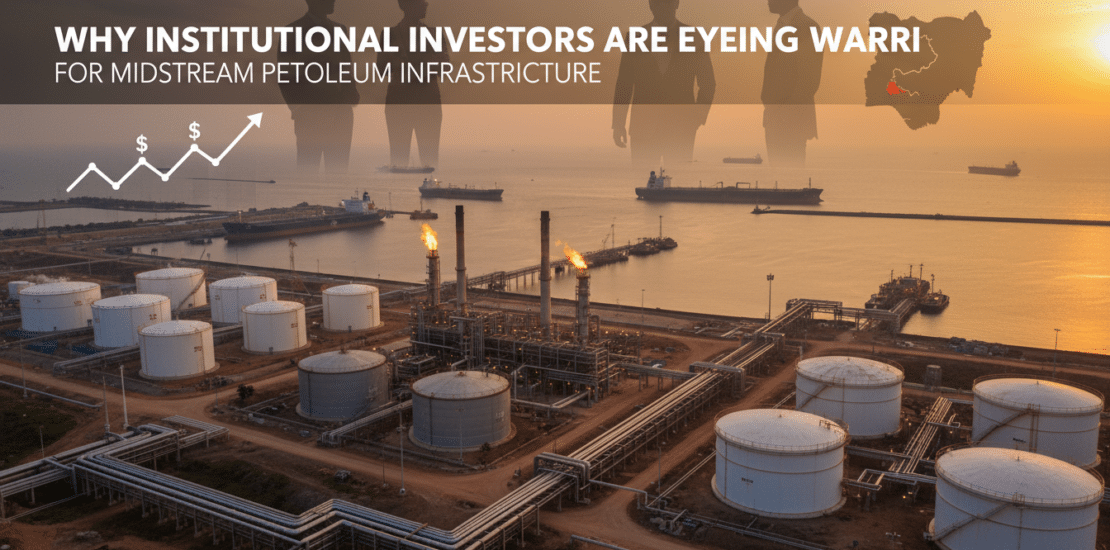
Warri, a bustling city in Delta State, Nigeria, has long been associated with upstream oil and gas activities. However, a shift is occurring, with institutional investors increasingly setting their sights on Warri for midstream petroleum infrastructure. This burgeoning interest is driven by a confluence of factors, including strategic location, untapped potential, government incentives, and evolving industry dynamics. The city’s unique position within the Nigerian oil and gas ecosystem, coupled with a growing demand for efficient and reliable midstream services, makes Warri a compelling investment destination.
1. Warri’s Strategic Location and Connectivity:
Warri boasts a geographically advantageous location that significantly contributes to its appeal for midstream infrastructure investment. Its proximity to both upstream production fields and downstream refining centers positions it as a vital transit point for crude oil and refined petroleum products. This strategic advantage allows for streamlined transportation and storage, reducing logistical bottlenecks and ultimately lowering costs.
- Proximity to Upstream Assets: Warri is located within the Niger Delta, the heartland of Nigeria’s oil production. Numerous oil fields, both onshore and offshore, lie within a relatively short distance. This proximity translates into lower transportation costs for moving crude oil from production sites to processing facilities, storage terminals, and ultimately, export channels. Investors recognize the economic benefits of reducing the distance between extraction and processing, making Warri a desirable location for pipelines, storage facilities, and other midstream assets.
- Access to Downstream Refineries: While the operational status of some Nigerian refineries is currently uncertain, Warri is home to the Warri Refining & Petrochemical Company Limited (WRPC), a significant downstream facility. The existence of a refinery necessitates efficient infrastructure for the supply of crude oil and the distribution of refined products. Investors are attracted by the potential to build or upgrade infrastructure that supports the refinery’s operations, ensuring a reliable supply chain and potentially enhancing its efficiency.
- Waterway Network and Ports: Warri is a port city with access to a complex network of waterways and river channels, providing crucial connectivity to other parts of the Niger Delta and the Atlantic Ocean. This network facilitates the transportation of crude oil, refined products, and equipment via barges and ships. The presence of Warri Port, despite its challenges, represents an existing infrastructure base that can be further developed and modernized to accommodate larger volumes of cargo, supporting the growth of midstream activities. Investors see opportunities to invest in port infrastructure, including jetties, terminals, and warehousing facilities, to enhance its capacity and efficiency. The development of inland waterways transportation is also gaining traction, presenting further investment possibilities.
- Road and Rail Connectivity (Potential): While the current road and rail infrastructure in the region face challenges, there are ongoing efforts to improve connectivity. Improved road networks will facilitate the movement of personnel, equipment, and refined products to and from Warri, expanding its reach and making it a more attractive location for midstream investments. Similarly, revitalizing the rail network could provide a more cost-effective and efficient means of transporting large volumes of crude oil and refined products, further enhancing Warri’s strategic importance. Investors are closely monitoring these infrastructure development projects, recognizing the potential for significant returns on investment if Warri becomes a well-connected hub for midstream operations.
2. Untapped Potential and Market Demand:
Nigeria’s midstream petroleum sector has historically suffered from underinvestment, creating significant opportunities for investors seeking to capitalize on unmet market demand. The existing infrastructure is often inadequate, outdated, and prone to disruptions, leading to inefficiencies and supply chain bottlenecks. Warri, as a key location within the oil-producing region, presents numerous opportunities to address these shortcomings.
- Storage Capacity Deficit: Nigeria faces a significant shortage of storage capacity for both crude oil and refined petroleum products. This deficiency leads to challenges in managing supply fluctuations, ensuring stable prices, and mitigating the impact of disruptions. Warri presents a prime location for developing large-scale storage terminals, catering to both domestic and regional demand. Investors can capitalize on the opportunity to build new storage facilities or upgrade existing ones, providing a crucial service that enhances the security and efficiency of the petroleum supply chain.
- Pipeline Infrastructure Gaps: The existing pipeline network in Nigeria is often plagued by leaks, vandalism, and inadequate capacity. This results in significant losses of crude oil and refined products, as well as environmental damage. Warri offers opportunities to invest in the construction of new pipelines or the rehabilitation of existing ones, improving the reliability and efficiency of transportation. Smart pipelines with advanced monitoring and leak detection systems are particularly attractive investments, as they can help to minimize losses and enhance safety.
- LPG Infrastructure Development: The Nigerian government is actively promoting the use of Liquefied Petroleum Gas (LPG) as a cleaner and more affordable alternative to traditional cooking fuels. However, the infrastructure for the distribution and storage of LPG is still underdeveloped, particularly in the Niger Delta region. Warri presents an opportunity to invest in LPG storage terminals, distribution networks, and bottling plants, contributing to the expansion of LPG access and usage in the region. This aligns with the government’s policy objectives and offers attractive investment returns.
- Petrochemical Industry Potential: While Warri’s focus has traditionally been on crude oil and refined products, there is growing potential for the development of a petrochemical industry. The availability of natural gas and other feedstocks in the region makes Warri a suitable location for petrochemical plants that can produce a variety of products, such as plastics, fertilizers, and synthetic fibers. Investors are exploring the feasibility of establishing petrochemical complexes in Warri, diversifying the local economy and creating new jobs.
- Addressing Supply Chain Inefficiencies: Nigeria’s petroleum supply chain is often characterized by inefficiencies, including long lead times, high transportation costs, and inadequate coordination. Warri offers opportunities to invest in logistics and supply chain management solutions that can streamline operations, reduce costs, and improve the reliability of supply. This could include the development of modern warehousing facilities, the implementation of advanced tracking systems, and the establishment of efficient transportation networks.
3. Government Incentives and Policy Support:
The Nigerian government recognizes the importance of developing the midstream petroleum sector and has implemented various incentives and policies to attract investment. These measures are designed to reduce risk, improve returns, and create a more favorable investment climate. Warri, as a key location within the oil-producing region, stands to benefit significantly from these government initiatives.
- Petroleum Industry Act (PIA) 2021: The PIA is a landmark piece of legislation that aims to overhaul Nigeria’s petroleum industry, creating a more transparent, efficient, and competitive environment. The Act provides clarity on regulatory frameworks, fiscal terms, and environmental standards, reducing uncertainty and encouraging investment. Specific provisions within the PIA address midstream infrastructure development, offering incentives such as tax breaks, duty waivers, and streamlined permitting processes.
- Nigerian Content Development and Monitoring Board (NCDMB): The NCDMB promotes the participation of Nigerian companies and personnel in the oil and gas industry. This policy requires that a certain percentage of goods and services used in oil and gas projects be sourced locally. Investors in Warri can benefit from the NCDMB’s support by partnering with local companies, accessing local expertise, and complying with Nigerian content requirements. This ensures that investments contribute to the development of the local economy and create opportunities for Nigerian businesses.
- Infrastructure Development Funds: The Nigerian government has established various infrastructure development funds to finance critical projects, including those in the midstream petroleum sector. Investors can access these funds through public-private partnerships (PPPs) or other financing mechanisms. These funds can help to reduce the initial capital outlay required for projects, making them more financially viable.
- Free Trade Zones: The existence and potential expansion of free trade zones in and around Warri offer additional incentives for investors. These zones provide benefits such as tax holidays, duty-free imports of equipment and materials, and simplified customs procedures. By locating midstream infrastructure projects within a free trade zone, investors can significantly reduce their operating costs and improve their competitiveness.
- Government-led Infrastructure Projects: The government is actively investing in infrastructure projects that support the growth of the midstream sector, such as roads, ports, and power generation facilities. These projects can enhance the attractiveness of Warri as an investment destination by improving connectivity, reducing logistics costs, and providing a more reliable power supply. Investors can leverage these government-led initiatives to further optimize their investments.
4. Evolving Industry Dynamics and Technological Advancements:
The global petroleum industry is undergoing significant transformations, driven by technological advancements, environmental concerns, and evolving market demands. Warri, like other oil-producing regions, must adapt to these changes to remain competitive. This adaptation presents opportunities for investors who are willing to embrace innovation and adopt new technologies.
- Digitalization and Automation: The integration of digital technologies and automation systems in midstream operations can significantly improve efficiency, reduce costs, and enhance safety. This includes the use of sensors, drones, data analytics, and artificial intelligence to monitor pipelines, optimize storage facilities, and predict equipment failures. Investors can capitalize on the opportunity to implement these technologies in Warri, creating a more modern and efficient midstream infrastructure.
- Renewable Energy Integration: While Warri is traditionally associated with fossil fuels, there is growing recognition of the need to integrate renewable energy sources into the energy mix. This could include the use of solar power to operate storage facilities or the development of biogas plants that utilize waste from agricultural activities. Investors can explore the potential for integrating renewable energy solutions into midstream operations in Warri, contributing to a more sustainable and diversified energy sector.
- Focus on Environmental Sustainability: Environmental sustainability is becoming increasingly important in the petroleum industry. Investors are paying closer attention to environmental risks and are seeking to invest in projects that minimize their environmental impact. This includes the implementation of advanced leak detection and repair systems, the adoption of cleaner transportation technologies, and the development of waste management facilities. Warri offers opportunities to invest in environmentally responsible midstream projects that meet international standards and contribute to the protection of the environment.
- Carbon Capture and Storage (CCS): Carbon Capture and Storage (CCS) technologies are gaining traction as a means of reducing greenhouse gas emissions from industrial processes. Warri, with its proximity to potential CO2 storage sites, could become a hub for CCS projects. Investors can explore the feasibility of capturing CO2 from industrial sources and storing it underground, contributing to Nigeria’s efforts to mitigate climate change.
- Modular Refineries: The development of modular refineries represents a potential opportunity for Warri. These smaller, more flexible refineries can be deployed relatively quickly and cost-effectively, helping to address the shortage of refined petroleum products in the region. Investors can explore the possibility of establishing modular refineries in Warri, contributing to energy security and reducing reliance on imports.
The combination of strategic location, untapped potential, government incentives, and evolving industry dynamics makes Warri an increasingly attractive destination for institutional investors seeking opportunities in midstream petroleum infrastructure. The city’s unique position within the Nigerian oil and gas ecosystem, coupled with a growing demand for efficient and reliable midstream services, presents a compelling investment case. While challenges remain, including security concerns, regulatory hurdles, and infrastructure gaps, the potential rewards are significant for those willing to invest in Warri’s future.