

How the Nigerian solid minerals revolution is attracting global mining giants
- Posted by: PSL
- Categories: BRICS News, Financial Management, Human Resources and Talent Management, International Business and Market Entry, Marketing and Sales, News Blog, Operations and Process Improvement, Organizational Development, Risk Management and Compliance, Strategy and Planning, Technology and Digital Transformation
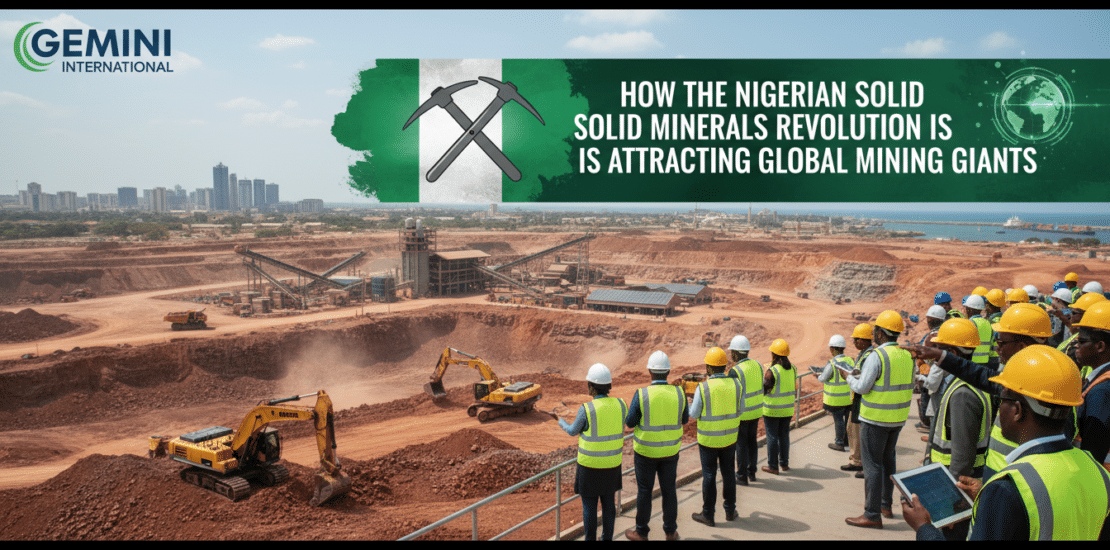
How the Nigerian Solid Minerals Revolution is Attracting Global Mining Giants
Nigeria, long synonymous with oil wealth, is quietly undergoing a resource revolution of a different kind – one fueled by its vast and largely untapped solid mineral deposits. For decades, the country’s focus remained laser-locked on petroleum, leading to a significant neglect of its burgeoning mineral sector. However, with dwindling oil prices, increasing awareness of the limitations of a mono-economy, and a renewed commitment to diversification, Nigeria is now aggressively pursuing the development of its solid mineral resources. This pivot is capturing the attention of global mining giants, drawn by the potential for lucrative returns and the promise of access to a diverse range of valuable minerals.
A Treasure Trove Beneath the Surface: The Scope of Nigeria’s Mineral Wealth
Nigeria’s geological landscape is a veritable treasure trove, brimming with a variety of commercially viable solid minerals. These resources are spread across the 36 states and the Federal Capital Territory, offering a geographically diverse opportunity for investment. Some of the most significant mineral deposits include:
- Gold: Significant gold deposits are found in states like Osun, Niger, Kebbi, Zamfara, and Kaduna. While artisanal mining has been a long-standing practice, the potential for large-scale, formalized gold mining operations is immense.
- Lead and Zinc: These minerals are abundant in states such as Plateau, Ebonyi, Benue, and Taraba. They are crucial for various industries, including battery production, construction, and manufacturing.
- Tin, Tantalite, and Columbite (Tin-Tantalite): The Jos Plateau region is historically known for its tin mining activities. Tantalite and Columbite, essential for electronics manufacturing, are often found alongside tin, adding to the region’s strategic importance.
- Coal: Nigeria boasts substantial coal reserves, particularly in Enugu, Kogi, and Benue states. While traditionally used for power generation, the potential for cleaner coal technologies and export markets is being explored.
- Iron Ore: Significant iron ore deposits are located in Kogi, Enugu, and Niger states. Developing these reserves is crucial for strengthening the domestic steel industry and reducing reliance on imports.
- Limestone: This essential ingredient for cement production is found extensively across the country, supporting a thriving domestic cement industry and offering export opportunities.
- Barite: Used primarily in the oil and gas industry as a weighting agent in drilling mud, Barite deposits are found in states like Benue, Cross River, and Taraba.
- Gemstones: A variety of gemstones, including sapphires, tourmalines, aquamarines, and emeralds, are found in several states, attracting interest from both local and international gem traders.
This list is not exhaustive but highlights the vast and diverse nature of Nigeria’s solid mineral wealth. The sheer scale of these resources, coupled with rising global demand for these minerals, makes Nigeria an increasingly attractive destination for mining investment.
Driving the Revolution: Government Initiatives and Policy Reforms
Recognizing the immense potential of the solid minerals sector, the Nigerian government has implemented a series of initiatives and policy reforms aimed at attracting foreign investment, promoting sustainable mining practices, and fostering economic growth. Key initiatives include:
- The Nigerian Minerals and Mining Act of 2007: This act provides a legal and regulatory framework for the exploration, mining, and processing of solid minerals in Nigeria. It establishes clear guidelines for licensing, environmental protection, and community engagement.
- The Roadmap for the Growth and Development of the Nigerian Mining Industry: This strategic document outlines the government’s vision for the mining sector, focusing on increasing investment, promoting value addition, and creating jobs.
- The Mineral Sector Support for Economic Diversification Project (MinDiver): This World Bank-funded project aims to strengthen the governance and regulatory framework of the mining sector, improve access to finance for mining companies, and enhance the sector’s contribution to economic diversification.
- Fiscal Incentives: The government offers a range of fiscal incentives to attract investment in the mining sector, including tax holidays, import duty waivers, and capital allowances. These incentives are designed to reduce the cost of doing business and improve the profitability of mining operations.
- Geological Survey and Data Acquisition: The government is investing in geological surveys and data acquisition to improve the understanding of Nigeria’s mineral resources and provide investors with reliable information for decision-making. This includes conducting airborne geophysical surveys and updating geological maps.
- Simplified Licensing Procedures: Efforts are being made to streamline the licensing process and reduce bureaucratic hurdles for mining companies. This includes the introduction of an online licensing portal and the establishment of a one-stop shop for mining-related permits and approvals.
- Community Engagement and Social Responsibility: The government emphasizes the importance of community engagement and social responsibility in mining operations. Mining companies are required to consult with local communities, minimize environmental impact, and contribute to the development of local infrastructure and social services.
- Security Measures: Recognizing the challenges posed by illegal mining and insecurity in some regions, the government is working to strengthen security measures in mining areas to protect investments and ensure the safety of mining personnel. This includes deploying security forces to patrol mining sites and cracking down on illegal mining activities.
- Value Addition and Beneficiation: The government is actively promoting value addition and beneficiation of minerals within Nigeria. This involves encouraging the processing of raw minerals into intermediate or finished products before export, creating jobs and increasing the value of exports.
These initiatives demonstrate the government’s commitment to creating a favorable environment for mining investment. By providing a clear regulatory framework, offering fiscal incentives, and investing in geological surveys and infrastructure, the government is laying the foundation for a thriving mining sector.
The Lure of Lucrative Returns: Why Global Giants Are Taking Notice
The combined effect of Nigeria’s vast mineral resources and government initiatives has started to attract the attention of global mining giants. These companies are drawn by the potential for lucrative returns on investment, driven by factors such as:
- Untapped Potential: Nigeria’s mineral resources are largely untapped, offering a first-mover advantage for companies willing to invest in exploration and development. This contrasts with more mature mining jurisdictions where resources are often more difficult to access and competition is fiercer.
- High Mineral Prices: Global demand for minerals is increasing, driven by factors such as the growth of developing economies, the transition to renewable energy, and the increasing use of technology. This has led to higher mineral prices, making mining operations in Nigeria more profitable.
- Cost-Effectiveness: Labor costs in Nigeria are relatively low compared to other mining jurisdictions, making mining operations more cost-effective. This is particularly important for labor-intensive mining activities such as artisanal mining and small-scale mining.
- Access to Regional Markets: Nigeria is strategically located in West Africa, offering access to a large and growing regional market. This makes Nigeria an attractive base for companies looking to export minerals to other countries in the region.
- Government Support: The Nigerian government is actively promoting investment in the mining sector and offering a range of incentives to attract foreign companies. This includes tax holidays, import duty waivers, and capital allowances.
- Diversification Opportunities: For mining companies looking to diversify their portfolios, Nigeria offers exposure to a wide range of minerals, reducing their reliance on any single commodity. This can help to mitigate risks and improve the overall stability of their operations.
Several global mining companies have already started to invest in Nigeria’s solid minerals sector. These companies are involved in a range of activities, including exploration, mining, processing, and trading. Some notable examples include:
- Thor Explorations Ltd: This Canadian-based company is developing the Segilola Gold Project in Osun State, which is expected to be Nigeria’s first large-scale gold mine.
- Symbol Mining: This Australian company is focused on developing the Macy zinc-lead project in Nigeria.
- African Natural Resources and Mines (ANRML): This company is investing in the development of an iron ore mine and steel plant in Kogi State.
These investments are a testament to the growing confidence in Nigeria’s mining sector. As more global mining companies recognize the potential of Nigeria’s mineral resources, investment is expected to continue to flow into the country, driving economic growth and creating jobs.
Challenges and Opportunities: Navigating the Nigerian Mining Landscape
Despite the significant potential of Nigeria’s solid minerals sector, there are also challenges that need to be addressed to ensure its sustainable development. These challenges include:
- Infrastructure Deficiencies: Nigeria’s infrastructure, including roads, railways, and power supply, is inadequate in many mining areas. This can increase the cost of transportation and production, making mining operations less competitive.
- Security Concerns: Security concerns, particularly in the North East and North West regions, can deter investment and disrupt mining operations.
- Illegal Mining: Illegal mining is a widespread problem in Nigeria, undermining the government’s efforts to regulate the sector and collect royalties.
- Environmental Degradation: Mining activities can have a negative impact on the environment, including deforestation, soil erosion, and water pollution.
- Community Relations: Conflicts between mining companies and local communities can arise over issues such as land rights, compensation, and environmental impact.
- Bureaucracy and Corruption: Bureaucracy and corruption can hinder investment and delay the implementation of mining projects.
- Lack of Skilled Labor: There is a shortage of skilled labor in the mining sector, particularly in areas such as geology, mining engineering, and metallurgy.
Addressing these challenges is crucial for unlocking the full potential of Nigeria’s solid minerals sector. The government is working to address these challenges through various initiatives, including investing in infrastructure development, strengthening security measures, cracking down on illegal mining, promoting sustainable mining practices, and improving community relations.
Despite these challenges, the opportunities in Nigeria’s solid minerals sector are immense. By addressing the challenges and capitalizing on the opportunities, Nigeria can transform its mining sector into a major driver of economic growth and diversification. This requires a collaborative effort between the government, mining companies, local communities, and other stakeholders.
The Nigerian solid minerals revolution is gaining momentum, attracting the attention of global mining giants. With its vast mineral resources, government initiatives, and potential for lucrative returns, Nigeria is poised to become a major player in the global mining industry. However, addressing the challenges and promoting sustainable mining practices is crucial for ensuring the long-term success of the sector and maximizing its contribution to economic development. The future of Nigeria’s mining sector is bright, and the coming years will be crucial in shaping its trajectory.
Related Posts
 Investing in the Oyo State solid minerals sector for global industrial supply
 Why the Nigerian Livestock Industry is Attracting Global Capital
 Bridging the Gap Between Nigerian Healthcare and Global Specialists
 The Impact of Global Supply Chains on Nigerian Pharmacies
 The role of PharmSource in de-risking Nigerian market entry for foreign firms
 Unlocking the legacy value of diaspora investments in Nigerian agriculture
 Why Nigeria remains the most significant high growth market in the Global South
 Why public private partnerships are the key to Nigerian infrastructure growth